Solar panel installation mistakes: How to avoid them?
The installation of solar panel systems is no longer a luxury, but a long-term investment that not only reduces overhead costs but also promotes sustainable energy production. However, in order for this to truly pay off, professional installation is essential, as even the smallest mistake can cause significant performance loss or safety risks.
In this article ,we will discuss the most common solar panel installation mistakes, such as ignoring shading, poor mounting, faulty cabling, and the problem of undersized or oversized inverters. We will also discuss how shading affects system performance, why proper grounding is crucial, and what standards must be followed for safe operation.
Finally, we will highlight how SOLARKITcan help prevent faults, maintain your system, and optimize solar panel production—saving you not only energy but also money.
Poor site selection and ignoring shading
Many installation errors stem from not paying enough attention to environmental conditions when choosing a location, especially shading and roof geometry. Even a roof that appears to be a "good location" may have shading effects that you only notice later—and which can cause significant production losses. Below, we explain why avoiding shading is critical and what orientation is most effective.
How does shade affect the performance of solar panels?
Shade can seriously reduce the efficiency of a solar system. Even partial shade can cause a drastic loss of performance. In more severe cases, if the panel or its cells are largely shaded, the loss can be as high as 40-80%.
This is because shaded cells receive less light and therefore generate less electricity. Since the cells on the panel are connected in series, the weaker cells can act as a "brake" on the entire string.
In addition, hotspots (local overheating) caused by shading can lead to damage over time, reducing the life of the module.
Therefore, during installation, it is very important to carefully map out where trees, roof sections, chimneys, neighboring buildings, antennas, or other shading elements may be located and how the shade moves throughout the year.
In which direction should the solar panels be oriented?
The orientation of the panels is one of the key factors for optimal energy production. In the northern hemisphere, including Hungary, south-facing panels are ideal because they receive the most direct sunlight during the day.
If the roof does not face completely south, minor deviations (e.g., southeast or southwest) are also acceptable, but production may be slightly reduced.
The tilt angle also affects optimal performance. Tilt angles between ~30 and 40° are typically recommended for Hungary. For example, SOLARKIT recommends a tilt angle of around 38° as optimal under certain conditions.
Some sources list that an inclination angle of 38° may also be recommended for fixed installations in Budapest. According to other simulations, using different inclination angles in different seasons (flatter for summer, steeper for winter) provides better yields.
If the configuration of the roof or building does not allow for a perfect south orientation or optimal tilt angle, design compromises may be necessary, e.g., alternative panel arrangement or partial deviation from south.
Poor-quality mounting structure and fasteners
The support structure for solar panels is one of the most important elements of the system, yet many people tend to underestimate its importance. Improperly designed or cheaply made fasteners not only shorten the life of the panels, but can also pose a serious safety risk. Weather conditions (wind, snow, hail, thermal expansion) constantly test the structure, so quality and precise design are essential.
The key to stability: material quality and design
The support structure is not only responsible for fastening the panels: it must also ensure stability, the correct angle of inclination, ventilation, and drainage. According to experts , stainless steel and anodized aluminum are the most reliable structural materials because they are resistant to UV radiation, corrosion, and mechanical stress over the long term.
The use of unsuitable materials often causes deformation, vibration, or panel cracking. In addition, screws that are too loose or too tight can cause microcracks in the panels due to thermal expansion, leading to a gradual decrease in performance. According to a 2023 German study, an undersized support structure can reduce the service life of modules by up to 15-20%.
What can inadequate fastening cause in the long term?
Poorly chosen or incorrectly executed fastening not only spoils the aesthetics, but can also lead to serious structural and safety problems. Loose elements can cause the panels to move, which also jeopardizes the cabling — friction or vibration can cause short circuits and even fires.
In addition, the roof structure may also be damaged: improper fastening or insulation can allow water to enter through the mounting points, causing leaks and structural weakening. Furthermore, the displacement of the panels can also reduce the performance of the inverters, as the efficiency of solar energy utilization decreases due to the deviation in the angle of inclination and orientation.
During maintenance, SOLARKIT engineers also check the tightness, corrosion protection, and leak-free condition of all structural elements to ensure the long-term safe operation of the system.
Faulty electrical connections and cabling
One of the most common faults in solar panel systems is improper electrical installation. A single poorly connected cable, an overly tight connector, or incorrect polarity can cause the entire system to shut down or even catch fire. Electrical faults can cause immediate and long-term damage – one of the most common problems is a drop in performance, which can lead to losses and even void the warranty.
Solar panel safety risks and performance losses, overproduction
Improperly connected or damaged cables can cause current backflow, which can result in overheating or even a short circuit. This is particularly dangerous if the direct current (DC) side is not properly protected or grounded. According to research by the National Renewable Energy Laboratory (NREL), more than 25% of fires in photovoltaic systems are caused by faulty connectors or poor wiring.
Faulty connections not only pose a safety risk, but also causea loss of performance: increased resistance generates heat, and some of the energy is "lost" in the wiring. Overly long, undersized cables also cause significant losses, especially in larger systems.
The phenomenonof solar panel overproduction should not be overlooked either: if the inverter or the electrical grid cannot accept the excess energy, it automatically curtails production, thereby reducing the yield.
What standards must be met?
When installing solar panel systems in Hungary and the EU, strict safety regulations apply to electrical installations. One of the most important standards is MSZ HD 60364-7-712:2016, which specifically applies to the electrical installation of photovoltaic systems and stipulates, among other things, the dimensioning of cables, polarity protection, and surge protection.
In addition ,the international standardIEC 62548 also specifies requirements for the electrical design and installation of PV systems, including the type of connectors and protection of circuits against overload (iec.ch). Proper grounding and surge protection are also key to the long-term safe operation of the system.
SOLARKIT uses components that comply with the latest standards in every installation, and all phases of electrical installation are carried out by certified professionals. This ensures that the solar system remains not only efficient but also safe throughout its entire service life.
Incorrectly sized inverter
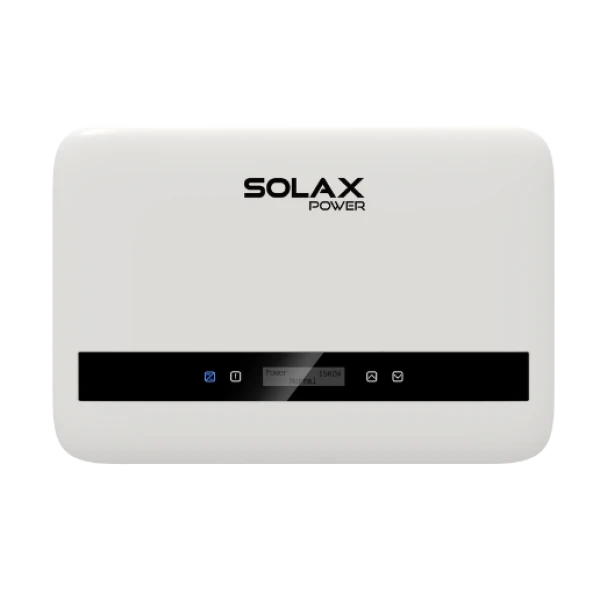
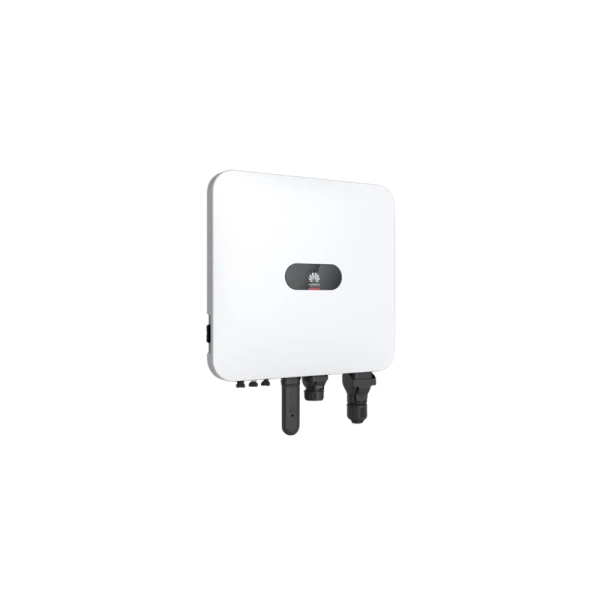
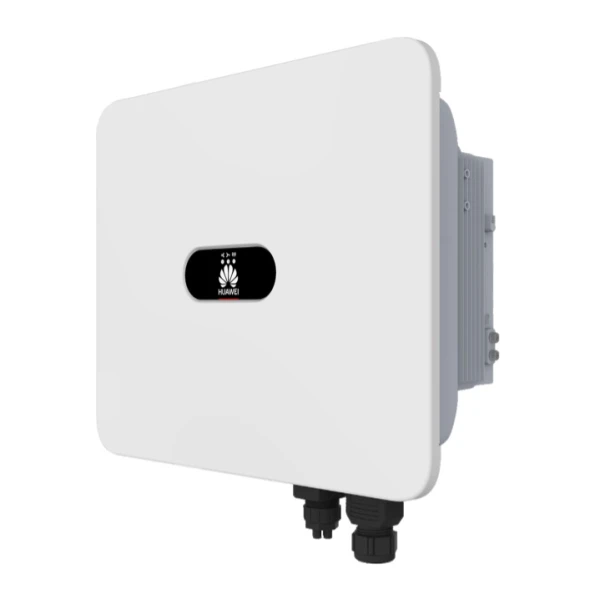
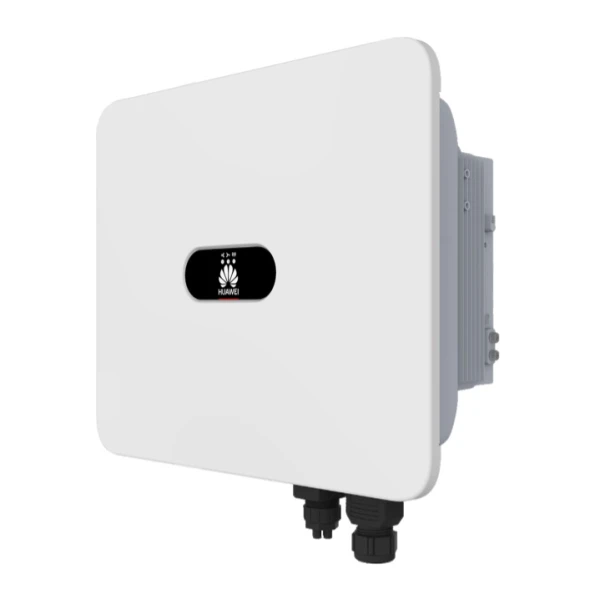
The inverter is the "heart" of the solar system — its job is to convert the direct current (DC) generated by the solar panels into alternating current (AC), which can then be used by the household or the grid. However, if the inverter is not properly sized for the system, it can lead to long-term performance loss, instability, and even overheating. Incorrect sizing is one of the most common and costly installation mistakes, which could be avoided with a little attention.
When is an inverter too small or too large?
An inverter that is too small cannot handle the maximum power produced by the solar panels, so some of the production is "lost." For example, if only a 4 kW inverter is selected for a 6 kWp system, the 2 kW of excess energy generated during peak sunlight hours is simply not utilized. In the long term, this can result in energy losses of up to 5-10% (solaredge.com).
On the other hand, an oversized inverter is also not optimal: operating at low power levels can significantly reduce efficiency, as the inverter cannot reach its ideal operating range. In addition, due to the higher start-up voltage, the system starts producing later and shuts down earlier before sunset.
For ideal sizing , the power of the solar array, its orientation and tilt angle, and the shading factormust be taken into account . Experts generally consider a ratio of 110-130% between the power of the solar panel and the inverter to be ideal.
Modern models inthe SOLARKIT inverter category feature automatic power optimization, which adjusts operation in real time to the current load on the system.
Solar panel inverter monitoring and repair as needed
Problems resulting from incorrect sizing often only become apparent months later, when the yield has already decreased significantly. In such cases, a solar panel monitoring system can help identify the fault: the inverter's operating data, voltage and current values can be continuously monitored.
Modern inverters are able to automatically alert the user to overheating, voltage fluctuations, or communication errors. If you notice any of these, it is important to take immediate action — duringsolar inverter repair, a specialist will check the performance curves, update the firmware, and replace any faulty parts if necessary.
SOLARKIT's remote monitoring solutions allow maintenance specialists to access inverter data in real time, enabling them to respond quickly to any malfunctions. This not only improves performance, but also prevents prolonged downtime and costly failures.

Improper grounding of solar panels and lack of surge protection
The grounding and surge protection of a solar system is not just a technical detail, but a fundamental safety requirement. Incorrectly installed grounding or missing surge protection jeopardizes the operation of the entire system and, in extreme cases, can even lead to fire or life-threatening electric shock. Proper protection ensures that the solar system operates safely in all weather and grid conditions.
Rules for touch protection for solar panels
The purpose of touch protection is to prevent electric shock to the human body in the event of a malfunction. In the case of photovoltaic systems ,it is particularly important to ensure that the protective earthing (PE) is properly designed, as the metal frame of the panels and the support structure are potentially conductive surfaces.
The MSZ HD 60364-7-712 standard clearly stipulates that all PV systems must be equipped with grounding and potential equalization, and also recommends RCD protection (residual current device) on the AC side.
If the system is not properly grounded, lightning strikes or secondary effects of power surges can cause serious damage to the inverter, cabling, or even the building's electrical network. According tothe National Electrical Code (NEC), systems without grounding are 60% more likely to suffer short circuits or inverter failures.
SOLARKIT performs ground resistance measurements during every installation and only works with certified copper conductors and corrosion-resistant connectors, thus guaranteeing safe operation and a long service life.
Proper solar panel grounding
The key to effective grounding is to connect all metal components of the system—including solar panel frames, rail systems, inverter housings, and mounting structures—to a common grounding point. This ensures potential equalization, so that any fault current can be safely conducted to the ground rather than concentrating at a single point.
The ideal grounding resistance is less than 10 ohms, but Hungarian standards consider 10 ohms acceptable for residential systems. Surge protective devices (SPDs ) provide additional protection by absorbing and dissipating lightning or mains surges before they can reach sensitive components.
In SOLARKIT systems, every inverter, distribution box, and cable connection is equipped with surge arresters, providing multiple levels of protection. This is not only crucial for protecting the inverters and panels, but also essential for validating the warranty.
Lack of maintenance and faulty solar panel monitoring
Installing a solar system is only the first step towards long-term efficient operation. One of the most common yet underestimated mistakes is lack of maintenance or faulty monitoring systems. Many people mistakenly believe that solar panels are "maintenance-free," when in reality, without regular inspection, faults can easily develop that can lead to performance loss or even failure.
Contamination, oxidation of connectors, shading, or undetected inverter faults can result in a 10-15% drop in yield over a period of months. The monitoring system therefore plays a key role in prevention and rapid response.
How often should the system be checked?
According to experts , a comprehensive inspection ofa solar panel system is recommended at least once a year, while real-time monitoring should be carried out continuously. During annual maintenance, it is advisable to:
- clean the panels of dust, pollen, and bird droppings,
- check the cabling, connectors, and grounding,
- examine the condition of the support structure and fastenings,
- and analyze the solar panel production data to see if there are any deviations from expectations.
Modern remote monitoring systems, such as those offeredby SOLARKIT, immediately signal if the yield deviates from normal or if the inverter detects a fault. This prevents malfunctions before they cause a significant loss of performance.
Some SOLARKIT systems also optimize energy consumption through the use of energy storage devices, increasing efficiency and self-sufficiency.
SOLARKIT for ideal solar panel production
SOLARKIT's advanced monitoring systems are capable of real-time monitoring of the status of inverters, cables, and panels in addition to performance measurement. The software can predict potential faults based on the data, such as when a module's temperature deviates from the norm or when the output of one of the strings drops.
Such systems not only make solar panel repairs faster and more targeted, but also reduce maintenance costs. SOLARKIT's experts also perform grounding and surge protection checks during every maintenance visit, ensuring that the entire system operates safely and at optimal efficiency.
If the monitoring system indicates that the solar inverter needs to berepaired, troubleshooting can be initiated remotely—with a firmware update or parameter correction—eliminating the need for immediate on-site intervention. This solution is not only convenient, but also significantly increases the reliability and service life of the system.
FAQ
1. What are the most common solar panel installation errors?
The most common errors include installation in shaded areas, faulty cabling, undersized inverters, and inadequate grounding and touch protection.
2. Why is grounding and touch protection important for solar panels?
Proper grounding of solar panels prevents electric shock and damage caused by overvoltage, thus protecting both the system and the user.
3. How can solar panel overproduction be prevented?
Overproduction can be avoided by choosing well-sized inverters and a modern solar panel monitoring system that regulates energy flow and optimizes production.
4. What should I do if the inverter indicates a fault or shows low battery voltage?
In this case, it is advisable to consult a specialist, as low battery voltage can indicate a serious performance or safety problem.
5. How often is it recommended to maintain and repair a solar panel system?
It is recommended to inspect the system, repair the solar panels, and check their performanceat least once a year , but real-time monitoring provides continuous supervision.