Storing solar energy is worth it for a green future!
With the rapid spread of renewable energy sources, especially solar energy, energy storage is becoming increasingly important . Solar power systems are no longer just about generating electricity at a given moment, but also about how to use the energy generated later, during peak consumption periods. Energy storage is not only a matter of convenience, but also a key factor in creatinga green future from an economic and environmental perspective .
In this article, we will discuss when storage is recommended in practice, what types of batteries are available, how to align consumption profiles with surplus production, and how to calculate the return on investment. We will discuss smart control,installation pitfalls, and how energy storage supports energy independence and sustainability.
Energy storage in practice: When should we recommend it to customers?
The introduction of energy storage becomes justified when the production of the solar system and consumption needs differ in time. For example, if a household produces high output during the day but has low consumption (when the residents are not at home), it can "lose" a lot of energy if there is nowhere to store it. In this case, the battery allows the surplus energy generated during the day to be stored and later – when the sun is no longer shining – used by the household for its own consumption, thus completely avoiding the need to draw energy from the grid.
Energy storage is particularly worth considering in the following cases:
- If the consumption profile does not follow solar energy production—i.e., there is a lot of surplus at noon and high demand in the evening
- If the price of grid energy is higher on the consumption side, maximizing your own production will bring financial benefits
- If greater independence from the grid is planned, or if there is a need for backup against power outages
- If the legal environment, subsidies, or billing systems are expected to favor systems combined with storage
By using energy storage, customers can increase their self-consumption ratio (i.e., the proportion covered by their own production), reduce the amount of energy purchased from the grid, and achieve a more stable energy supply.

Technical overview of energy storage solutions
Energy storage technologies operate on a variety of principles, each with its own advantages and disadvantages. Here is a brief overview:
- Chemical (batteries): the most common solution in residential and small industrial systems. These include lithium-ion, lead-acid, lithium-iron-phosphate, etc. Ideal when a flexible, relatively compact solution is required.
- Mechanical: for example, pumped storage reservoirs, which are typically used in large energy management systems. Not typically used in homes or small businesses.
- Heat or compressed air storage: solutions used in special cases where the energy produced is stored not in electrical form but in the form of heat or compressed air, primarily in industrial environments.
The selection of the optimal technology depends on several factors: energy demand, budget, available floor space, maintenance requirements, and life cycle costs. The choice of technology will only pay off in the long term if it is in line with local conditions and consumer needs.
Comparison of battery types from a professional perspective
The battery is the heart of energy storage. Although at first glance they all serve the same purpose—storing energy for later use—there are significant differences in terms of operating principle, service life, efficiency, and price. Choosing the right technology can be crucial in the long term for the efficient operation of the system and the return on investment.
Lithium-ion batteries
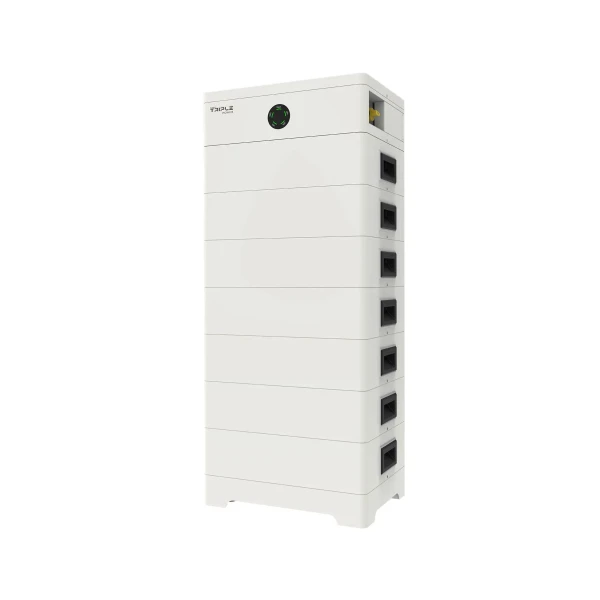
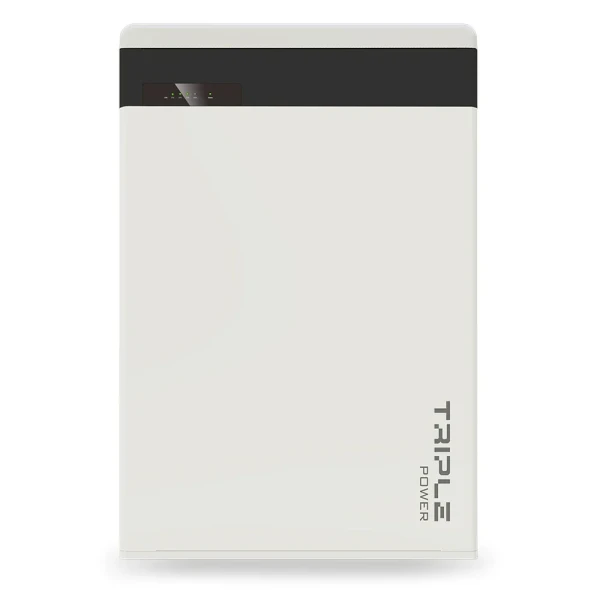
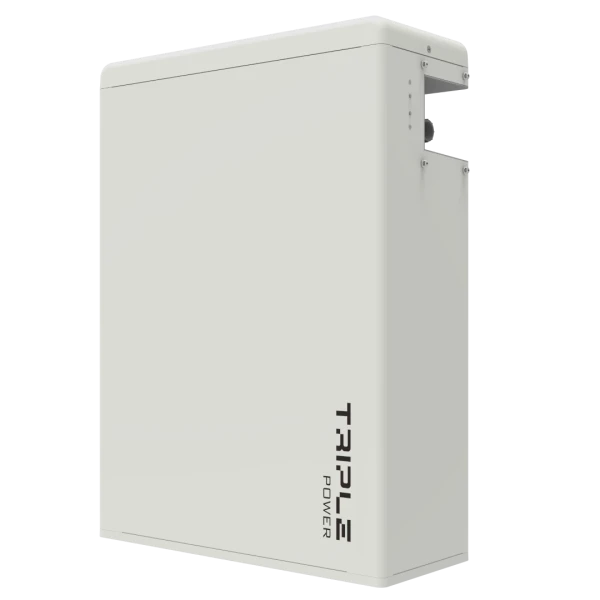
Lithium-ion technology is one of the most commonly used energy storage solutions today , especially in the residential and industrial segments. It offers high energy density, long cycle life, and fast charging capabilities. Modern systems, such as the Solax energy storage system, use lithium iron phosphate (LiFePO4) technology, which offers excellent safety and stable performance.
Lead-acid batteries
The classic lead-acid solution has long been used in energy storage. Their lower investment costs make them attractive for smaller systems, but their shorter lifespan and lower energy density make them a less efficient choice for industrial applications . These types require a lot of maintenance and lose their capacity quickly when deeply discharged.
Saltwater and other alternative technologies
New-generation saltwater batteries offer a more environmentally friendly alternative as they do not contain any hazardous materials. Although the technology is currently more expensive and less widespread, it has a promising future, particularly in terms of the sustainability of energy storage systems.
Summary from a professional point of view
When selecting a battery, professionals consider several factors:
- the size and purpose of the system (domestic, industrial, hybrid);
- the space and budgetavailablefor installation ;
- the desired service life and cycle stability;
- safety requirements and temperature conditions.
Overall, lithium-ion technology currently offers the best compromise between price, performance, and durability, especially when the goal is to efficiently store green energy and increase electricity independence.
Balancing surplus production and consumption profiles could be one of the keys to a green future
One of the biggest challenges for solar power systems is that production and consumption often do not coincide in time. During sunny hours , huge amounts of electricity can be generated, but if it is not needed at that time , the energy must either be fed back into the grid or stored. This is exactly where energy storage systems come in: they bridge the time gap between the energy produced and the energy consumed, thereby optimizing energy use and promoting agreen future.
Energy storage also plays a key role in balancingelectricity systems . The load on national and local grids can be reduced if surplus energy is not fed back into the grid immediately, but is stored instead. This results inlow grid load, fewer losses, and high efficiency, especially with the spread of decentralized energy production. Household-scale small power plants (HMKE) and industrial energy storage are the cornerstones of sustainable energy management in the future.
Sizing energy storage systems and batteries
Determining storage capacity is a key step in system design. Optimal sizing means that the amount of energystored is in line with consumer demand and the performance of the solar system.
A battery with too little capacity will not be able to store all the surplus energy, while an oversized storage system can be unnecessarily expensive and inefficient.
The following factors must be taken into account when sizingthe system:
- daily and annual consumption patterns,
- peak power of the solar system,
- possible power outages or peak load periods,
- long-term returnon investment and battery life.
A well-designed energy storage technology provides a stable, predictable energy supply not only for households but also for industrial players.
Energy storage vs. grid feed-in
Energy storage and grid feed-in are two different approaches to the same problem: how to manage surplus production.
The advantage of grid feed-in is that the energy can be "sold" immediately, but under current billing systems, this often results in lower returns. In addition, due to increasingly frequent grid restrictions, it is not always possible to feed in the entire amount of energy.
In contrast , energy storage ensures independence: the energy is available to the user even when the grid is overloaded or fails. This is particularly important for industrial and commercial facilities , where continuity of production is essential.
Return on investment in figures: When is the investment worthwhile?
One of the most important questions when deciding to invest in energy storage is when and under what conditions the investment will pay off. Solar systems are efficient on their own, but the return on investment can be significantly increased if the energy produced is not consumed immediately, but stored and used later when the price ofelectricity purchased from the grid is higher.
The economic return depends on three main factors:
- System size and consumption profile: the greater the difference between production and consumption, the greater the benefit of storage.
- Battery life and efficiency: as technology advances, the price of lithium-ion systems is falling, while cycle stability is improving.
- Subsidies and regulations: there are preferential schemes and non-repayable funds available, especially for businesses.
Solax energy storage systems are typical examples of how an investment can pay for itself within a few years if it is well-sized and optimized . These solutions effectively manage daily energy fluctuations and can provide self-consumption rates of up to 70-80%.
According to professional calculations, a modern household energy storage system can pay for itself in 6-9 years, and on an industrial scale ,this time can be even shorter, especially when the peak costs of purchasing energy from the grid are taken into account.
Integration of intelligent control and monitoring systems
Maximizing return on investment dependsnot only on storage capacity, but alsoon smart control. Modern energy systems are capable of monitoring consumption in real time, making predictions, and automatically deciding when to charge or discharge batteries.
Smart monitoring systems enable remote supervision, performance data analysis, and quick response to changes in external conditions, such as fluctuations in solar energy production or movements in the electricity market. This not only enables more efficient energy use, but also ensuresa longer service life for the batteries.
The integration of such advanced systems is particularly beneficial forindustrial players , where continuous power supply is a business-critical factor. A well-optimized energy storage system can improve the return on investment by as much as 15–20%.
Installation pitfalls and best practices for professionals
The installation of energy storage is a complex process that requires thorough preparation, planning, and execution. Since the batteries and inverters integrated into the system are critical components of the power supply, the quality of the installation fundamentally determines the efficiency and safety of operation and the long-term return on investment .
The most common installation errors include:
- inappropriate sizing, which can overload or underutilize the storage system,
- inadequate ventilation and thermal management, which can lead to rapid battery degradation,
- poor cabling and protection design,
- faulty inverter communication or software configuration.
These problems can be avoided by creating an accurate consumption profile before installation, taking environmental conditions into account, and fully complying with the manufacturer's installation protocols. Professionals should payparticular attention to ensuring that the system fits properly into the existing network and has all the necessary protection devices (e.g., overvoltage, overheating, and short-circuit protection).
In the field of industrial energy storage, a modular approach is best practice: the system can be expanded at a later date, while the initial investment remains controlled.
Modern installation strategies now also include digital simulation and monitoring systems. These allow us to test the system's operation, energy flexibility, and the behavior of individual components in advance of commissioning . This approach is aneffective tool for minimizing errors and increasing safety.
How does energy storage contribute to a green future and energy independence?
The key to a green future lies not only in the use of renewable energy sources, but also in their smart and efficient use. Energy storage makes this possible: the use of stored energy reduces demand for fossil fuels , lowers carbon dioxide emissions, and increases the security of energy supply.
The use of energy storage technologies can relieve the burden on the national grid, reducing the need for reserve electricity capacity. This is beneficial not only economically but also environmentally. Smart storage systems enable households and businesses to become independent of market fluctuations, which is particularly important in the current climate of energy price volatility.
Decentralized energy systems and efficient solar energystorage help communities become more self-sufficient while reducing the load on the national grid. Advanced solutions such as smart energy management and hybrid inverters allow us to use the energy we generate where and when it is most needed.
The energy system of the future will therefore not only consist of production ,butwillalsocreate a balance between renewable production, storage, and consumption. Energy storage is thus not only a technological innovation, but also a real social and economic breakthrough on the road to sustainability.
FAQ - Frequently asked questions
1. When is it worthwhile to install an energy storage system alongside a solar panel system?
When there is a time difference between production and consumption, or when the goal is partial independence from the grid. Energy storage is particularly worthwhile when the price of grid electricity is high.
2. What type of battery is recommended for home use?
Lithium-ion batteries are the most reliable and efficient because they have a long service life and can withstand frequent charging cycles.
3. What is the typical payback period for an energy storage system?
Typically 6-9 years, but this depends on consumption habits, battery size, and the level of subsidies. For industrial systems, this can be shorter.
4. How can the efficiency of a storage system be increased?
With smart control and monitoring systems that automatically optimize charge-discharge cycles and take daily energy needs into account.
5. What role does energy storage play in achieving a green future?
Energy storage balances the production of renewable energy sources, reduces grid load, and promotes the development of a sustainable, energy-independent society.