
Izkoristite pravi potencial svojega sončnega parka Z ZAPOROM ENERGIJE!
Samo proizvodnja sončne energije ni več dovolj za doseganje največjega donosa. Če trgujete na prostem trgu, to že veste: povečanje prihodkov vašega sončnega parka je odvisno od tega, kdaj energija pride na trg, in ne le od tega, koliko kWh proizvedete. Sistem BESS, povezan z vašim sončnim parkom, to razliko pretvori v merljiv dobiček.
Na prostem trgu je za vaš prihodek odločilno pravo časovno usklajevanje, ne pa obseg.
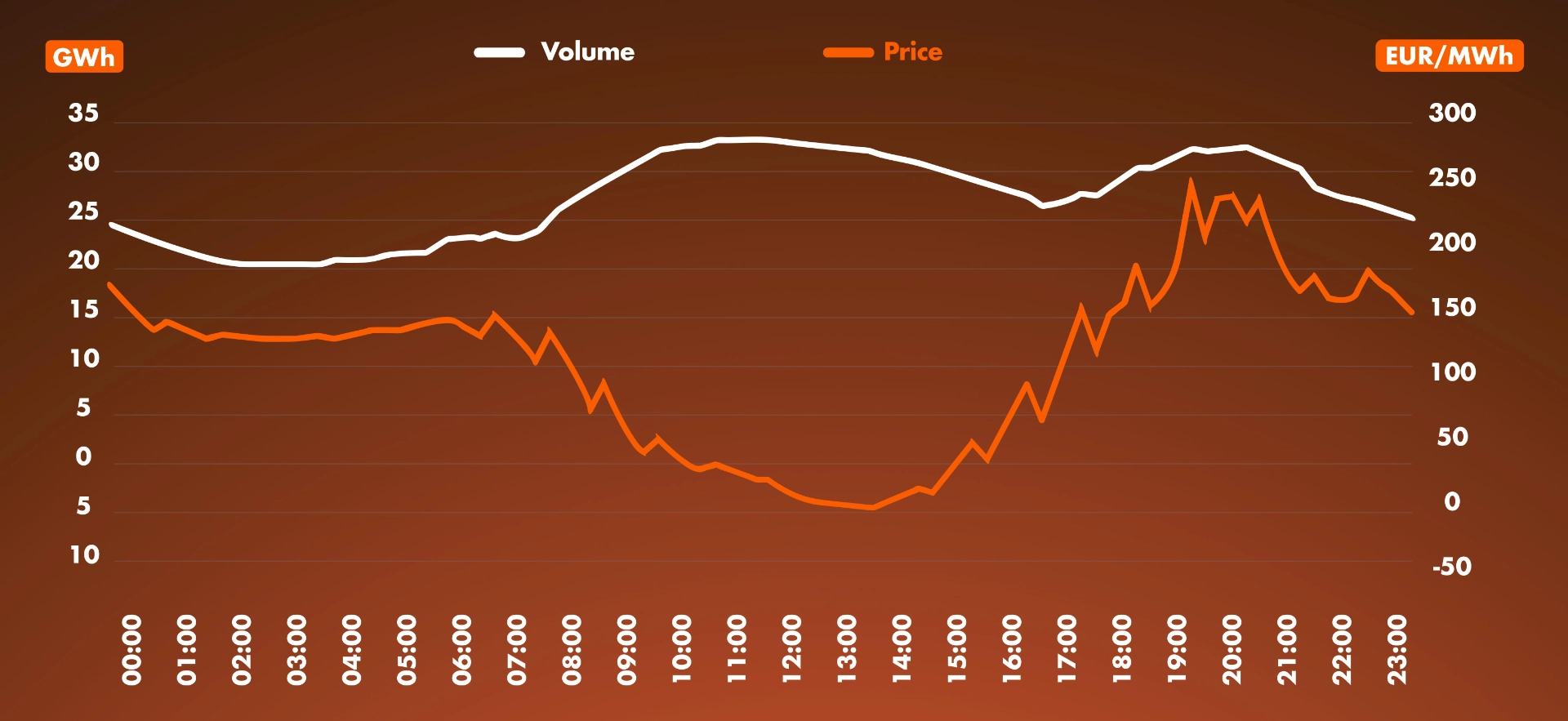
Z ukinitvijo sistema tarif za odkup električne energije KÁT so lastniki sončnih parkov vstopili v tržno okolje, v katerem se proizvodnja iz obnovljivih virov energije in povpraševanje ne ujemata več. Opoldne, ko večina sončnih elektrarn proizvaja električno energijo, je spotna cena najnižja, včasih pa postane celo negativna. Zvečer, ko obstaja povpraševanje, sončni park ne deluje. Ta vrzel se vsako leto povečuje, saj se v omrežje vključuje vedno več zmogljivosti sončnih elektrarn.
Sistem BESS ravno to vrzel zapolnjuje. Polni se ob najnižji ceni in prazni ob najvišji. Prihodki niso odvisni od absolutne ravni cen, temveč od velikosti razlike med cenama, ta pa se je v zadnjih treh letih večkrat povečala. Kdor zdaj zgradi zmogljivosti za shranjevanje, vstopi na trg z vedno večjo prednostjo. Kdor počaka, bo vstopil pod slabšimi pogoji, zato se splača čim prej namestiti baterijski sistem za shranjevanje v vašem sončnem parku, da ga boste lahko optimalno upravljali in dolgoročno ohranili vrednost vaše naložbe.
HUPX Spot May Report 2026 · Podatki se spreminjajo iz meseca v mesec.
Vsako leto zamude podaljšuje obdobje vračanja naložbe.
Za vsak dan, ko sončni park prodaja energijo na prostem trgu brez sistema BESS, se prodaja po nižji ceni. Za park z zmogljivostjo 1 MW lahko to pomeni do 130.000 EUR izgubljenih letnih prihodkov, kar je skoraj 350 EUR na dan. Operativna učinkovitost neposredno vpliva na dobo povračila naložbe – to je izračunljiva, ne pa zgolj ocenjena izguba.
Proizvodne zmogljivosti se rezervirajo eno četrtletje vnaprej. Kdor ukrepa zdaj, bo v naslednji sezoni že v polnem pogonu. Kdor bo počakal, bo vstopil pozneje, po višji ceni in z daljšim čakanjem.
Elektrarna, opremljena s sistemom BESS, se ponaša s prožnejšim urnikom, nižjimi stroški izravnalne energije in višjo povprečno ceno.
Do 70.000–109.000 EUR letnega prihodka na 1–1,3 MWh zmogljivosti, na podlagi dnevnega razpona HUPX.
Zvečer in zjutraj se cena ne spusti na najnižjo vrednost, ki je značilna za opoldne. Sistem BESS shranjuje vašo proizvodnjo in jo oddaja takrat, ko je cena najvišja.
Razpon, ki temelji na analizi občutljivosti podjetja Ewiser in je prilagojen vašim konkretnim podatkom o naložbi v sončni park.
Finančno stabilen, izkušen partner z neposrednim stikom s proizvajalcem.
Projekt BESS ni zgolj nakup strojne opreme. Tehnično načrtovanje, pridobivanje dovoljenj DSO, integracija sistema za upravljanje z energijo (EMS), protokol za zagon in usklajevanje proizvajalčeve garancije potekajo vzporedno, pri čemer vsak od teh korakov prinaša tveganje za napake. SOLARKIT vse to združuje pod eno streho.
CATL, neposredni proizvajalčev distribucijski kanal
Podjetje CATL priporoča SOLARKIT za regionalne projekte BESS v Vzhodni Evropi. Strokovno znanje proizvajalca, garancijski postopek in tehnično ozadje – brez posrednika.
Finančna stabilnost, bonitetna ocena AAA
Po oceni agencije Dun & Bradstreet sodi podjetje SOLARKIT v najvišjo kategorijo bonitetne ocene. Pri večmilijonski naložbi to ni nepomembna podrobnost.
Izračun donosnosti naložbe (ROI) za posamezen projekt
Za vsako ponudbo pripravimo izračun donosnosti, prilagojen podatkom vašega sončnega parka. Omogočamo tudi dostop do rešitev naših finančnih partnerjev.
Integracija sistema EMS z namenskimi operacijami
Programska oprema, razvita v našem podjetju, ki v okviru enotne logike upravlja sistem BESS, sistem PCS in fotovoltaični inverter. Za upravljanje skrbi naše specializirano partnersko podjetje. En pogodbeni dogovor, ena kontaktna točka.
Lokalna prisotnost na madžarskem trgu
Lokalna ekipa z neposrednim poznavanjem domačih postopkov distribucijskih sistemskih operaterjev (DSO) in izkušnjami na področju pridobivanja dovoljenj, ki so prilagojene lokalnim zahtevam za postavitev sončnih elektrarn. Ni potrebe po prevajanju, pojasnjevanju ali čakanju na odgovor.
Koordinacija montaže
Zagotavljamo dokumentacijo in nadzor, kar je pogoj za veljavnost proizvajalčeve garancije. Lahko se obrnete na svojega izvajalca montaže ali pa vam priporočimo preverjenega izvajalca.





Pet korakov od vaše zahteve do začetka delovanja.
Ni treba, da nam vnaprej posredujete tehnične podrobnosti, vse bomo pojasnili med posvetovanjem.
Začetna ocena in ponudba
Prosimo vas za podatke o vašem parku in pripravimo 1–2 možnosti konfiguracije z izračunom naložb (CAPEX) ter primerjavo dobe povračila.
Proizvodnja in dokumentacija DSO
Proizvodnja sistema BESS in priprava dokumentacije za pridobitev dovoljenj DSO potekata vzporedno: risbe SLD, tehnični listi, načrti integracije EMS.
Priprava gradbišča
Spletno in telefonsko svetovanje pred prihodom sistemov BESS in PCS: temelji, izkopavanje jarkov, polaganje kablov.
Namestitev
Na podlagi dokumentacije, bodisi samostojno bodisi v sodelovanju s priporočenim partnerjem. Mi poskrbimo za dokumentacijo in nadzor.
Zagon v hladnem/vročem stanju in SAT
Protokol proizvajalca za zagon, validacija FAT, preskus zmogljivosti, poročilo SAT. Od tega trenutka naprej je sistem mogoče upravljati na daljavo.
Koliko prihodkov lahko ustvari sistem BESS?
Čas povračila naložbe je odvisen od treh dejavnikov: velikosti razlike v ceni HUPX, izkoriščenosti in konfiguracije. Spodnji podatki prikazujejo scenarije, ki temeljijo na analizi občutljivosti – gre za informativni model, ne za obljubo.
| Konfiguracija | Zmogljivost | Razpon naložb v osnovna sredstva | Tipični letni prihodki | Območje povračila |
|---|---|---|---|---|
| 4× Dyness DH200Y124.9 kW / 261 kWh cabinet | 1,044 MWh | 220–260k EUR | 70–90 tisoč EUR na leto | 2,5–4 leta |
| 5× Dyness DH200Y99.9 kW / 261 kWh cabinet | 1,305 MWh | 260–300k EUR | 85–109 tisoč EUR na leto | 2–3.5 years |
To je zgolj scenarij, ne ponudba. Vir: analiza občutljivosti podjetja Ewiser, 2025 · Poročilo HUPX Spot za maj 2026. Dejanski donosi so odvisni od tržnih razmer in konkretnih parametrov vašega parka.
Finančno, tržno in tehnično strokovno znanje – vse v eni ekipi.
Ni potrebe po usklajevanju s tremi podjetji. Ocena, izračun, tehnična zasnova in zagon potekajo v okviru ene same ekipe.

Zahtevajte ponudbo za sistem BESS, prilagojeno vašemu projektu.
Vnaprej ni potrebno navajati tehničnih podrobnosti, vse bomo pojasnili med posvetovanjem. Hugó vas bo poklical nazaj v roku 1–2 delovnih dni.