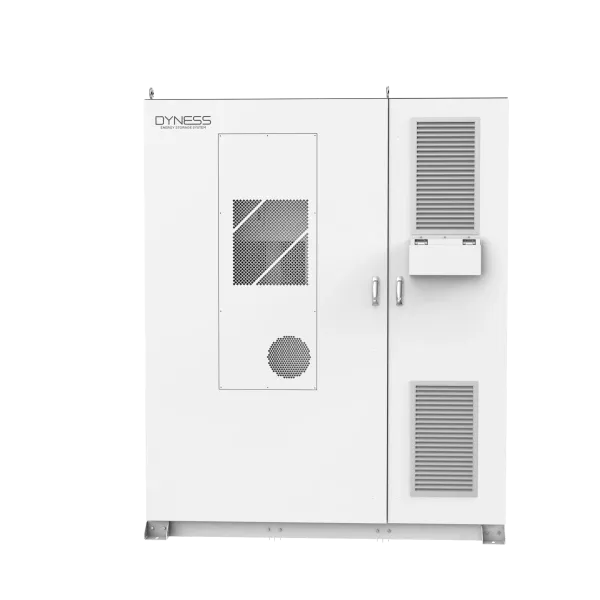
Comparison of wall-mountable batteries vs. rack-mountable batteries
Wall-mounted battery vs. rack-mounted battery – Which is the better choice for solar power systems?
Energy storage is no longer the preserve of industrial facilities, but is becoming a strategic issue for more and more homes and businesses. With the spread of solar power systems, choosing the right battery has become a key decision, as it matters whether a wall-mounted battery or a rack system is installed. Choosing the right solution has a long-term impact on the expandability, maintenance, and cost-effectiveness of the system.
In this article, we compare in detail the design, areas of application, capacity expansion options, and installation considerations of wall-mounted batteries and rack-mounted batteries. We examine battery charging and battery charging solutions, as well as when it may be necessary to replace the battery or the battery.
Finally, we provide practical advice on which solution may prove to be the most suitable and safe choice in the long term for single-family homes, apartment buildings, or industrial environments.
Wall-mounted battery – features and applications
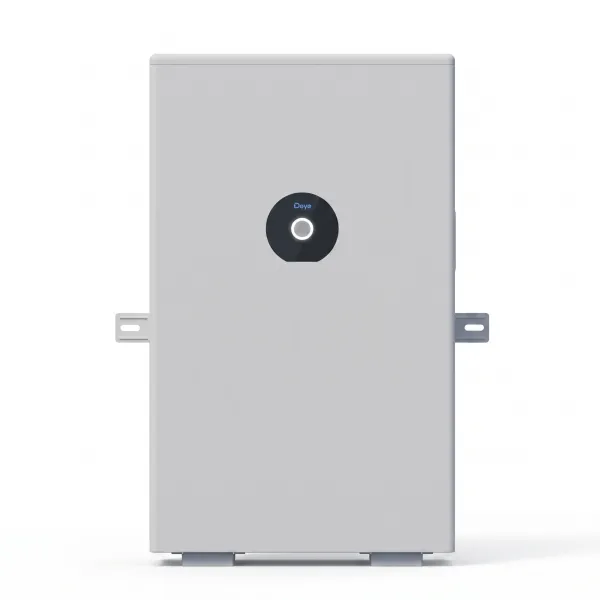
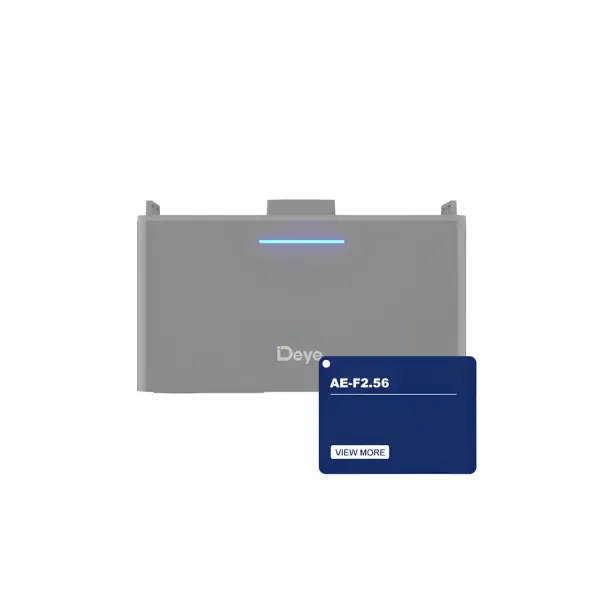
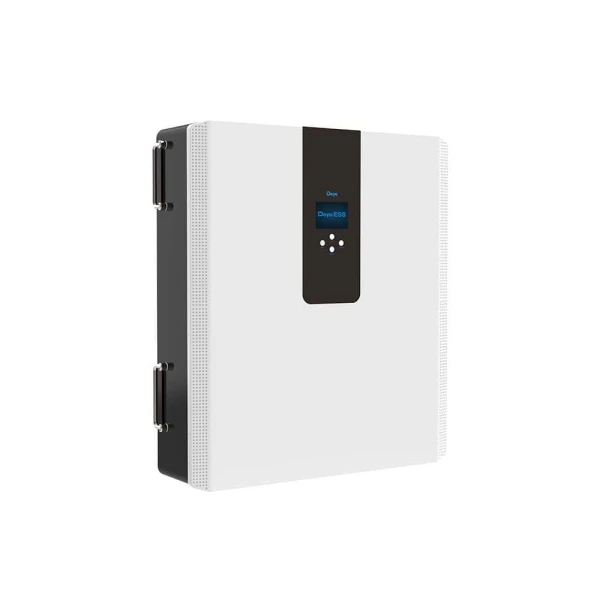
The wall-mounted battery is an energy storage solution designed specifically for residential and small commercial systems. Thanks to its compact design, it can be mounted directly on the wall, so it does not require a separate rack cabinet infrastructure. This is particularly advantageous when installing in the garage, mechanical room, or basement of a family home.
The vast majority of modern wall-mounted battery systems are based on lithium iron phosphate (LiFePO4) technology, which offers a long cycle life and high operational reliability. According to energy storage reports by the International Energy Agency (IEA), lithium-based systems dominate the residential energy storage market due to their high energy density and reliability.
Their capacity typically ranges from 5 to 15 kWh, which is sufficient to cover evening and night-time energy needs for typical household consumption. A well-sized battery system can optimize self-consumption, reduce grid feed-in, and provide backup power in the event of a power outage.
During installation, it is important to ensure a load-bearing wall structure, ventilation, and inverter compatibility. Wall-mounted batteries offer easier expandability for smaller systems, but their scalability may be limited for industrial energy storage.
This solution is ideal for residential applications, especially when the goal is aesthetic, space-saving, and quick installation.
Rack cabinet and rack-mountable battery – features and industrial benefits
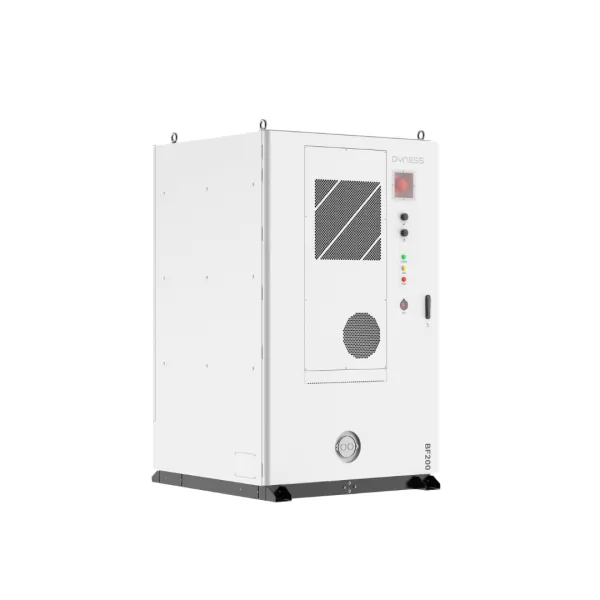
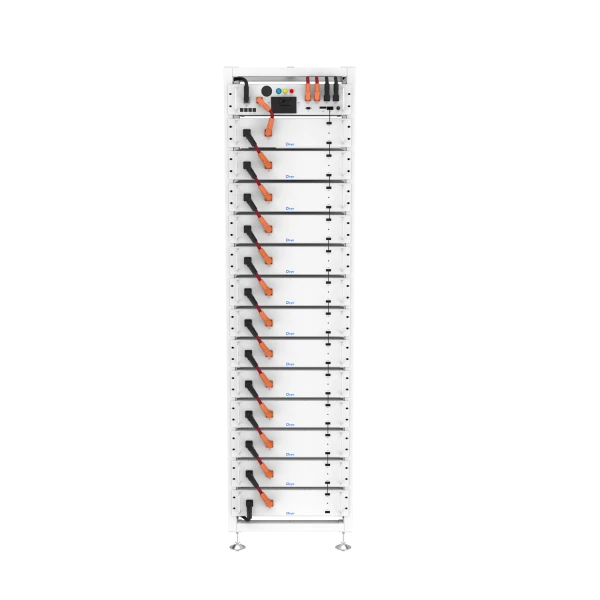
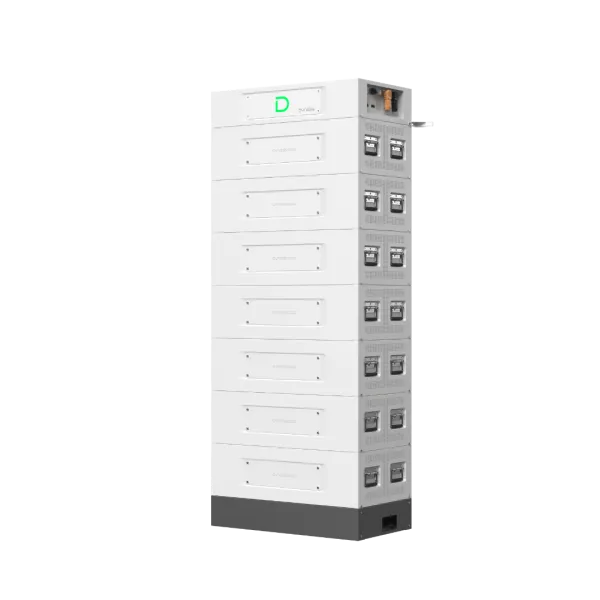
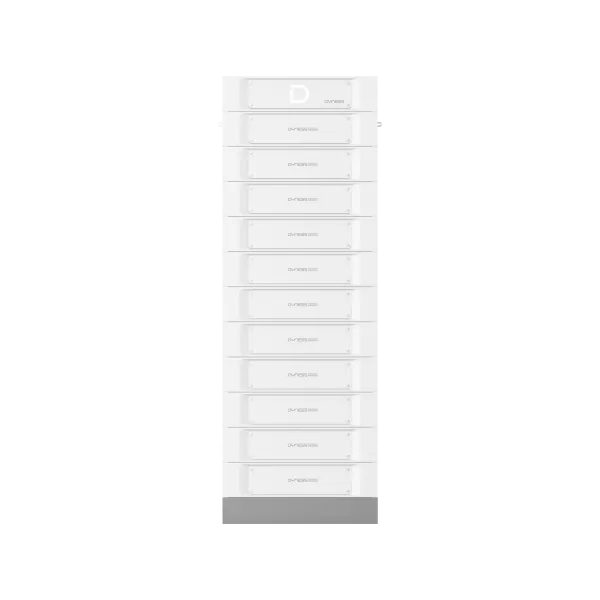
Rack-based energy storage is primarily designed for systems with higher power requirements, where scalability and structured installation are of paramount importance. The rack cabinet is a standardized metal frame mounting structure into which the rack-mountable battery unit can be modularly inserted.
The advantage of the rack system is that it is easily expandable: new modules can be simply inserted into the rack structure, allowing the total capacity of the energy storage system to be gradually increased. This is particularly advantageous in industrial battery applications, where load and energy requirements can vary over time.
Such systems are often part of larger-scale industrial energy storage projects, where the goal is to reduce peak loads, stabilize the grid, or optimize costs. In the case of the rack solution, structured cabling, a central BMS system, and precise battery charge control ensure high operational reliability.
Rack-mountable batteries can typically be integrated into higher-capacity systems and are better suited to the needs of businesses, factories, logistics centers, or even solar power plants.
Capacity and expandability comparison
Capacity and expandability are among the most important factors to consider when choosing between a wall-mounted battery and a rack-mountable battery. The two systems have fundamentally different philosophies.
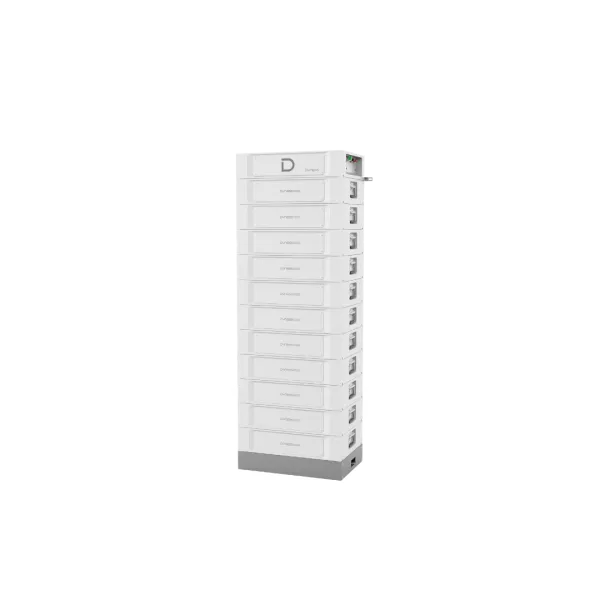
Wall-mounted batteries typically come as fixed-capacity units, for example with an energy storage range of 5–15 kWh. In residential systems, this is often sufficient, especially if the output of the solar system is adjusted accordingly. Expansion is done in parallel for low voltage and in series for high voltage, but manufacturers often maximize the number of units that can be connected.
In contrast, the rack system has a distinctly modular design. A rack cabinet can accommodate multiple battery modules, allowing the capacity of the entire system to be increased incrementally. This is a significant advantage in industrial energy storage, as the size of the system can be adjusted to changes in consumption demand. During such expansion, the new module can be easily inserted into the rack structure and integrated into the central control system.
An important difference is that for larger systems, the rack solution provides a more stable mechanical and electrical structure, while wall-mounted batteries are a more practical choice for smaller, well-defined energy requirements.
Battery charging solutions in wall-mounted and rack systems
Battery charging control plays a key role in both wall-mounted battery and rack system solutions. Modern energy storage devices have a built-in Battery Management System (BMS) unit that continuously monitors cell voltage, temperature, and charge status.
In residential systems, wall-mounted batteries are usually connected to a hybrid inverter, which optimizes the battery charging process based on solar production and household consumption. In such cases, the goal of control is to maximize self-consumption and minimize grid feed-in.
In a rack system, control can be more complex. Multiple modules in the rack cabinet are monitored by a central control unit, which balances charge levels and ensures an even load. This is particularly important in industrial energy storage environments, as precise battery charge control directly affects the lifetime and stability of high-power systems.
For higher capacities, the rack solution allows the load to be distributed across multiple modules, while the wall-mounted battery operates as a simpler, more compact system.
Installation considerations – space requirements, mounting, modular design
One of the most important issues during installation is the available space and the long-term expandability of the system. The wall-mounted battery is a compact solution that can be mounted directly on load-bearing masonry. This is an ideal choice for family homes where mechanical space is limited. During mounting, it is important to use a stable support structure and to comply with the minimum side clearance and ventilation requirements specified by the manufacturer.
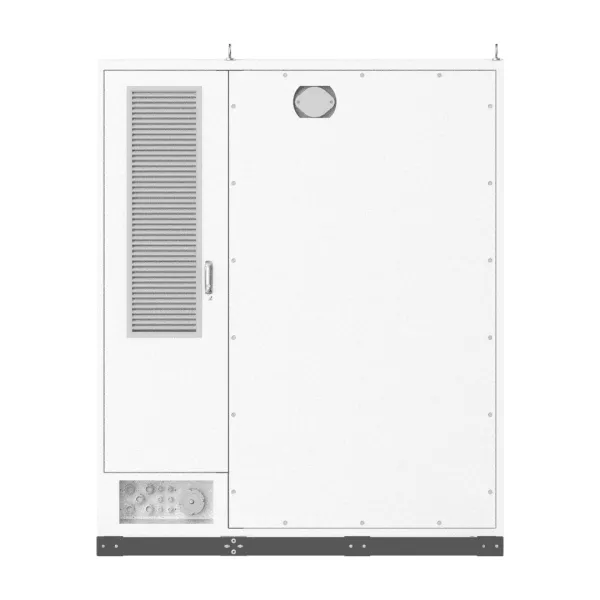
In contrast, the rack system requires the use of a dedicated rack cabinet, which is a floor-mounted or fixed unit in an industrial environment. Its advantage is that battery modules, distributors, and control units can be placed in it in a structured and compact manner. For larger systems, the modular design allows for expansion during installation.
The installation environment can be a basement, garage, or separate technical room, but in all cases, electrical protection and fire safety design in accordance with regulations are required.
Maintenance and reliability – when is it time to replace the battery?
One of the biggest advantages of modern lithium-based energy storage systems is their long service life. A high-quality wall-mounted battery or rack-mounted battery system can last for up to 6,000–8,000 cycles, which means 10–15 years of operation in residential use. However, every system will eventually need to have its battery replaced.
The need for battery replacement depends on several factors: the number of charge cycles, the operating temperature, the load profiles, and the quality of the battery charge control. If the capacity decreases significantly—for example, below 70–65%—the system will no longer be able to adequately meet energy demand.
In residential systems, the battery replacement process depends largely on the technology and system design. In low-voltage (LV) systems, a modular design can be an advantage because, in some cases, it is possible to replace individual battery modules without having to replace the entire system. In high-voltage (HV) systems, however, expansion or partial replacement is typically much more limited, and in many cases manufacturers do not recommend the subsequent replacement of individual modules or the operation of modules in mixed condition. For this reason, battery replacement in such systems must always be planned in accordance with the manufacturer's specifications and system compatibility requirements.
In industrial energy storage environments, a continuous monitoring system monitors performance and status during maintenance, which predicts the need for replacement. A properly configured BMS and optimized battery charging can significantly extend service life.
Safety factors for both solutions
Safety is a key consideration for all energy storage systems. Wall-mounted batteries typically feature built-in overheating protection, overvoltage protection, and short-circuit protection.
In rack systems, safety solutions can be even more complex. The closed design of the rack cabinet, central heat management, and intelligent monitoring system allow for a higher level of control. In industrial battery applications, the integration of a fire protection system and standardized installation are particularly important.
In both solutions, compliance with manufacturer specifications and regular inspection are essential. Proper installation and correctly configured battery charging significantly reduce the risk of failure.
SOLARKIT reviews: When should you choose which one?
The right battery must always be chosen for the specific application environment. Based on experience, wall-mounted batteries are ideal for single-family homes, smaller apartment buildings, and businesses with low energy consumption.
In residential environments, compact design, aesthetic appearance, and easy installation are important considerations. Wall-mounted batteries can be quickly integrated into existing solar systems, and battery charging can be automatically optimized with most modern hybrid inverters. If the goal is to increase self-consumption and protect against power outages, this solution adequately meets the needs.
However, for higher energy consumption or business environments, a rack system offers a more stable and scalable solution. In such cases, it is worth considering a higher-capacity industrial battery system, especially if the goal is to reduce costs or manage peak loads. Industrial energy storage allows you to optimize energy consumption and reduce grid fees.
As a general rule, if the system is expected to be expanded in the future, a rack design offers a more flexible solution in the long term. For smaller, fixed consumption, a wall-mounted battery is a simpler and more cost-effective choice.
Frequently asked questions
What is the main difference between wall-mounted and rack-mounted batteries?
The biggest difference lies in their design and scalability. Wall-mounted batteries are compact, stand-alone units designed primarily for residential use. They are quick to install, require less space, and have a simpler system architecture.
In contrast, the rack system has a modular design, and multiple battery units can be integrated into a rack cabinet structure. This provides greater capacity and flexible expandability, which is a significant advantage for industrial energy storage or larger corporate energy needs.
Which battery do you recommend for family homes and which for industrial use?
For family homes, a wall-mounted battery usually provides sufficient capacity to cover evening consumption and power outage backup. It is easier to install, takes up less space, and the battery charge control is compatible with most hybrid inverters.
In industrial environments, however, a rack system is the more practical solution. An industrial battery system offers higher performance and scalability and is better suited to complex energy management systems.
How does the installation location influence the right choice?
The installation location is a key decision factor. If space is limited, such as in a garage or basement, a wall-mounted battery may be the preferred choice.
If a separate mechanical room or industrial hall is available, a rack cabinet system offers a more structured and future-proof solution. Ventilation, heat dissipation, and electrical protection are always necessary for safe operation.
Which inverters are compatible with wall-mounted batteries?
Wall-mounted batteries only work with hybrid inverters. Compatibility depends on the manufacturer, so it is important to check the communication protocol (e.g., CAN or RS485) when selecting a model.
The right inverter ensures optimal battery charging and battery charge control, as well as full utilization of energy management functions.
How does the modular expansion of rack-mountable batteries work?
One of the biggest advantages of the rack system is its modular design. New battery modules can be easily inserted into the rack cabinet structure and then integrated into the central BMS system.
This allows for a gradual increase in capacity. For larger systems, this provides significant investment flexibility.
Which solution is easier for battery charging and replacement?
For smaller systems, wall-mounted batteries are easier to charge and replace because they can be treated as separate units.
In the case of rack systems, the modular design is an advantage because it is not always necessary to replace the entire battery. Replacing individual modules may be sufficient, which is a cost-effective solution in the long term.