Home Energy Storage Prices in 2026 - Storing Generated Energy
Interest in home energy storage will continue to grow in 2026, particularly due to the spread of solar panel systems and changing grid regulations. More and more people want to know how home energy storage prices are evolving, what cost components make up an investment, and what to expect for different capacities.
In this article, we provide an overview of energy storage price trends and explain in detail what factors influence the price—from capacity and technology to installation costs and premium features. We’ll also look at how choosing a storage system to go with your solar panel system affects the price, and what role the inverter and compatibility play.
We’ll cover the issue of return on investment, the impact of government subsidies and grant opportunities, as well as the most common purchasing mistakes. Finally, I’ll offer practical recommendations to help you make the best possible decision in terms of value for money.
Home Energy Storage Prices: An Overview
Home energy storage prices will continue to vary significantly in 2026, depending on the capacity, technology, and features of the system you choose. On the domestic market, the price of an average home energy storage system ranges from approximately 2.5 to 3.5 million forints, but premium-category solutions are available at even higher prices. It is important to distinguish between the “battery-only price” and the price of the complete, installed system.
Energy storage prices on their own generally refer to the list price of the battery unit. However, this does not include the necessary inverter, protective devices, installation labor costs, and any system integration costs. The price of a complete, operational solution is always higher than the net purchase cost of standalone batteries.
In 2026, prices will be influenced by several factors: trends in raw material prices, global demand for batteries, and the regulatory environment in Europe and China. Energy storage prices are stabilizing, while quality differences are becoming increasingly apparent between entry-level and premium products.
What determines the price of home energy storage systems?
Home energy storage prices depend not only on the brand but are shaped by the combined effect of several technical and system integration factors. One of the most important parameters is capacity (kWh), which indicates how much energy the battery can store, and power (kW), which indicates how quickly it can discharge or charge energy.
A system with a higher capacity naturally involves higher investment costs, but the price does not always increase linearly in proportion. Manufacturers often offer modular solutions that allow for future expansion. This is a particularly important consideration if your energy consumption is expected to increase in the future, for example due to an electric car or a heat pump.
Another key factor affecting price is the type of technology, the quality of the battery cells used, and the integrated control electronics. Premium solutions typically feature more advanced monitoring systems, longer warranties, and more stable performance.
Compatibility is also a key issue: not all energy storage systems work with every inverter. When connecting to an existing system, the type of inverters and communication protocols can significantly influence the final cost.
Capacity (kWh) and power: Price of a 5–10 kW battery storage system
When interpreting prices, it is important to distinguish between two figures: capacity (kWh) and power (kW). Capacity indicates how much energy you can “store,” while power indicates how much load you can safely supply at any given time.
The price of a 5 kW battery storage system is typically relevant for solutions designed to provide a continuous supply to smaller loads. It can range around 2.5–3 million forints, but the final cost depends heavily on the chosen capacity, scalability, and control capabilities.
The price of a 10 kW battery storage system falls into a higher category: here, the goal is typically to serve larger loads, which generally requires greater capacity, though the two are not necessarily the same. A price range of approximately 3.5–4 million forints is realistic, but here it is particularly important to verify whether the specified “10 kW” actually refers to continuous power or only peak power.
When sizing the system, it is worth considering not only current consumption but also future expansion.
Battery technology type
Prices for home energy storage systems depend largely on the battery technology used. By 2026, lithium iron phosphate (LiFePO4) technology will dominate the residential market, as it offers favorable safety characteristics, a high cycle life, and stable temperature performance.
Compared to earlier lithium-ion solutions, LiFePO4-based batteries offer a longer service life, often with a design life of 6,000–8,000 cycles. This means that with daily charging and discharging, an operational lifespan of around 15 years is achievable.
Cheaper energy storage systems often feature a lower cycle count, shorter warranties, and simpler battery management systems. Premium systems come with more advanced BMS solutions, more precise charge control, and remote monitoring capabilities, which enhance operational safety and long-term reliability.
From a technological standpoint, therefore, not only the price but also the total cost over the entire lifespan is a decisive factor.
Energy storage prices for solar systems
Home energy storage systems represent a significant investment on their own, but in most cases they are not installed as standalone solutions but rather alongside solar panels. In such cases, the cost of the energy storage system should always be considered as part of the entire system, since its operation is closely linked to the existing or newly installed solar panel system.
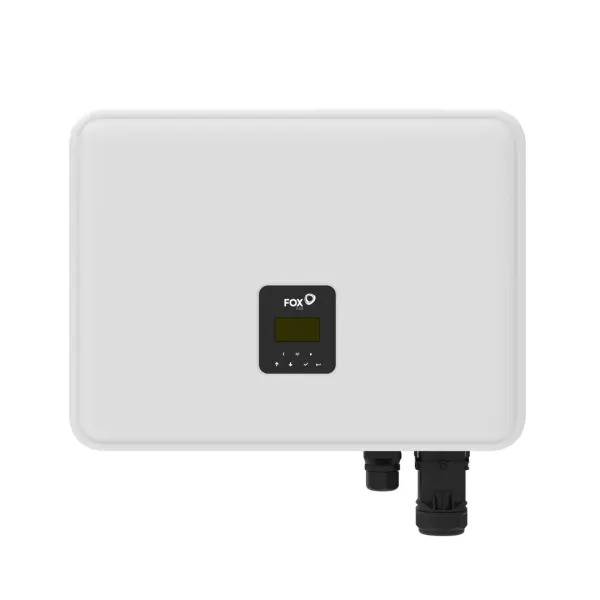
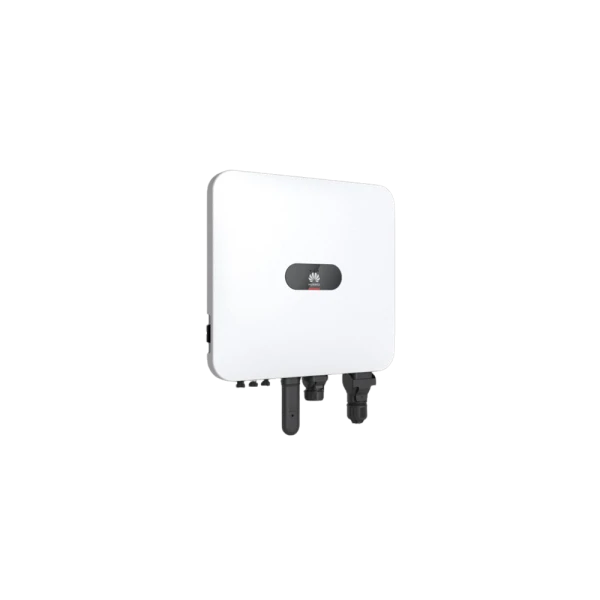
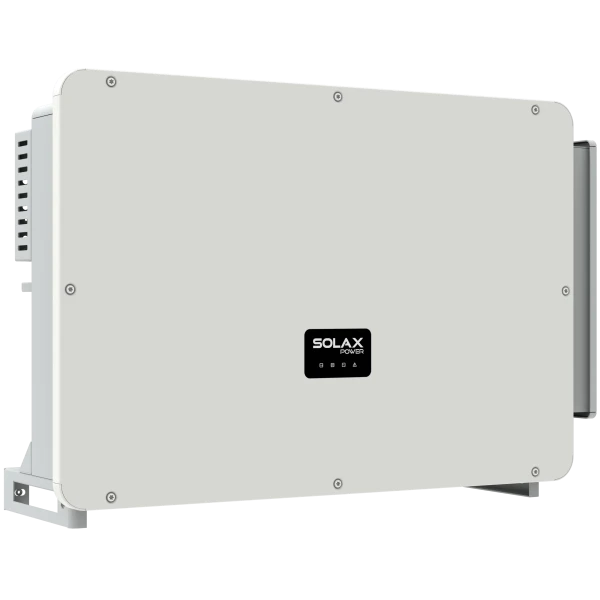
For new installations, the most cost-effective solution is typically the use of a hybrid inverter, which can manage the energy generated by the solar panels, battery charging, and household consumption all within a single system. If you already have an existing system, it is particularly important to check whether your current inverter is suitable for connecting an energy storage unit or needs to be replaced. This can significantly affect the final cost.
Energy storage prices for solar systems are often higher when retrofitting, as this may require additional controllers, communication modules, and in some cases, grid modifications.
Proper sizing is key: a storage unit that is too small will not utilize the full potential of the solar panels, while excessive capacity may represent an unnecessary investment. A well-designed system allows you to use a larger portion of the energy generated during the day in the evening and at night.
The Role of Installation and Additional Costs in the Price
When discussing home energy storage prices, many people focus exclusively on the list price of the battery. However, the actual investment amount always includes installation and ancillary costs, which can significantly impact the final price.
One of the most important factors is the inverter. If the existing system is not compatible, installing a new hybrid inverter may be necessary. Additionally, you must account for appropriate protection, circuit breakers, surge protection, and any potential grid modifications. The type and capacity of the inverters also affect the total cost.
Installation labor costs can also vary, depending on whether it is a new installation or an expansion of existing systems. A simpler, pre-prepared installation environment results in a lower price, while a retrofit may require more labor hours.
Permit and reporting requirements should not be overlooked, as they entail administrative costs. Collectively, these can add up to a difference of hundreds of thousands of forints in the final price of energy storage systems.
Budget vs. premium energy storage systems: what’s the difference?
When choosing a home energy storage system, it’s not just the price that matters, but also what you get in return. The difference in energy storage prices often lies in the technical specifications, the warranty, and long-term reliability.
Cheaper solutions generally have a lower cycle count, a shorter warranty, and simpler control electronics. These may be suitable for households with lower energy consumption, but they can wear out more quickly with intensive daily use. For such systems, battery quality and thermal management design are key factors.
Premium-category solutions offer a more advanced energy management system, with more precise charge control, remote monitoring capabilities, and often a longer warranty of up to 10 years. Advanced software control enables optimized self-consumption and load management as well.
Another key difference is scalability. Modular solutions allow for future capacity expansion, which can be important if energy demand increases in the future. Although premium systems require a higher initial investment, they often provide a lower cost per unit over the entire lifespan.
Return on investment for home energy storage: when is it worth it?
The return on investment for a home energy storage system in 2026 depends primarily on how you utilize the system and what your energy consumption profile is. A properly sized home energy storage system allows you to use the energy generated during the day in the evening and at night, thereby reducing grid consumption.
One key to achieving a return on investment is increasing the proportion of self-consumption. If your solar panel system generates a significant amount of energy but you don’t use it during the day, energy storage helps optimize the system’s operation. This can be particularly important in environments where net metering is limited or subject to unfavorable billing rates.
Another consideration is electric vehicle integration. If you have an electric vehicle at home, a properly sized combination of energy storage and a charger can significantly increase your self-sufficiency rate. In this case, the energy stored during the day can also be used to charge the car at night.
The payback period typically ranges from 6 to 10 years, but this depends largely on current electricity prices, consumption habits, and the extent of any available subsidies. When making a decision, it is worth considering not only financial factors but also security of supply considerations.
Impact of government subsidies and grants on prices
In 2026, home energy storage prices will depend not only on the technology and installation but also on the current grant environment in the market. One of the most influential factors is the OEP (Home Energy Storage Program), because when a subsidized program launches, it simultaneously impacts demand, inventory, and contractor capacity.
Tender waves shape the final cost in two ways. On the one hand, the subsidy reduces the household’s upfront costs, which for many immediately brings the investment to an “affordable level” and can significantly shorten the payback period. On the other hand, however, waves of applications typically drive up demand: if many people want a battery, inverter, and installation at the same time, lead times increase.
Therefore, in practice, a good strategy is not only to look at “how much funding is available,” but also at how quickly you can get the project implemented and what technical requirements the specific program entails (e.g., capacity, compatibility, documentation). You can find the detailed requirements and the latest information here: residential energy storage grant 2026
Common mistakes before buying an energy storage system
When choosing a home energy storage system, many people focus solely on price, even though a poor decision can cost more in the long run than a more expensive but properly sized system. One of the most common mistakes is undersizing. If the capacity is too small, the energy storage system cannot cover evening and nighttime consumption, so you won’t be able to fully utilize the energy generated by the solar panels.
The other extreme is oversizing. A system with too much capacity can represent an unnecessary investment if the household’s consumption does not justify it. In this case, the cost of the energy storage system will be unreasonably high compared to the actual savings.
Another common problem is choosing an incompatible inverter. Not all inverters are suitable for connecting to energy storage, and retrofitting can result in significant additional costs.
Finally, many people fail to consider future expansion options. A modularly expandable system can be a more flexible and cost-effective solution in the long run.
SOLARKIT recommendations: how to choose a good value-for-money option
When selecting a home energy storage system, one of the most important factors is value for money. The cheapest solution isn’t necessarily the best choice; rather, it’s the one that technically aligns with your household’s consumption patterns and existing system.
As a first step, we always recommend analyzing your consumption profile. What is the evening and nighttime load? Are you planning to use an electric car or a heat pump? These questions fundamentally influence the appropriate capacity and performance.
The second step is to check compatibility. Communication between the selected energy storage system and the inverters is key to stable operation. It’s worth choosing a solution that supports future expansion and also offers smart energy management features.
If you are considering a current grant program, it is worth reviewing the available OEP 2026 offers.
An informed decision leads to a stable, predictable, and cost-effective solution in the long term.