Solar panel optimizers help increase system efficiency
The efficiency of modern solar systems is determined not only by the quality of the panels and the type of inverter, but also by how well they can adapt to real environmental conditions. The solar panel optimizer plays a key role in this, allowing the system to operate at the maximum capacity of each module rather than being limited by the weakest link.
In this article, we will explain in detail what a solar panel optimizer is and why it has become almost indispensable in modern solar systems. We will look at how solar performance optimization works in practice, with a particular focus on losses due to shading and different orientations. We will also discuss why optimization is particularly advantageous for larger, more complex systems, what possibilities panel-by-panel performance monitoring offers, and when it is worth considering Huawei, Tigo, or Deye solutions. Finally, we will provide practical recommendations for the most common solar systems.
What is a solar panel optimizer and why is it important?
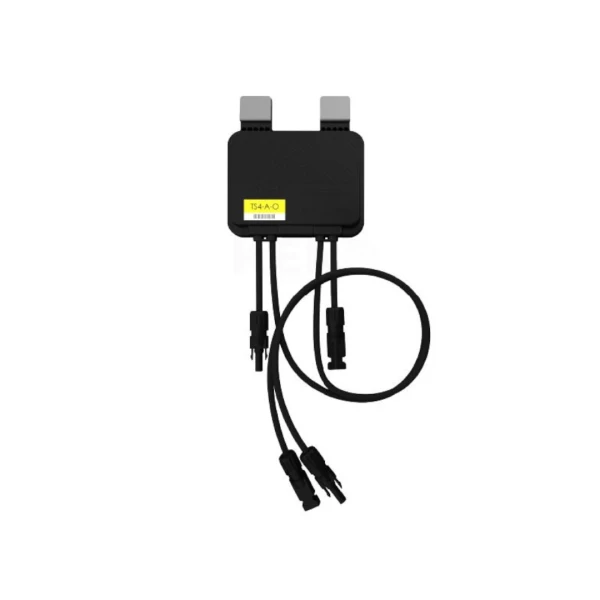
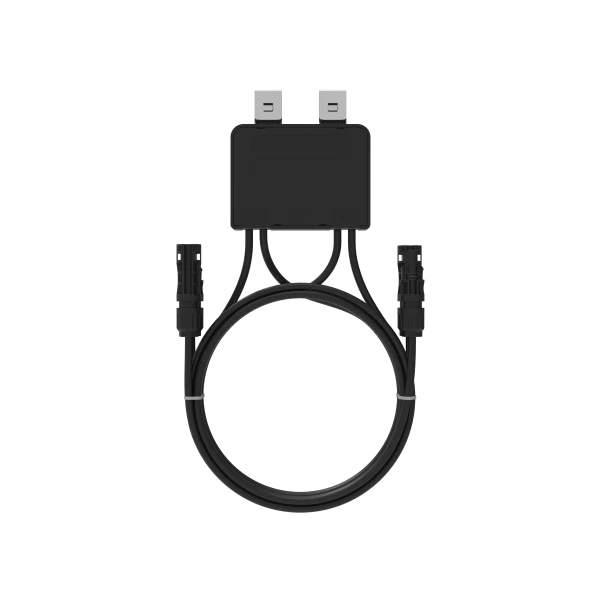
A solar panel optimizer is an intelligent electronic device that connects to each solar panel individually and sets it to the highest possible energy production. While in traditional string inverter systems, MPPT tracking is common for each MPPT branch (string), so the weaker modules in a given string have a greater impact, the optimizer performs MPPT for each module, meaning that each panel can operate at its own maximum power point. Therefore, the performance of the other panels is not determined by the weakest performing panel, which is a significant advantage in particularly shaded or differently oriented systems.
The essence of the operation is that the optimizer is a DC-DC converter, i.e., it converts the direct current input so that the panel can always generate at its ideal voltage and current before the power is sent to the inverter.
This approach improves system efficiency and energy production, increases the value of the investment, and allows for module-by-module performance monitoring, which can later help with rapid fault detection and maintenance decisions.
How does solar power optimization work in practice?
The essence of solar power optimization is that the system does not operate on a single common operating point, but rather each solar panel generates power according to its own current conditions. In traditional string systems, if the performance of one panel decreases, for example due to dirt or shade, the energy production of the entire string drops. The optimizer reduces this effect by regulating the voltage and current for each panel.
In practice, this is done by the optimizer continuously monitoring the output parameters of the given module and dynamically adjusting them so that the panel always operates at the best possible efficiency. This is particularly important on roof surfaces where the orientation and angle of the panels vary, or where the intensity of sunlight changes significantly throughout the day. In such environments, optimization tangibly increases annual energy production.
Shading and power loss: how does a Deye optimizer help?
Shading is one of the most common causes of performance degradation in solar systems. The shadow of a chimney, tree branch, or neighboring building can cause significant losses even for a short period of time if the system is not optimized. With conventional solutions, the output of the entire string drops, even if only a single panel is affected.
With an optimizer, however, the shaded panel is separated from the other modules in terms of performance. The optimizer ensures that the shaded panel only affects itself, while the shaded module has a much smaller impact on the production of the other modules, so the loss can be managed more locally. This is particularly useful in urban environments and with complex roof structures.
The solution not only increases yield, but also makes energy production more predictable throughout the year. In such systems, the loss caused by shading is typically not cumulative, but can be managed locally, resulting in a better return on investment in the long term.
Why is optimization essential in larger and more complex solar systems?
In higher-performance and more complex solar panel systems, the operating conditions of the panels are rarely identical. Different orientations, different tilt angles, and partial shading are common. In such cases, the traditional string structure forces the system to make serious compromises, as the panels "drag down" each other's performance. Optimization addresses precisely this problem.
Solar panel optimization allows each panel to produce independently, according to its own characteristics, so that differences are not added together but separated. For larger systems, this not only means increased yield, but also more stable operation and more predictable annual production. For industrial, commercial, and larger residential systems, this difference translates into measurable financial benefits.
Performance monitoring at the panel level: What are the benefits?
Many systems offer module-by-module monitoring (with a separate communication unit, depending on the manufacturer and installation), which enables faster troubleshooting. This means that not only the output of the entire system can be viewed, but also that of each individual panel. This allows faulty, contaminated or underperforming modules to be identified immediately, without the need for on-site measurements.
Monitoring at the panel level results in faster troubleshooting, less downtime, and lower maintenance costs. This is especially important for large systems, as even a single malfunctioning panel can cause significant annual production losses if it remains undetected.
Huawei, Tigo, Deye optimizers: When is which solution the best?
There is no universally "best" solution among optimizers; the choice always depends on the design and purpose of the solar system. There are systems where optimization is only justified for a few problematic panels, while in other cases it is an integral part of the operation of the entire system.
Solutions compatible with Huawei (typically Huawei inverter families) are primarily advantageous in uniform, modern inverter systems, where the purpose of optimization is to reduce the effects of partial shading or different orientations. Simple system monitoring and transparent operation are important considerations in these cases.
Tigo-type optimizers allow for more flexible use. They are particularly well suited for mixed environments or when only certain panels in an existing system require optimization. For this reason, they are a common choice for retrofits.
Deye-type solutions are mainly used in more complex, hybrid or energy storage-combined systems.
The selection of the appropriate optimizer therefore always depends on the size of the system, future plans, and site conditions.
Safety features: how do optimizers increase system reliability?
Optimizers not only affect performance, but also safety. Many modern solutions have a fast DC voltage reduction function that minimizes dangerous voltage levels on the roof in an emergency, such as a fire.
This significantly increases system operational safety and also complies with increasingly stringent fire safety regulations. This is particularly important in larger buildings, where the safety of rescue workers is a priority.
Installation considerations and compatibility with inverters
Compatibility with inverters is a key issue when installing optimizers. Some solutions only work with their own manufacturer's inverters, while others offer a more open system. This affects installation costs, future expandability, and operation.
Another important consideration is whether the optimizer is a factory-integrated or retrofittable solution. A pre-designed system is always more cost-effective, but retrofitting can also be a viable alternative for existing systems.
How much return can a Huawei optimizer bring?
A Huawei optimizer typically delivers a spectacular return on investment when the system operates with partial shading, different orientations, or mixed panel use. In such an environment, the annual increase in energy production can be as high as several hundred kilowatt hours, which directly improves the return on investment.
The exact return on investment depends on the system, of course, but in general, the additional yield and better monitoring provided by optimizers offset the higher initial cost in the long run. This is especially true when you consider the system's lifespan and reduced maintenance requirements.
SOLARKIT optimizer recommendations for the most common solar panel systems
Choosing the right optimizer always depends on the configuration and size of the system and the environmental conditions. The Huawei, Deye, and Tigo solutions available in the SOLARKIT range have been specifically designed to cover the most common residential and small industrial applications. In the case of shaded roofs, panel fields with different orientations, or expandable systems, optimization is no longer an extra, but a conscious design element.
In residential systems where some panels are partially shaded, optimizers help ensure that the other modules do not lose performance. In such cases, a properly selected solar panel optimizer can even provide a noticeable increase in annual yield. This advantage is further enhanced on larger roof surfaces or with multiple orientations, especially when the system is built using a high-quality optimizer.
According to SOLARKIT's approach, the optimizer is not a product to be understood on its own, but part of the entire system. By coordinating the right components, a solution can be developed that simultaneously increases yield, improves operational reliability, and supports future expansion needs.