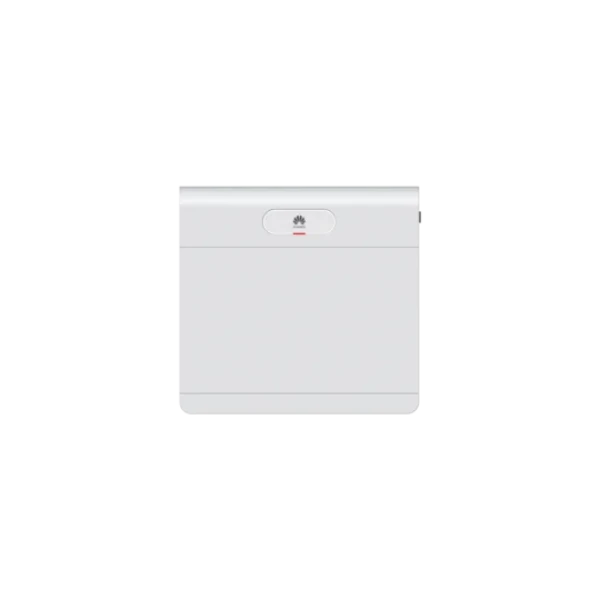
Uninterruptible battery power supply with mains connection now available!
Uninterruptible power supply now available for solar power systems with batteries
How does a grid-connected uninterruptible solar system work?
Modern solar systems no longer rely solely on sunshine as their energy source: the grid and the battery can also play a role in energy supply. An uninterruptible system with a battery and grid connection means that the system can also operate from the grid and automatically switches to battery mode in the event of a power failure, thus ensuring an uninterrupted power supply. The battery should ideally be charged from solar panel production, but if the battery is depleted and there is not enough sunlight, the system can also use energy from the grid if necessary. This means that if, for example, a power outage occurs when the battery still has energy, the system will continue to operate without interruption.
Some inverters already have a built-in switchover mechanism that switches to battery operation within 0.01-0.02 seconds if the grid is interrupted. This ensures that consumers receive an uninterrupted power supply even in the event of an energy shortage or power outage. The grid connection also allows excess production to be fed back into the grid (HMKE – household-sized small power plant), while the battery serves as a backup.
How to choose an uninterruptible power supply for hybrid, stand-alone systems?
Several critical factors must be considered when selecting a power source:
- Power requirements: Measure the peak demand of consumers (total watts) and start-up loads (e.g., motors, air conditioning).
- Power conversion speed: the faster the inverter can switch over, the less disruption there will be to consumers.
- Efficiency and losses: a type that operates with lower losses is more economical in the long term.
- Compatibility with the inverter: the inverter must support battery backup operation (hybrid or off-grid mode).
- Protection and safety: adequate protection (overcurrent, over/undervoltage, temperature) is required.
- Cycle stability: how long the battery can last – e.g., lithium technology generally lasts for more cycles.
What electricity supplier licenses are required for such a system in Hungary?
In the case of such hybrid/grid-connected systems, if the system also feeds back into the grid (HMKE), a license must be obtained from the electricity supplier.
Examples:
- Application to the electricity supplier for the installation of a small-scale power plant of domestic size.
- The type of inverter, connection current, and fuse size must be approved (e.g., E.ON "inverter approval").
- Submission of design documentation and technical description (e.g., for distribution network approval).
- If there is no feed-in (stand-alone system), the permit requirement is lower, but the electrical installation must be carried out by a specialist.
Why is uninterruptible power supply important for businesses and homes?
Power outages can cause serious problems both in homes (refrigerators, freezers, heating, lighting) and businesses (servers, machines, data loss). The purpose of an uninterruptible power supply (UPS) is to take over the role of the mains during a power outage and ensure the power supply.
What is an uninterruptible power supply?
In the classic sense, an uninterruptible power supply (UPS) is a device that monitors the mains voltage and immediately switches to battery mode in the event of a power failure, so that the power supply is not interrupted.
However, modern solar systems work differently: hybrid inverters provide a separate connection point for uninterruptible consumers, so that these devices continue to operate without interruption even when there is no voltage in the grid. The system automatically detects a power failure, but the uninterruptible circuit remains active as long as sufficient energy is available from the solar panel or battery.
Why is a battery needed for an uninterruptible power supply?
The battery provides the energy that the uninterruptible power supply (or hybrid inverter) uses to power consumers in the event of a power outage. Without a battery, there is no backup power, so uninterruptible operation is not possible.
Although technically the capacity of the battery determines how long the system can operate during a power outage, if solar panels are also charging the battery, then in theory the operating time can be unlimited – provided there is sufficient sunlight for recharging.
What types of batteries can be used in stand-alone systems?
The most commonly used types are:
- Lead-acid (sealed/gel, AGM) — lower cost, but shorter life and cycle count
- Lithium-ion (LiFePO₄, Li-NMC, etc.) — higher price, but much higher cycle count and better efficiency
- Other technologies (e.g., nickel-based, redox flow) — less commonly used, typically experimental solutions
When making your choice, you should consider cycle stability, depth of discharge, temperature sensitivity, and maintenance requirements.
Sizing considerations for three-phase consumers
In a three-phase system, the capacity of the battery and inverter must be sized so that each phase is supplied with energy. This means that the system must be able to distribute the load appropriately across each phase. The following factors are taken into account in three-phase sizing: phase balancing, the energy output of individual consumers, and reserve capacity.

Calculating battery capacity for different user profiles
Determining battery capacity is one of the most important steps in designing an off-grid or hybrid system. When sizing, it is advisable to follow these steps:
1. Determine your daily energy consumption in kilowatt-hours (kWh):
There are two approaches you can take to do this. One method is to add up the daily power consumption of all consumers (e.g., refrigerator, lighting, computer, pump, etc.). The other, simpler solution is to read your electricity meter in the morning and evening – the difference between the two values gives you your daily consumption in kilowatt hours.
2. Determine how many hours of backup power you need:
This is the amount of time that the system must be able to operate independently (e.g., 2–6 hours or even several days if there is no solar power supply).
3. Calculate the required capacity in kWh:
Capacity (kWh) = (daily consumption kWh /24× backup time in hours) * usable capacity
Example:
- Daily consumption: 10 kWh
- Reserve time: 1 day
- Usable capacity: 80% (i.e. 0.8)
- Capacity (kWh) = 10/24*8* 0.8 =2.67
- Ah = (capacity kWh × 1000) / system voltage (V)
- For example, if the system is 48 V, then:
- Ah = (2.67 × 1000) / 48 = approx. 55.625 Ah
It is important to note that in order to determine the exact requirement, the type of use must be taken into account: for example, heating, cooling, pumping, lighting, domestic or industrial use, and the timing of these (night-day load). Based on the profile, the required battery size may vary significantly.
SOLARKIT advice on system installation
How to connect an uninterruptible power supply?
The input of the uninterruptible power supply (UPS/inverter) is connected to the mains power supply, the batteries are connected to the DC side, and the consumers receive power from the inverter output. In the event of a power failure, the UPS immediately switches to battery operation.
How is the uninterruptible power supply and battery charged?
If the customer wishes, when the mains is available, the system charges the battery from surplus solar energy or directly from the mains. The inverter controller regulates the charging, monitoring the voltage and current.
Choosing an inverter for hybrid systems: what should a professional pay attention to?
It is important that the inverter supports battery mode, has fast switching capability, high efficiency, and is included in the list of inverters approved by the service provider.
What installation challenges may arise? Cabling, protection, and safety regulations
Long cables can cause losses, so the cross-section of the power cables must be properly dimensioned. Protection must include surge protection, short-circuit protection, and overcharge/deep discharge protection. Installation must only be carried out by a qualified electrician.
How does the hybrid three-phase system increase the competitiveness of professionals in the market?
Three-phase systems mean higher sales and expansion opportunities, as they are also suitable for industrial consumers, and differentiated services (uninterrupted power supply, backup) can set professionals apart from their competitors.
FAQ
1. How often should an uninterruptible battery system be maintained?
It is recommended to check the condition of the battery, connections, and system operation at least once a year, especially in cases of heavy use.
2. Can an old, existing battery be used for an uninterruptible power supply system?
This is only recommended if the battery type is compatible with the system and is still in good condition – but for reliability, it is better to choose a new device.
3. What happens if the battery runs out and there is no mains power?
In this case, the system cannot supply power – once the battery is dead, the power supply is interrupted until the mains power is restored or an alternative charging source is available.
4. What is the expected lifespan of a lithium battery?
On average, 8–12 years, with up to 6,000–8,000 cycles possible, depending on the type and use – this far exceeds the lifespan of lead-acid batteries.
5. How long does it take to recoup the investment in an uninterruptible hybrid system?
At the residential level, the investment can pay for itself in 6–10 years, and for businesses, it can pay for itself in as little as 3–5 years, especially if there are regular power outages or high consumption.