
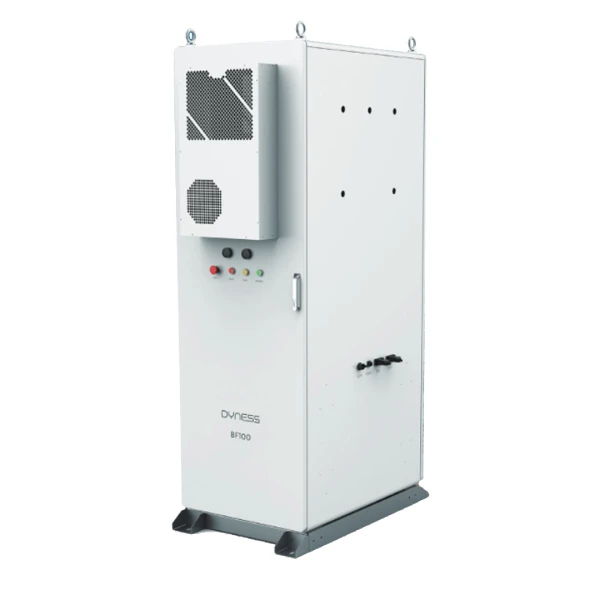
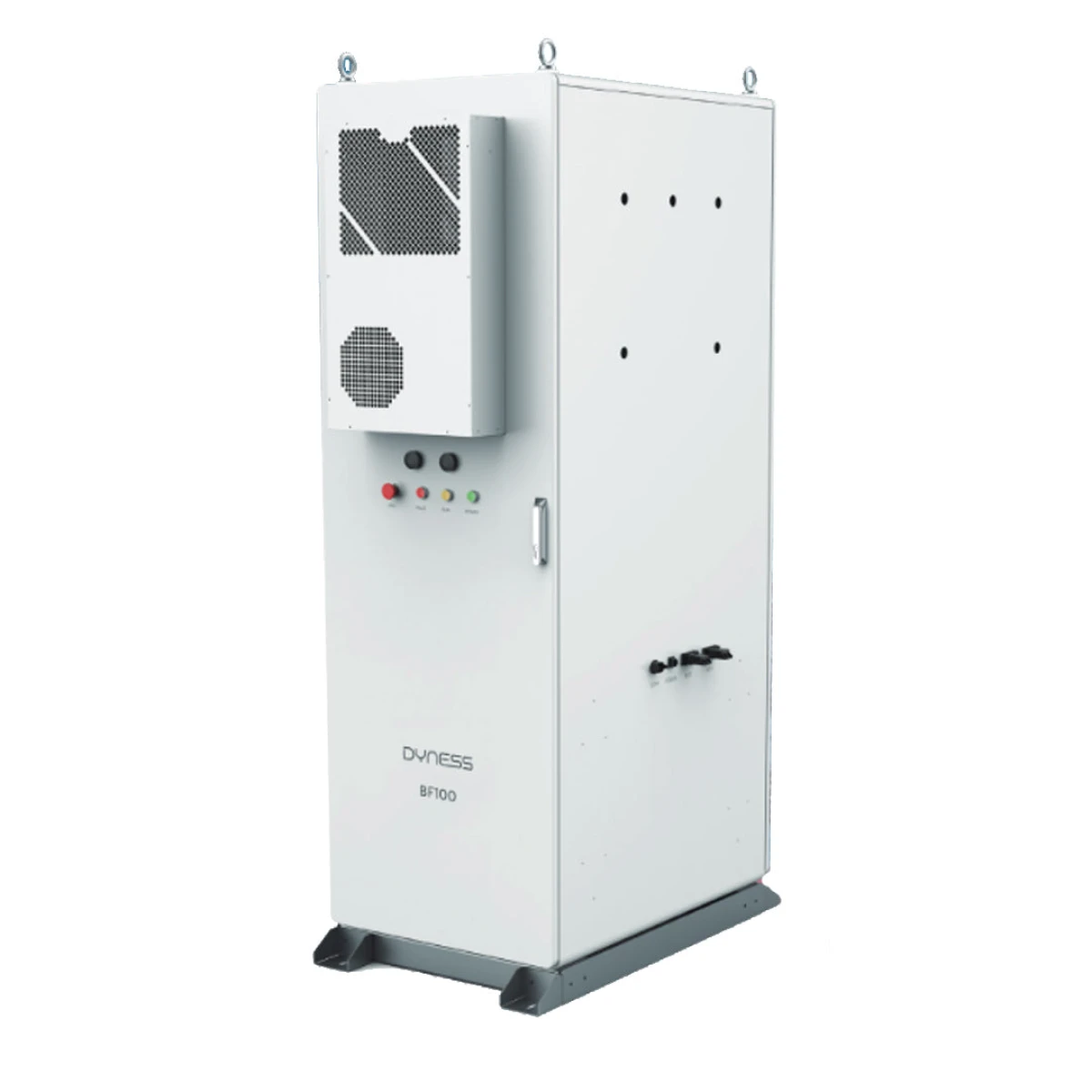
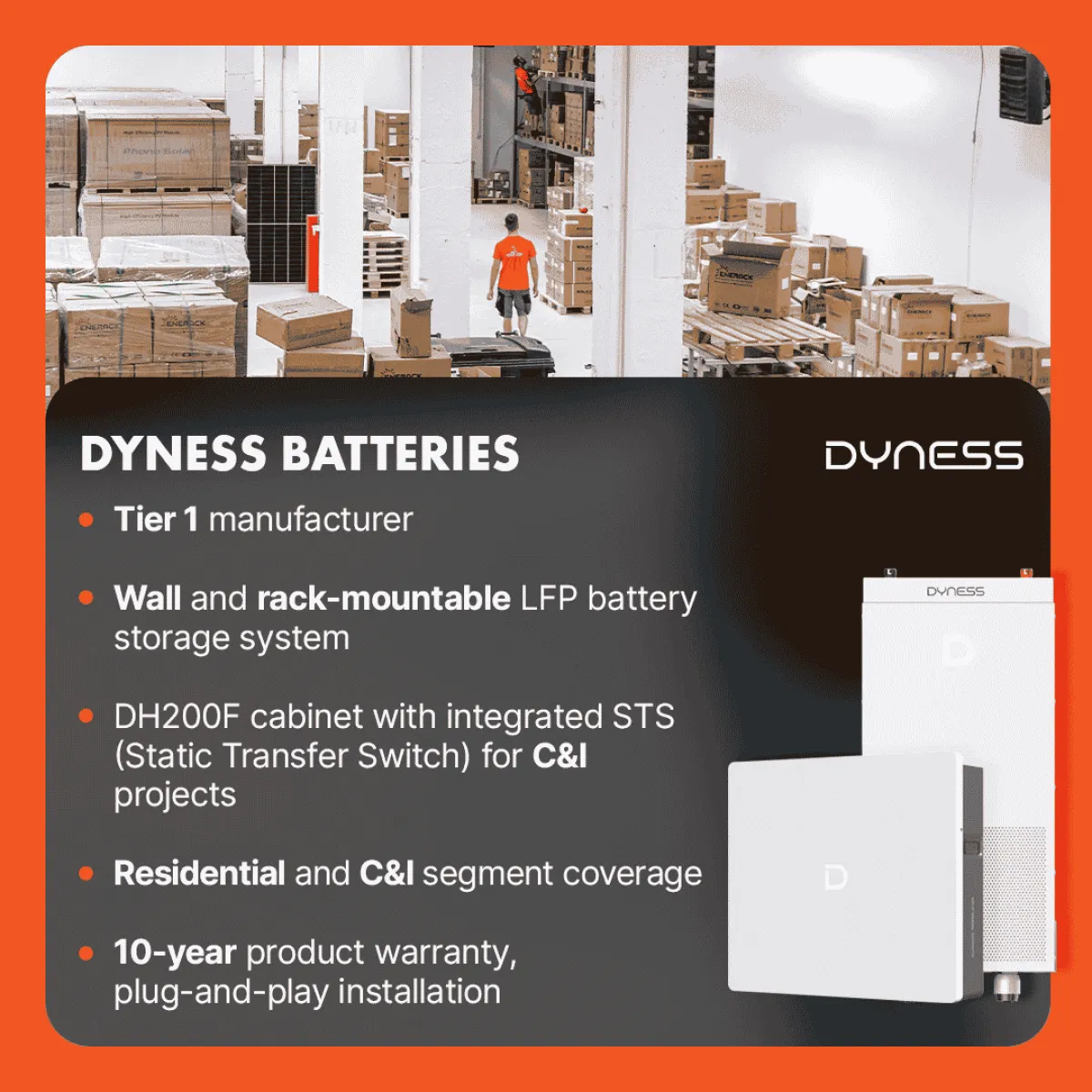
Dyness BF100 100kWh C&I Cabinet
 100 kWh DC battery cabinet for small-scale industrial and commercial systems, paired with an external hybrid inverter
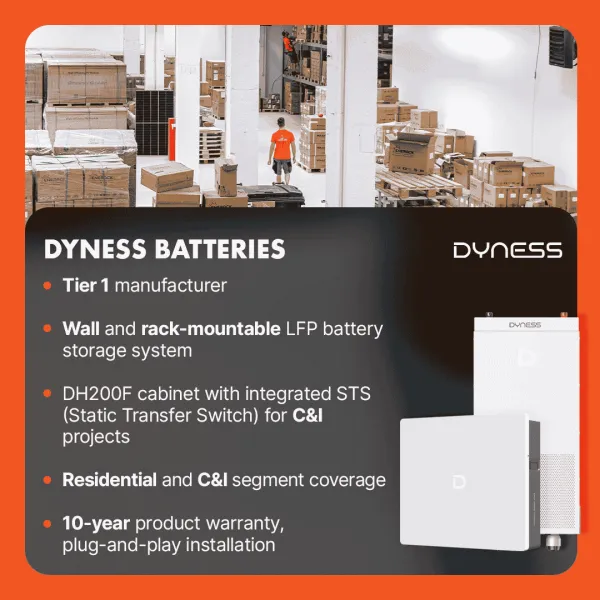
LFP cell technology with ≥8,000 cycles, a 10-year lifespan, and a 95% depth of discharge (DoD)
Three-level fire detection, active ventilation, and passive explosion-proof design for safe outdoor operation
Compatible with Solis, SOSEN, SOLINTEG, and Megarevo hybrid inverters, with DC-side expandability
IP55 protection rating, C3 (optionally C4) corrosion resistance, operating temperature range from -20 °C to +50 °C with active air conditioning
100 kWh DC battery cabinet for small-scale industrial and commercial systems, paired with an external hybrid inverter
LFP cell technology with ≥8,000 cycles, a 10-year lifespan, and a 95% depth of discharge (DoD)
Three-level fire detection, active ventilation, and passive explosion-proof design for safe outdoor operation
Compatible with Solis, SOSEN, SOLINTEG, and Megarevo hybrid inverters, with DC-side expandability
IP55 protection rating, C3 (optionally C4) corrosion resistance, operating temperature range from -20 °C to +50 °C with active air conditioning
| Brand: | Dyness |
| Unit: | Piece |
| Code: | ESS-DYN-BF100-C100 |
| Model: | BF100-C100 |
| Weight: | 1300 kg |
| Product dimensions: | 800x1200x2260 mm |
| Energy storage capacity: | 16 - 100 kWh |
| Voltage: | High voltage |
| Battery heating: | Heated |



Dyness BF100 – 100 kWh C&I Energy Storage System
Still have Questions?
Register with your company details on our B2B webshop and get full access.
We offer education, assistance in installation planning, and training. You can source the COMPLETE material needs for solar systems from a single supplier.
Our company is internationally traceable, and we are official manufacturers' distributors for several global, well-established brands.
Our B2B webshop provides up-to-date information on prices, discounts, and availability. If something is out of stock, request a notification upon restocking.
We offer quantity discounts based on individual agreements. Contact our colleagues.
We have close relationships with various freight and logistics companies. We primarily deliver within Europe, but we can also arrange deliveries beyond. We organize cost-effective shipping without adding extra charges.
After placing an order, we send a proforma invoice (PI) by email, and we can proceed with delivery or release the goods after the settlement. Prolonged payment options are available based on individual agreements for our established partners. Our credit insurance is provided by Allianz.
Due to high demand, we can store ordered products for max 4 working days. If the order is not picked up within the specified deadline in the contract, a storage fee will be applied.
Most partners use our webshop for speed, but our team is available if you need assistance.
Please send us a support ticket, and our expert colleague will get in touch with you.
We provide warranty support for our partners. Please reach out to our colleague.
Through our extensive manufacturer relationships, we can fulfill unique requests. Let us know what you need.