

EcoFlow inverters
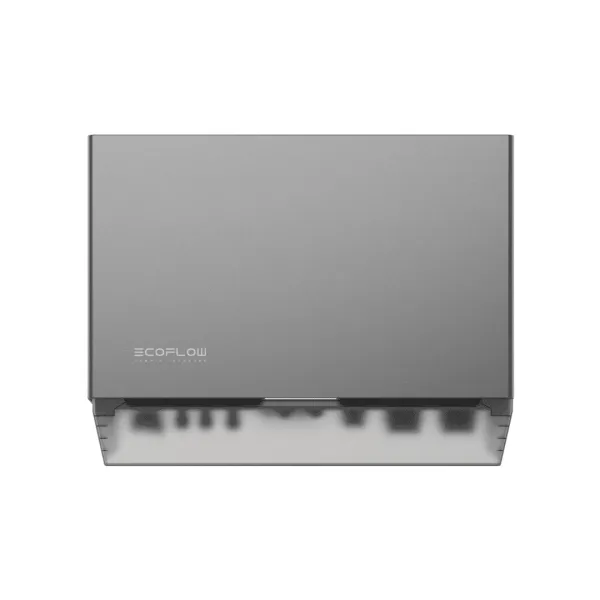
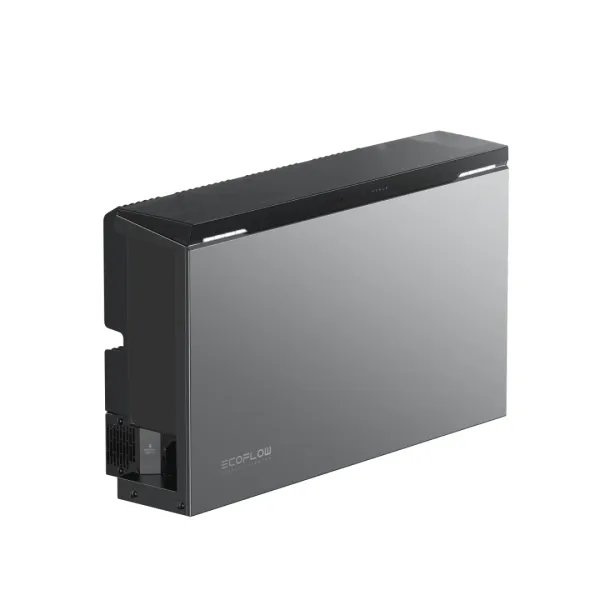
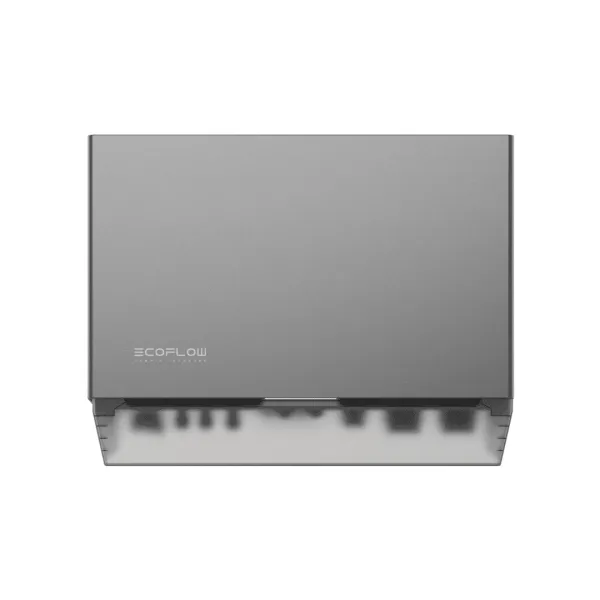
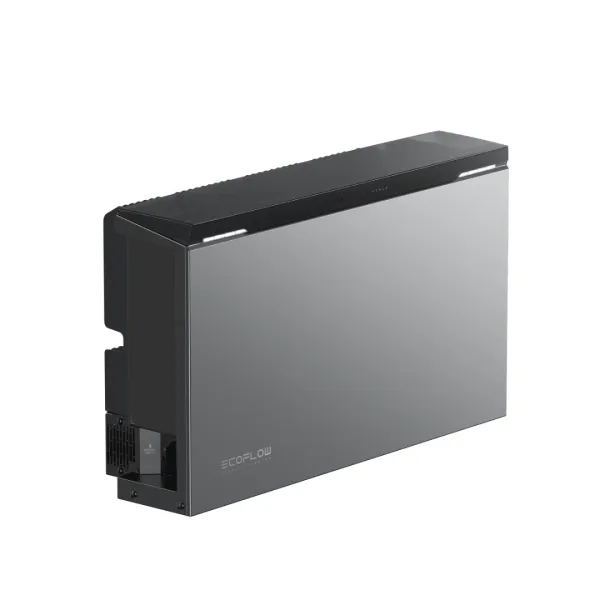
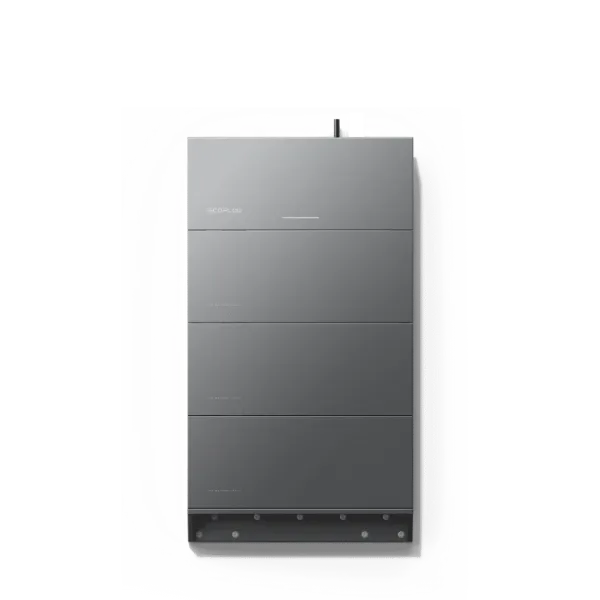
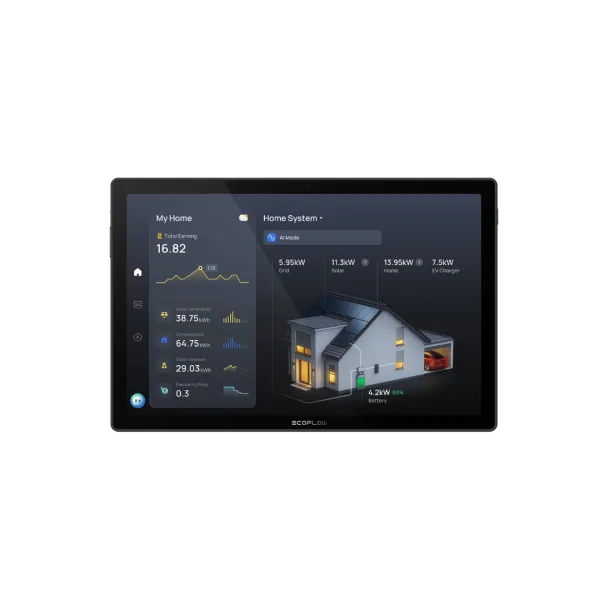
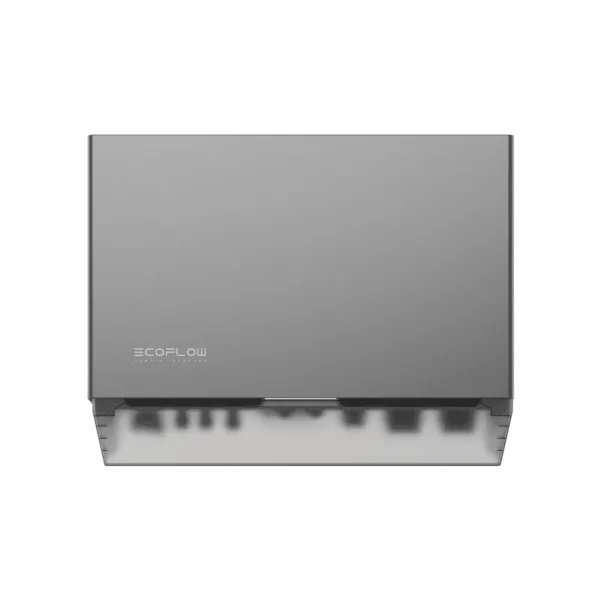
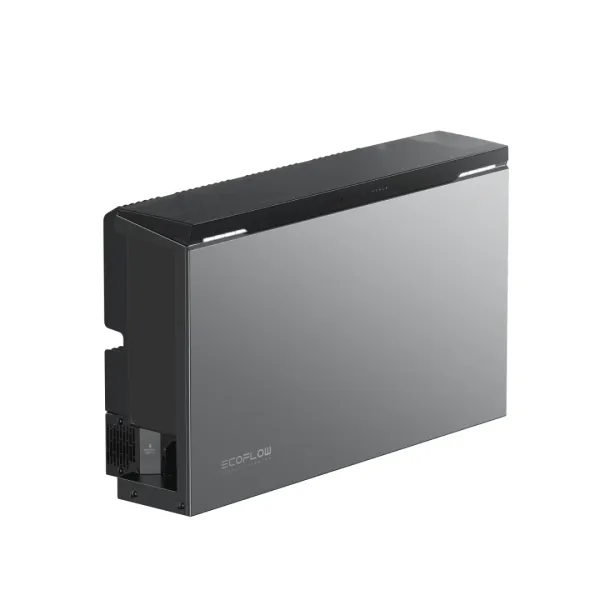
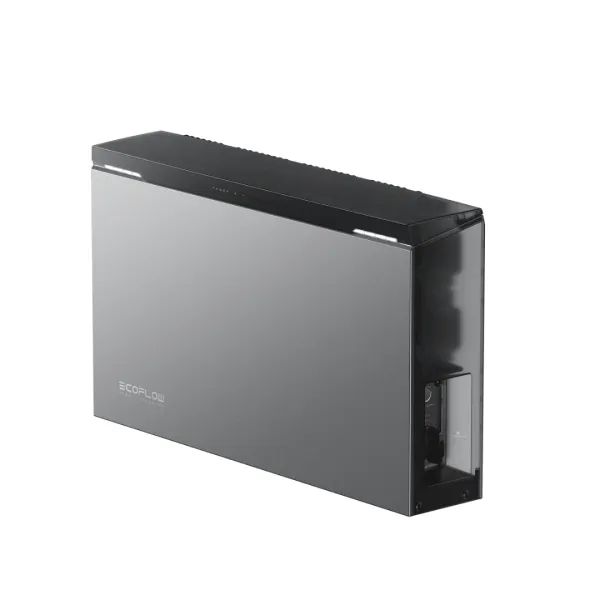
Explore our range of EcoFlow inverters and energy storage solutions!
Looking to build your solar system on a reliable foundation, where flexible scalability and continuous, outage-free power supply are just as important as raw performance? EcoFlow inverters deliver a modern solution for today's solar systems, supporting the intelligent conversion, storage and efficient use of the energy you generate throughout everyday operation.
EcoFlow Inverters
EcoFlow inverters are designed for installers and wholesale partners who want to cover solar power generation, storage, and uninterruptible power supply with a single device. These three-phase hybrid inverters are built on a high-voltage architecture and operate at a maximum efficiency of 97.6% and an MPPT efficiency of 99.9%, ensuring that the generated energy reaches consumers or the battery with minimal loss.
Models in this category are available with rated outputs of 6, 8, 10, and 12 kW, and each can be connected to up to 10–16 kW of DC solar power with two independent MPPT trackers. This oversizing range precisely meets the needs of the Hungarian market: the east–west roof layout can be operated on separate MPPT channels, while the larger array keeps the inverter running even during the early morning and late afternoon hours. Thanks to its IP65 protection rating and passive, fanless cooling, the unit can be installed outdoors, and its maintenance requirements are virtually zero—no wearing parts, no dust filters, and no noise pollution.
The manufacturer offers a 15-year warranty, and the battery side of the system—which uses LFP cells—can be expanded in a modular configuration in 5.1 kWh increments up to 45.9 kWh. Each battery module has its own DC-DC converter, which means that modules of different ages or with different states of charge can operate side by side without any loss of performance. In the event of a power outage, the system switches to backup power in approximately 20 ms, so the refrigerator, the heating circulator, and office IT equipment won’t even notice the switch. Remote monitoring works via RS485, CAN, Wi-Fi, Bluetooth, LAN, and 4G channels, using an app and a web portal—this is a significant factor in terms of service costs, as most faults can be diagnosed without the need for on-site visits.
Browse the full range of EcoFlow inverters and select the power category that best matches your project’s consumption profile and planned solar array. You’ll find additional models in the “Inverters” category, and compatible batteries in the “Energy Storage ” category.
If you’re a reseller, installer, or wholesale partner, please register with our B2B online store before purchasing your first EcoFlow inverter! Once your registration is confirmed, you’ll be able to log in to our B2B online store, where you’ll always find up-to-date information on prices, inventory, and current discounts. Once you’ve logged in to the online store, purchasing an inverter or placing an online order is quick and easy.
Do you have any questions about our products?
As a B2B partner, please contact your designated sales representative; our team is happy to assist you and answer any questions you may have regarding your selected EcoFlow inverter.
You can also find a lot of useful information in the frequently asked questions and answers below:
EcoFlow Inverter Systems
Which EcoFlow inverter should you choose: 6, 8, 10, or 12 kW?
Never base your sizing on the peak output of your solar array; instead, use two other factors: your annual consumption profile and the load to be supplied during backup operation. The four models have rated AC power outputs of 6, 8, 10, and 12 kVA in three-phase mode, and this is exactly the same as their off-grid (backup) output, with an overload capacity of approximately 1.2 times during a brief, one-second peak. On the DC side, the 6 kW model can be connected to 10 kW of solar panels, the 8 kW model to 12 kW, the 10 kW model to 14 kW, and the 12 kW model to 16 kW; thus, the smaller models allow for a higher oversizing ratio — for the 6 kW version, this results in a DC/AC ratio of 1.67, which, under Hungarian irradiation conditions, yields an annual surplus because the reduction in power during the infrequent summer peak hours is less than the gain from part-load operation in spring and fall.
For single-family home projects with an annual consumption of 6–10 MWh, the 6- or 8-kW model is the economical choice, since the instantaneous load of Hungarian households rarely exceeds 8 kW. For small business projects, heat pump systems, or electric vehicle charging projects, the 10- or 12-kW versions are the right choice, as they can handle the full load of an 11-kW AC wallbox even in reserve mode. Practical advice for calculating your needs: check the customer’s measured quarter-hourly peak power, add a 30% margin for future expansion, and select the model based on that—replacing an inverter later is always more expensive than upgrading to the next higher category from the start.
Does the EcoFlow inverter work during a power outage?
Yes, PowerOcean three-phase hybrid inverters feature a backup (EPS) output and switch to island mode in approximately 20 ms in the event of a power outage. In practice, this switchover time means that devices powered by switching power supplies—such as routers, NAS devices, boiler controllers, gas boiler circulators, and refrigerators—will not restart, because the capacitors in their power supplies bridge this interval. However, for sensitive medical or data center applications, a dedicated online UPS at the end of the chain is still recommended.
An important installation requirement is that island mode operation requires a battery and a properly wired backup output: the circuit to be protected must be routed to a separate sub-distribution panel, as powering the entire household network in island mode is rarely feasible. The backup capacity corresponds to the rated power of the selected model; thus, a 10 kW inverter delivers 10 kVA on three phases even during a power outage. During off-grid operation, the solar array also generates power, so during longer outages, the system recharges the battery during the day—this capability distinguishes a true hybrid inverter solution from simple uninterruptible power supplies.
Can the EcoFlow PowerOcean be used without a battery?
It can also be installed as a solar inverter. This setup is recommended if the customer primarily wants to implement the solar installation and plans to add storage in the next budget cycle—in this case, the design of the solar array, the DC cabling, and the inverter location are already prepared for the final, expanded system.
There are two points worth clarifying with the customer in advance. First, backup operation does not work without a battery: the battery is the energy source for the backup function; solar panels alone cannot maintain a stable off-grid system. Second, given the phase-out of net metering and the current low feed-in rates under the gross metering system, the payback period for a system without storage is significantly longer, because excess afternoon generation is fed into the grid at a fraction of its value. If the decision is made to proceed with phased installation, we recommend that the battery location, the DC cable route, and the junction box location be established during the first phase—this way, future expansion will take only half a day, rather than requiring a complete redesign.
Can the EcoFlow PowerOcean system be expanded with a battery later on?
Yes, and this is one of the system’s strongest selling points. The battery side consists of LFP modules with a nominal capacity of 5.1 kWh (approximately 4.8 kWh usable at a 95% depth of discharge); up to 9 modules can be cascaded per inverter, for a total capacity of 45.9 kWh, with a maximum of 3 modules connectable to a single junction box. Expansion does not require replacing the inverter or modifying the existing installation; it only involves the mechanical and DC-side connection of the additional modules, as well as reconfiguring the system.
The DC-DC converter built into the modules is essential because it allows batteries of different ages and internal resistances to operate in a single system without the weakest module limiting the performance of the entire array. With traditional HV batteries connected to a common DC bus, this is a major limitation; here, however, we can confidently recommend that the customer expand the system in two to three years. The cells are rated for 6,000 cycles to 70% remaining capacity, and the system comes with a 15-year warranty, so even a module installed later will easily remain within the warranty period. Always check the firmware version and network settings before expanding the system, as BMS communication only works flawlessly with the same software version. You can find the available battery modules and compatible accessories in the energy storage category.
What kind of solar system can be connected to these inverters?
The inverters operate with two independent MPPT trackers, one string per MPPT, with a maximum input current of 16 A and a short-circuit current of 24 A, a maximum input voltage of 1,000 V, and an MPPT operating range of 200–850 V. When designing strings, this 16 A limit is the most common pitfall: the operating current of today’s large-format, 210 mm-cell N-type TOPCon modules can approach this value, so for high-current panels, always check the module’s Impp and Isc ratings at the −10 °C design temperature. Sizing is straightforward with smaller-format or 182-mm-cell TOPCon and PERC modules.
On the voltage side, due to the 850 V upper MPPT limit, the string length is typically around 18–22 modules; the exact value depends on the module’s Voc value and the temperature coefficient; the open-circuit voltage at −10 °C in winter must be used as a basis to ensure that the system never exceeds 1000 V. With two MPPT controllers, two roof surfaces with different orientations or tilt angles can be managed separately—this is an advantage even in an east–west configuration and in cases of partial shading, because the weaker string does not drag down the other. DC/AC oversizing ranges from 1.33 to 1.67 depending on the model, and under Hungarian conditions, it is recommended to utilize the maximum oversizing. You can order the modules, mounting structure, and BOS components required for the system from a single source, along with a selection of compatible inverters.
SOLARKIT EcoFlow Inverter Reviews
The most prominent common theme in installer feedback regarding EcoFlow inverters is the speed of commissioning. Partners regularly emphasize that installing and commissioning the unit takes significantly less time than usual because the wall-mounted bracket and pre-wired connectors eliminate the need for special installation techniques. Several reviews note that the modular battery design also simplifies on-site logistics: the 5 kWh units are manageable in weight and can be comfortably moved by two people, unlike large, monolithic storage units.
Outdoor installation capabilities have received consistent praise. According to users, the IP65 rating provides true freedom in site selection, as the inverter does not have to be confined to a cramped, poorly ventilated utility room, where heat dissipation would compromise efficiency over the long term. This is also linked to the perception of passive cooling: installers in residential buildings particularly highlight the fanless, natural convection operation because the system remains silent and there are no subsequent complaints about noise.
Partners cite the scalability of energy storage as a commercial advantage. According to feedback, it greatly aids sales if customers are told that they can start with a smaller capacity and expand the system later without replacing the inverter—this phased investment approach often opens the door to projects where the initial budget would not have otherwise allowed for the full system. Feedback indicates that the 15-year manufacturer’s warranty is one of the most important factors influencing the decision, especially in a market where competitors typically offer a 10-year warranty.
Among operational experiences, monitoring and remote access receive the most positive mentions. According to users, the app and web portal provide a real-time overview of production, consumption, and charge levels, while service partners appreciate that a significant portion of troubleshooting can be performed remotely, which directly reduces after-sales service costs. The ability to install firmware updates remotely is also cited as an advantage. Feedback on the backup mode is unanimous: thanks to the fast switchover—approximately 10 ms—households typically only notice a power outage when notified by phone.
The most common criticisms in the reviews are the price—the system is not in the cheapest category—and the fact that configuring the island operation circuit requires careful planning on the sub-distribution side. However, the majority of feedback paints a positive overall picture: the long warranty, the safety of LFP cell chemistry, the efficiency of the high-voltage architecture, and scalability collectively provide a value proposition that installers can confidently pass on to their customers. This experience is consistent with feedback from SOLARKIT’s partners: EcoFlow inverters represent a stable, marketable solution in their portfolio that requires minimal post-installation maintenance.