Huawei Smart Logger and Smart Guard Solar Panel Meters in Industrial Systems
An industrial-scale solar power system will only deliver the expected output if all of its components operate reliably and under controlled conditions—and if a fault does occur, it must be detected immediately. The Huawei FusionSolar ecosystem addresses this challenge with two key components: the smart logger and the smart guard. The former serves as the system’s data collection and communication hub, while the latter is the intelligent switching and control unit responsible for ensuring the security of the power supply.
In this article, we’ll explore why continuous system monitoring is essential in industrial environments, what role the smart meter plays in managing production data, and how Huawei Smart Guard integrates into hybrid and energy storage systems. We’ll also show you how a complete industrial PV system is built using these devices, what benefits this offers to installers and operators, and what to look out for during design and commissioning.
Why is system monitoring essential for industrial solar systems?
An industrial-scale PV system—whether it’s a few hundred-kilowatt rooftop system or a multi-megawatt solar power plant—functions as an investment. If you don’t monitor it continuously, you’re guaranteed to lose production time that cannot be recovered later. By monitoring the solar system 24/7 and performing regular maintenance, malfunctions can be prevented, and atypical deviations in the production curve become immediately visible—troubleshooting can begin even before the owner notices the problem.
This is particularly critical in industrial settings. A solar power plant can only operate profitably if the operator has maximum visibility into the plant’s operations through an efficient and state-of-the-art monitoring system. Manual on-site inspections are not sufficient for this purpose: online monitoring allows for the continuous remote analysis of data from monitoring systems, whereas the offline, on-site method cannot be performed thoroughly in most cases due to the characteristics of solar farms.
The MSZ EN 61724-1:2017 standard classifies solar monitoring systems into three accuracy classes, and for higher-capacity photovoltaic systems—such as utility-scale or large-scale commercial solar farms—Class A or B monitoring is required. The Huawei Smart Logger fits perfectly into this category: with its professional data collection, alarm, and remote monitoring functions, it provides industrial-grade visibility into the entire system through a single platform.
The Role of Smart Meters in Industrial Power Generation
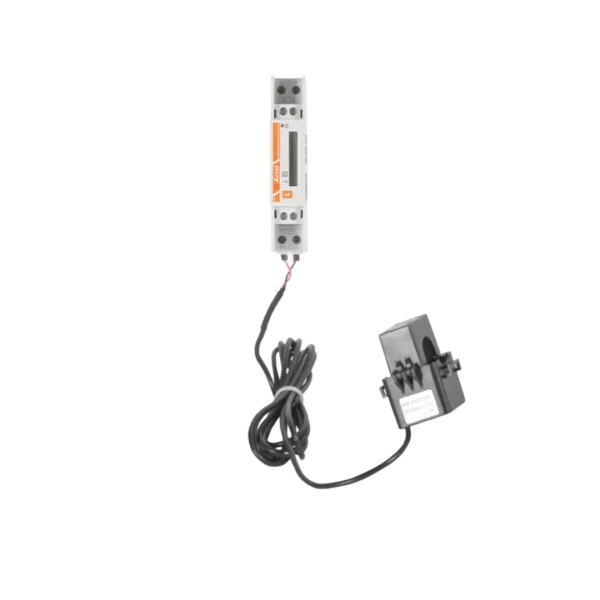
Accurate measurement is one of the cornerstones of the efficient operation of industrial solar power systems. The smart meter performs bidirectional measurement: it simultaneously tracks the amount of energy generated by the solar power system and the amount drawn from the grid. This information is more than just statistics: based on data from the smart meter, the inverter decides whether to charge the batteries or feed power back into the grid. In an industrial environment, where load and generation are constantly changing, this real-time feedback is essential for efficient energy management.
The installation and integration of a smart meter into the system depend on numerous factors that should be clarified during the planning phase—this will be discussed in more detail later in this article.
Solar Metering Device: Data Collection, Monitoring, and Remote Access All in One
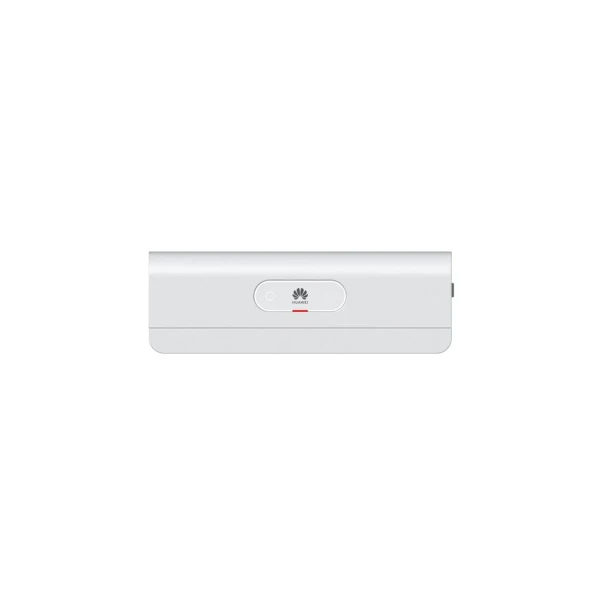
The Huawei Smart Logger serves as the system’s data collection and communication hub. The 3000A model can manage up to 80 devices simultaneously, while the 3000B version expands this capacity to 200 devices, up to 15 of which can be inverters—the latter being particularly well-suited for larger industrial and utility systems. Data communication takes place via RS485, Ethernet, and 4G channels, and the integrated web server allows the operator to access the system’s current status at any time and from anywhere via a web browser or the FusionSolar mobile app.
What a well-configured solar meter displays: real-time generation and consumption data, voltage and current values, string-level performance data, alarms, and error messages—all of which are also available in a historical view. When selecting a meter , it is therefore important to consider the size of the system and the communication infrastructure available on-site.
Integrated Management of Inverters, Meters, and Other Devices
The Huawei Smart Logger is not merely a passive data collector: it manages inverters, smart meters, energy storage systems, and other RS485- or Modbus-compatible peripherals from a single device, and acts as a bridge between different communication protocols when necessary. Huawei’s Smart I-V Curve Diagnostics technology analyzes the string-level current and voltage data collected by the inverters and automatically identifies faulty panel strings before they cause a noticeable drop in power output.
What is Smart Guard used for in an industrial environment?
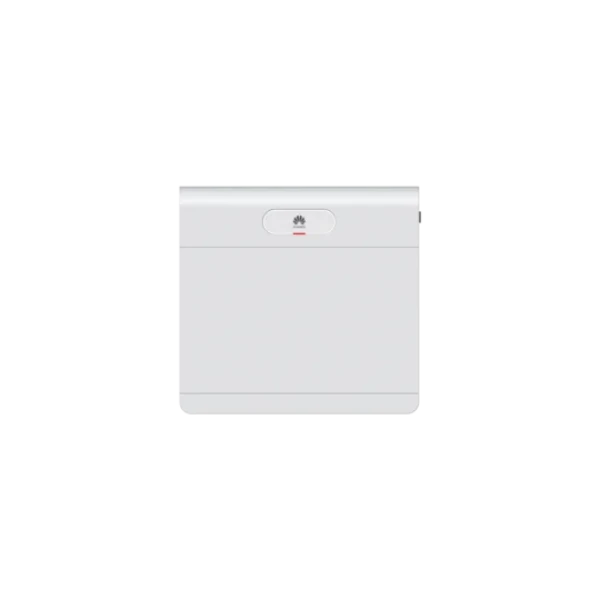
Huawei Smart Guard is an intelligent control unit responsible for power supply security; as part of the Huawei FusionSolar ecosystem, it manages automatic switching between the solar system, energy storage, and the grid. Essentially, in the event of a grid outage, it galvanically isolates consumers from the utility grid while ensuring that critical loads—powered by the battery and solar panels—continue to operate without interruption.
Power Supply Security and Intelligent Switching
One of the most important features of the Huawei Smart Guard is its extremely fast switching time of up to 20 milliseconds. In practice, this means that the switchover is virtually imperceptible: even the most sensitive industrial loads—such as CNC machines, server systems, and control systems—do not detect a power outage. In the event of a power outage, the inverter switches to island mode and supplies power to predefined consumer circuits from the LUNA2000 battery and ongoing solar generation. When grid voltage returns, Huawei Smart Guard automatically switches back, and the inverter resynchronizes with the grid. The built-in bypass switch also allows for maintenance without interrupting power supply, and even in the event of a failure in an internal contactor or control system, the home will not be left without power if the system is manually switched on.
The Role of Smart Guard in Hybrid and Energy Storage Systems
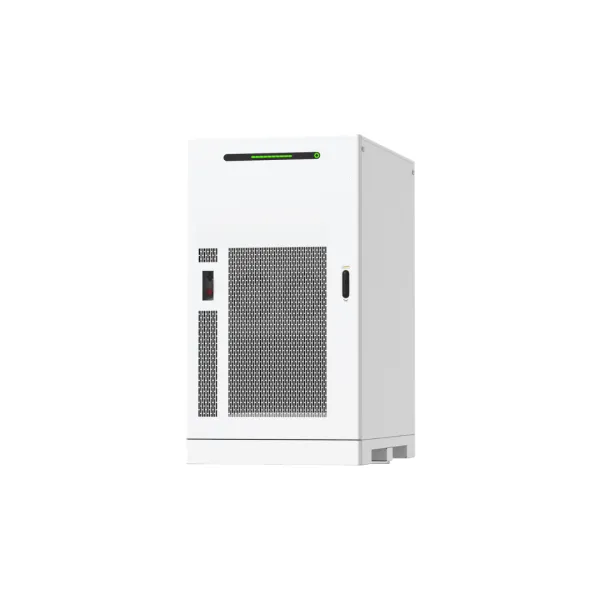
In hybrid and energy storage configurations, Smart Guard serves not only a safety function but also an energy management function. When paired with LUNA2000 battery modules, it enables Time-of-Use (TOU) mode: the battery charges at night using cheaper electricity and discharges during peak hours—when grid rates are higher—thereby reducing operating costs. Proper sizing of energy storage systems is particularly important in industrial environments, as backup time is determined by the power demand of critical loads and the available battery capacity. For example, the Huawei LUNA2000-215 industrial energy storage system operates with a usable capacity of 215 kWh and a bidirectional energy conversion efficiency of 91.3%, and by daisy-chaining multiple units, capacities in the range of MWh can be achieved.
How is an industrial system structured?
A Huawei FusionSolar-based industrial PV system is not simply a collection of interconnected devices—it is a fully integrated, interconnected ecosystem in which every component can be managed through the same platform. The system’s architecture can be understood in layers: on the DC side, the solar strings, optionally equipped with power optimizers; at the conversion level, the SUN2000 series string inverters; at the communication and data management level, the Huawei Smart Logger; at the storage level, the LUNA2000 battery modules; at the security level, the Smart Guard; and above all of these, the FusionSolar cloud platform, which provides real-time monitoring and alarm management.
In industrial systems—where power typically ranges from 100 kW to several MW—the Huawei Smart Logger 3000B model is the primary choice, as it can manage up to 200 devices in parallel and, thanks to its SFP optical ports, can be integrated into a ring-topology Ethernet network, ensuring redundancy. The smart meters (DTSU666-HW three-phase model) connect to the inverters via RS485 cabling, and the smart logger manages them all from the same single monitoring interface.
The system’s scalability is a major advantage: the LUNA2000 industrial energy storage units can be expanded modularly, allowing capacity to be increased from the initial installation without having to redesign the entire system. The Huawei SmartDesign 2.0 design tool helps contractors model the optimal system configuration as early as the proposal phase, reducing the risk of commissioning errors.
What are the benefits for contractors and operators?
One of the most frequently cited advantages of the Huawei FusionSolar ecosystem among installers is its quick and easy commissioning. Using the FusionSolar mobile app, the smart logger can be configured on-site via Wi-Fi; the devices automatically recognize each other, and the power plant can be registered by scanning a QR code. This significantly reduces the recommended commissioning time and the number of hours spent on-site.
Remote diagnostics provide the greatest value to plant operators. Using Smart I-V curve analysis, a 100 MW power plant can be inspected in roughly 10 minutes, and various error messages—including damaged panels, shading, or improper cable connections—can be pinpointed with precision without the need for on-site visits or measuring instruments. The diagnostics operate via the Huawei Smart Logger: the system initiates the I-V scanning process with a single click, the inverter collects string-level current and voltage data, and then the FusionSolar platform automatically identifies and flags faults using its built-in algorithm.
From an installer’s perspective, an additional benefit is the three-tier manufacturer service system: at the first tier, Huawei specialists respond to reported faults within 30 minutes; at the second tier, they attempt to resolve the issue remotely via online access; and on-site visits are only conducted when necessary. The inverters come with a 10-year standard warranty, which can be optionally extended to 20 years—a particularly important factor in planning lifecycle costs for industrial investments. The system can be managed on a unified platform: all settings, alerts, performance data, and reports are accessible from a single interface, which significantly simplifies the O&M (operation and maintenance) process for both the contractor and the operator.
Common Design and Commissioning Considerations for Huawei Systems
When designing an industrial Huawei system, one of the first and most important decisions is the proper selection and sizing of the inverter and data logger. According to generally accepted guidelines, the inverter’s power output should ideally be between 80% and 110% of the total power output of the solar panels; however, in industrial environments, by intentionally oversizing the DC/AC ratio—particularly in energy storage configurations—the LUNA2000 battery can absorb the excess energy, thereby minimizing derating losses.
Determining the type and location of the smart meter is also a key design consideration. For three-phase industrial systems, the Huawei DTSU666-H series of smart meters is the recommended solution. It must be connected to the inverter via an RS485 cable, and its precise physical placement—specifically, the relationship between the metering point and the consumer side—fundamentally affects the proper functioning of the feed-in limit and self-consumption optimization. You can find detailed instructions on connecting the smart meter and troubleshooting related issues on our blog.
When configuring the smart logger, keep in mind that the 3000A model can handle a maximum of 80, while the 3000B model can handle a maximum of 200 devices—this must be adjusted to the planned system size, and it is advisable to decide during the design phase whether an optical SFP port or ring-topology Ethernet redundancy is required. The FusionSolar SmartDesign 2.0 design tool is extremely useful at this stage: it models the entire system and immediately flags any configuration elements that are incompatible with other components.
One of the most common errors during commissioning is that the RS485 communication parameters for the smart meter are not correctly set in the inverter, which results in the system failing to detect consumption and switching to unregulated feed-in. It is advisable to check this in the device diagnostics view of the FusionSolar app before the first startup. It is equally important that the Huawei Smart Guard be connected and configured in accordance with the factory installation manual, with the assistance of a trained, Huawei-certified installer, as incorrect setup of the backup function will lead to a failure of the islanding protection.
FAQ – Frequently Asked Questions
What is the difference between the Huawei Smart Logger 3000A and 3000B models?
The most significant difference between the two models is the number of devices they can manage and the range of communication options. The Smart Logger 3000A model can manage up to 80 devices simultaneously via RS485, Ethernet, and 4G, and is primarily recommended for medium-sized commercial and industrial systems. In contrast, the 3000B model is capable of monitoring up to 200 devices, featuring an optical SFP port and support for ring-topology Ethernet networks, which provide redundancy—the latter offers a significant advantage, particularly for larger industrial solar power plants and complex systems built with multiple inverters. Both models feature an integrated web server and the FusionSolar mobile monitoring platform.
Is a smart meter necessary for a Huawei industrial system, and which type should you choose?
In industrial systems, the use of a smart meter is practically indispensable, as this device provides the inverter with real-time consumption and feed-in data, which form the basis for intelligent energy management. Without a smart meter, the system cannot optimally control self-consumption and energy storage, and the feed-in limit cannot be properly enforced. For three-phase industrial systems, the Huawei DTSU666-H series smart meter is the recommended solution, which must be connected to the inverter via an RS485 cable. The single-phase DDSU666-H model is suitable exclusively for single-phase applications. You can find detailed information on the exact wiring procedure and the most common mistakes in our article on smart meter installation.
How much battery capacity is needed for the Huawei Smart Guard to effectively ensure industrial power supply during a power outage?
The required battery capacity is determined by the total power demand of the critical loads and the expected backup time. As a general rule: required capacity (kWh) = critical load (kW) × expected backup time (hours), divided by the system’s efficiency (typically 0.91). Huawei’s LUNA2000 industrial energy storage units are modularly expandable, and can be configured to provide capacities of up to MWh. It is important to note that Huawei Smart Guard can only provide full backup functionality when paired with a properly sized battery system and a hybrid inverter—it cannot ensure uninterrupted power supply on its own, without a battery. During the design phase, it is worth noting that LUNA2000 systems have an operating efficiency of 91.3% with bidirectional power conversion, which is also an important input parameter when calculating life-cycle costs.
How does Smart I-V Curve Diagnostics work, and when should it be run?
Smart I-V curve diagnostics is an automatic fault detection feature based on the integration of the Huawei Smart Logger and the FusionSolar platform. With a single click, the Smart Logger sends an I-V scan command to the inverter, which collects current and voltage data from all strings and then uploads it to the FusionSolar system. The built-in AI algorithm automatically identifies one of several possible fault types—damaged panels, shading, improper cable connections, and other anomalies—and pinpoints the exact location of the fault. A full inspection of a 5 MW power plant can be completed in less than 5 minutes without the need for on-site visits or separate measuring devices. It is recommended to run this scan after initial commissioning, following any major storm or natural event, and on a quarterly basis as part of routine preventive maintenance.
Is the Huawei FusionSolar system compatible with third-party inverters or energy storage systems?
The Huawei FusionSolar ecosystem is based on a closed architecture: LUNA2000 battery modules are compatible exclusively with Huawei SUN2000 inverters, and Smart Guard also provides its full functionality when used in conjunction with the Huawei inverter family. However, the Huawei Smart Logger is capable of receiving and displaying data from RS485- and Modbus-compatible third-party devices—such as inverters, meters, and weather stations from other manufacturers—provided they comply with Huawei’s communication protocol. This partial openness provides flexibility in industrial environments—for example, when expanding an existing system or in facilities with a mixed fleet of devices—but the highest level of integration and comprehensive Smart I-V diagnostics are only available in a system consisting entirely of Huawei devices.