FoxESS Energy Storage Systems: What Independent Tests and Real-World Installation Experience Show
If you’re looking for an energy storage system for a solar power system, sooner or later you’ll come across the name FoxESS. This is no coincidence: over the past few years, the brand has not only surged ahead in market share rankings but has also proven itself in independent, scientific tests. A few years ago, we wouldn’t have believed that this relatively young manufacturer would enter the premium category so quickly, but the numbers and our own experiences tell a different story.
In this article, you won’t find generalities about FoxESS. We’ll look at what independent lab tests say about its performance, what real benefits it offers customers in terms of warranty, monitoring, and the installation process, and we’ll also show you what FoxESS energy storage looks like in everyday life as part of a solar panel system. If you’re serious about energy storage, this information will help you make an informed decision.
FoxESS Energy Storage: A Premium Brand for Modern Solar Power Systems
FoxESS was founded in 2019 and has experienced one of the fastest growth trajectories in the energy storage market over the past decade. This isn’t a marketing claim, but measured data: according to S&P Global Energy’s Residential Energy Storage Market Tracker, FoxESS ranked first globally in the residential energy storage market in 2025, while its global market share grew by 50 percent in just one year. In Europe, it also became the market leader in the United Kingdom and Poland based on shipped capacity—a market where most well-known premium energy storage brands are already present.
But market success alone is not a sufficient reason for a product to be carried by a wholesale partner. What convinced us at SOLARKIT were the results of independent performance tests. FoxESS’s energy storage system achieved a System Performance Index of 97 percent in HTW Berlin’s 2026 Energy Storage Inspection, securing first place in the 10 kW power class. The test conducted by the Technical University of Berlin is one of the industry’s most respected independent benchmarks: to date, more than 96 battery systems from 33 manufacturers have participated, including names such as BYD, Sonnen, Fronius, and Varta. FoxESS finished at the top of this field.
FoxESS was also included in BloombergNEF’s fourth-quarter 2024 Global Tier 1 Energy Storage Manufacturers list, which is based on a comprehensive assessment of product quality, technological innovation, market presence, and financial stability. This is the rating that European and American financial institutions and companies use as a reference when making partner selection decisions.
Behind the brand lies a vertically integrated manufacturing structure: FoxESS develops its own inverters and battery cell systems, with six R&D centers and more than 5,000 employees across 70 countries. This is not an assembly company—it is a manufacturer that controls the entire value chain, which is a key factor in terms of consistent quality and long-term component supply.
Why is FoxESS a better choice for energy storage on the customer side?
When purchasing an energy storage system, most buyers look at two things first: what they get for their money today, and what they’ll get from it ten years from now. FoxESS energy storage systems provide concrete answers to both questions, not just general promises.
The choice of battery chemistry is well-founded: FoxESS uses exclusively LiFePO4—lithium iron phosphate—chemistry in its systems. This technology is non-flammable, chemically stable, and retains most of its capacity even after more than 6,000 charge-discharge cycles, which translates to a service life of more than 15 years under real-world conditions. The warranty reflects this: FoxESS offers a 10-year warranty on both the inverters and the batteries, which is an outstanding commitment even in the premium category.
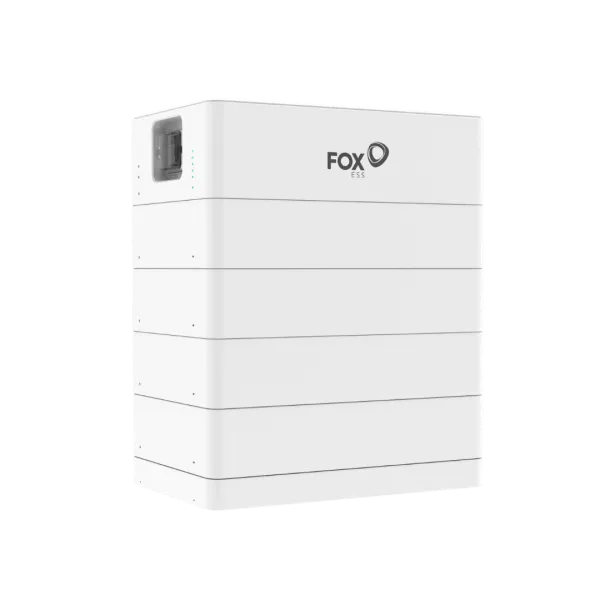
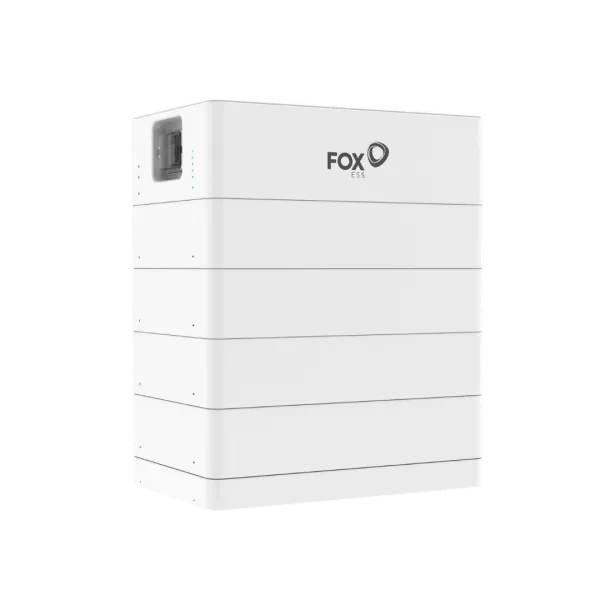
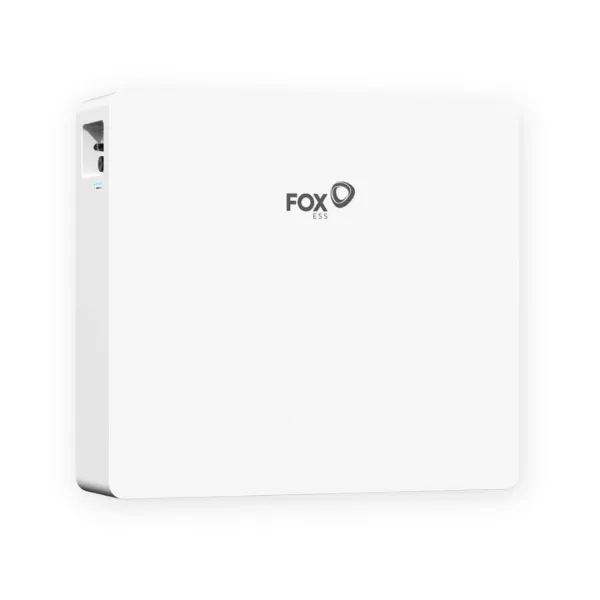
The system has a modular design. The EP12 Plus battery starts with a capacity of 11.52 kWh, but can be expanded to 46.08 kWh by connecting up to four units in parallel without having to replace the inverter. This is an important consideration for those who are currently building a smaller system but plan for future expansion, such as charging an electric car or installing a heat pump. The FoxESS energy storage lineup includes units with an IP65 protection rating, which can be installed both indoors and outdoors.
As for price: FoxESS offers one of the best value-for-money ratios in the premium category. You get performance, warranty coverage, and manufacturer support that were previously only available from the highest-priced brands—but FoxESS delivers this level of quality at a more affordable price.
The issue of winter operation deserves special attention: FoxESS batteries are available with a built-in heating function, which guarantees reliable charging and discharging performance even in low-temperature environments. This is not standard in the energy storage market and is particularly relevant in the Central European climate.
FoxESS Energy Storage App and Monitoring: Why Is User-Friendly Operation Important?
In a good energy storage system, the app is not an optional add-on but the foundation of daily use. Through the FoxCloud app, you can monitor solar panel production, battery charge levels, grid import and export, and household consumption in real time. The data is available in daily, weekly, and monthly breakdowns, making it easy to track the self-consumption rate and return on investment.
The FoxCloud app is compatible with all hybrid models of FoxESS inverters and also allows users to set charging and discharging time windows, which is particularly useful in the case of dynamic electricity rates. If electricity is more expensive during peak hours, the app can be used to charge the system in advance during cheaper periods, allowing you to consume your own energy during the more expensive time windows.
Based on user feedback, the app is relatively intuitive to use, though detailed system monitoring is also available on the installer side, which is important for service and warranty management. The FoxESS system can also be integrated with third-party energy management systems via an open API.
For which solar power systems do we recommend FoxESS energy storage?
FoxESS energy storage is not designed for just one type of user. Due to the system’s scalability and the breadth of the product family, it can be effectively applied from small residential systems to commercial-scale projects, but the specific decision is always determined by the actual consumption profile and objectives.
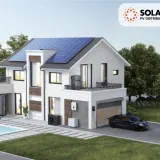
For residential solar systems, the most common goal is to increase self-consumption: storing energy generated during the day but not currently in use, and then using it in the evening. The combination of the FoxESS hybrid inverter and the EP12 Plus battery provides a ready-made solution for this, and there’s no need for a separate device to provide power outage protection: the system switches to backup mode in 4 milliseconds, which is imperceptible for most household appliances. In our article “Comparison of Energy Storage Systems,” you’ll find a more detailed overview of how FoxESS compares to other systems in commercial and industrial projects.
With dynamic electricity rates, the economic benefits of the energy storage system increase even further. If evening peak-hour electricity is more expensive than daytime rates, you can use the FoxCloud app to configure the system to charge the battery during the cheaper periods and avoid drawing power from the grid during the more expensive hours. This feature is particularly relevant as variable rates become increasingly widespread in Hungary and the region.
For commercial and industrial applications, FoxESS’s higher-capacity systems—such as the P3-Pro series or the TMax All-in-One C&I solutions—are suitable options, as they can be configured for capacities exceeding 100 kW. These systems are suitable for peak shaving, grid load optimization, and increasing energy independence.
Frequently Asked Questions
What monitoring options are available for the FoxESS system?
Through the FoxCloud app, you can monitor solar panel production, battery charge level, grid import and export, and household consumption in real time—all via both mobile and web interfaces. The app also allows you to set charging and discharging time windows, which is particularly useful for dynamic electricity rates. The system can also be integrated with third-party energy management systems via an open API, offering a flexible solution for those considering more complex automation.
What capacity FoxESS energy storage system is needed for an average single-family home?
The daily electricity consumption of an average Hungarian household ranges from 8 to 12 kWh. With a rated capacity of 11.52 kWh and a 90 percent depth of discharge, the EP12 Plus can cover typical evening and nighttime consumption. If demand is higher—for example, if you plan to charge an electric car or use a heat pump—the system can be expanded to up to 46.08 kWh with four parallel units, without needing to replace the inverter.
How does the FoxESS system work during a power outage?
The FoxESS hybrid inverter has a built-in backup function and switches to battery power within 4 milliseconds in the event of a power outage. This ensures a seamless transition for most household appliances, including the refrigerator, heating system, and IT equipment. The backup function works without the need to install a separate backup box, which reduces both the investment cost and the complexity of installation.
Does the FoxESS battery operate reliably in winter?
Some FoxESS energy storage systems feature built-in battery heating, which ensures normal charging and discharging performance even at low ambient temperatures. The discharge temperature range for LFP cells is between –10 and +55 degrees Celsius, and models equipped with the heating function can also be charged at temperatures below freezing. This is particularly important for outdoor installations, which is one of the most common concerns in the energy storage market in the Central European climate.
What is the difference between the FoxESS H3 and P3 series hybrid inverters?
Both series are three-phase hybrid inverters compatible with FoxESS batteries, but the P3 5- and 6-kW series feature two independent MPPT inputs, while the H3 5- and 6-kW models have three. This means that the P3 series can independently manage solar string arrays installed on multiple roof planes with different orientations, which is a significant advantage for properties with shaded areas or complex roof geometries. The H3 series is the optimal choice for systems with a simpler layout and a more uniform roof surface.