Setting Up a Backup System with FoxESS: What Can Be Operated During a Power Outage?
A power outage isn’t just a theoretical risk for us either: after a summer storm, the house can be plunged into darkness for hours, and the solar panel alone won’t help in such situations, even if the sun is shining. First, we’ll discuss the role of the backup system in a FoxESS setup. Next, we’ll examine how the solar panel behaves during a power outage when the system also includes energy storage. Then we’ll clarify what kind of FoxESS inverter and battery are actually needed for emergency operation, and what to keep in mind during installation.
We’ll specifically address whether it’s better to consider a full-house power supply or a separate emergency load circuit. We’ll go through the high-power loads that can bring the emergency system to its knees in a matter of seconds. We’ll also explain how the State of Charge (SoC) determines the actual runtime during a power outage.
When sizing the system, we’ll use specific kW and kWh values so you don’t have to rely on guesswork when designing your backup system. At the end of the article, we’ll summarize what the installer should pay attention to during installation and commissioning.
The Meaning of the Backup Function in a FoxESS System
In practice, the backup function refers to a separate emergency output on the inverter. During a power outage, the system safely disconnects itself from the public grid and continues to supply power to pre-designated loads via this output. This disconnection is not a convenience feature: the EN 50549-1 and IEC 62116 standards require that grid-connected inverters disconnect within two seconds of a grid outage to prevent voltage from reaching the line under repair.
It is important to note that this is not the same as full off-grid operation. The FoxESS backup does not promise that the home will continue to operate unnoticed with all loads, but rather that basic functions (or those connected to the critical load circuit) will remain safely available. The EPS output power is limited and supplies power only to the circuit that the installer has actually connected. During the day, solar panel generation also contributes to this circuit when the sun is shining.
With FoxESS inverters, the switchover typically occurs within 10–20 milliseconds, so lighting, a router, or a refrigerator connected to the EPS circuit continues to operate virtually without interruption. A desktop computer, however, may reboot even within this timeframe, so a separate uninterruptible power supply (UPS) is required for truly uninterrupted power.
How a solar panel works during a power outage with the FoxESS system
The moment a power outage occurs, the FoxESS inverter detects the loss of grid voltage, opens the grid-side relay, and energizes the emergency output within a few milliseconds. From that point on, the inverter itself provides the reference voltage and frequency; in other words, it does not synchronize with the grid but instead maintains the system’s operation.
The primary source of energy at this time is the battery. During the day, the solar panel also kicks in: it covers the power consumption of the emergency circuit and feeds any excess back into the battery, allowing the system to survive a power outage for up to several days. At night, however, only the stored energy is used.
This leads to the most important rule: without a battery, there is no backup. The emergency output of a solar system without energy storage will not activate, no matter how bright the sun is shining. It’s also worth increasing the Min SoC (On Grid) value, as this maintains the reserve from which the power outage response begins. If the battery has been completely discharged, FoxESS storage units can be restarted using the black start function: in most cases (e.g., with EP6 or EP12 energy storage units), you must press the power button on the main battery three times for 1–4 seconds each within 30 seconds.
What FoxESS inverter and battery are required to set up a backup system?
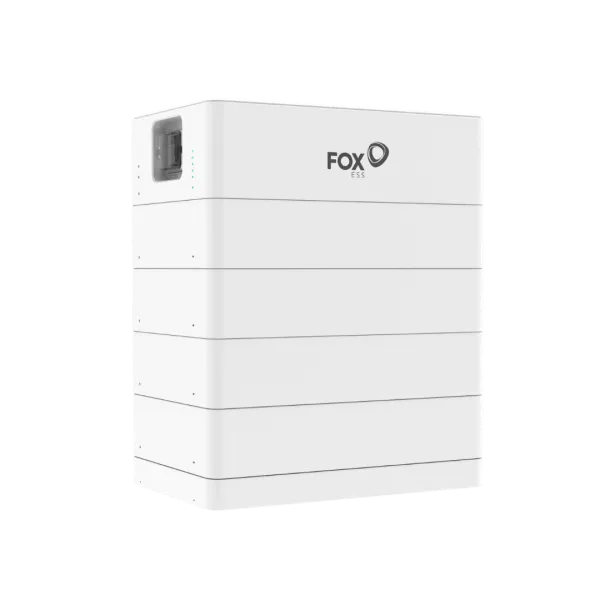
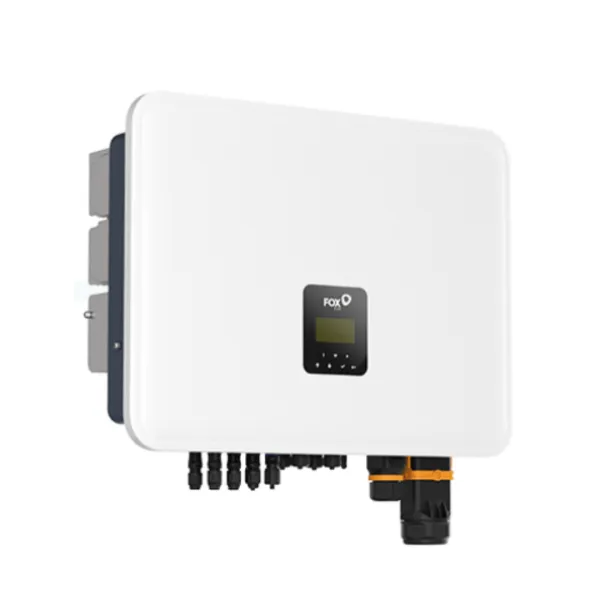
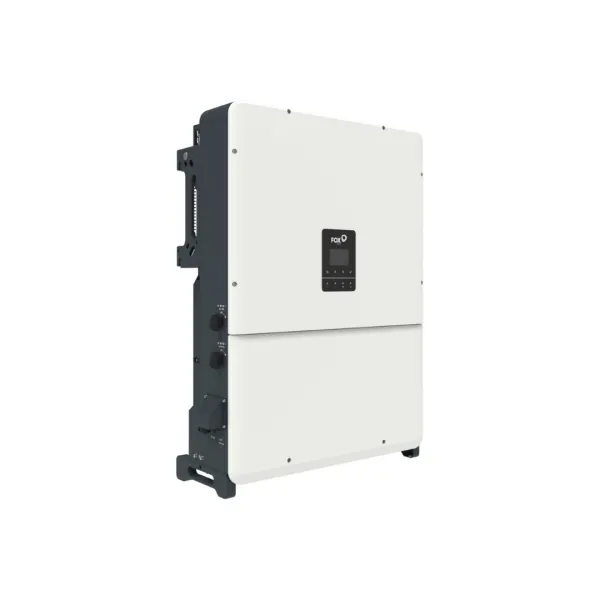
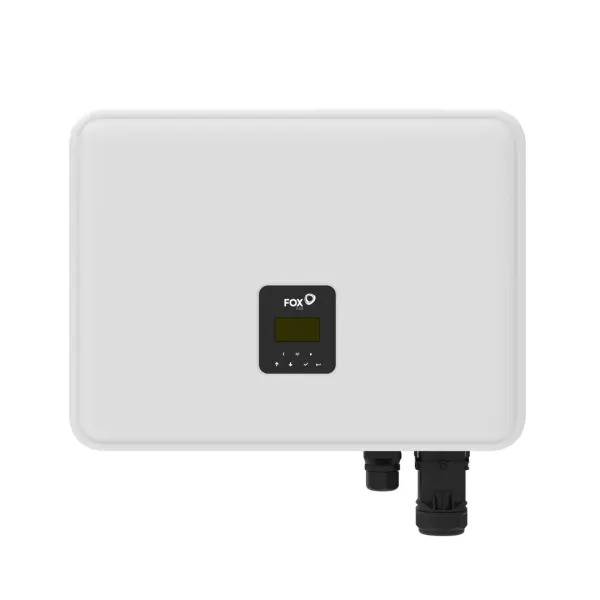
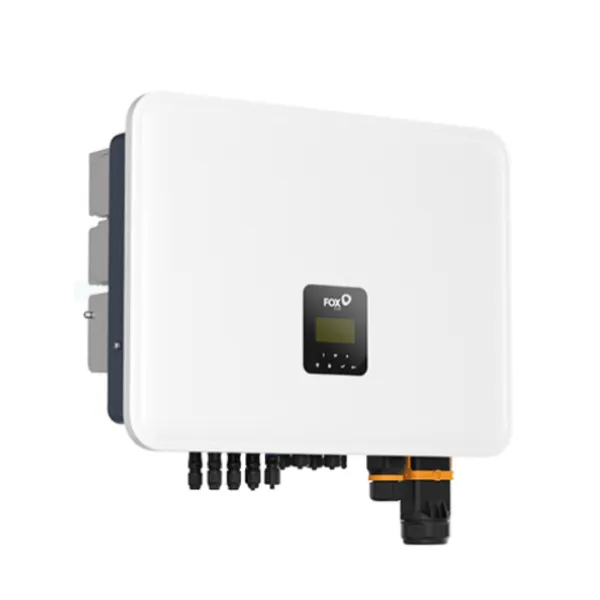
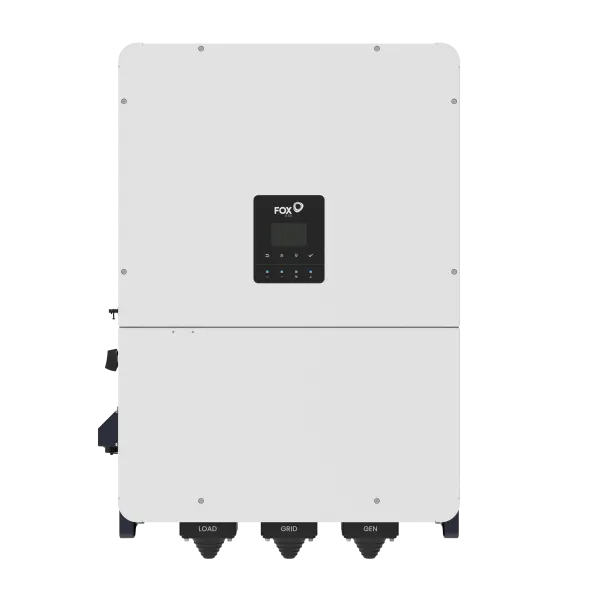
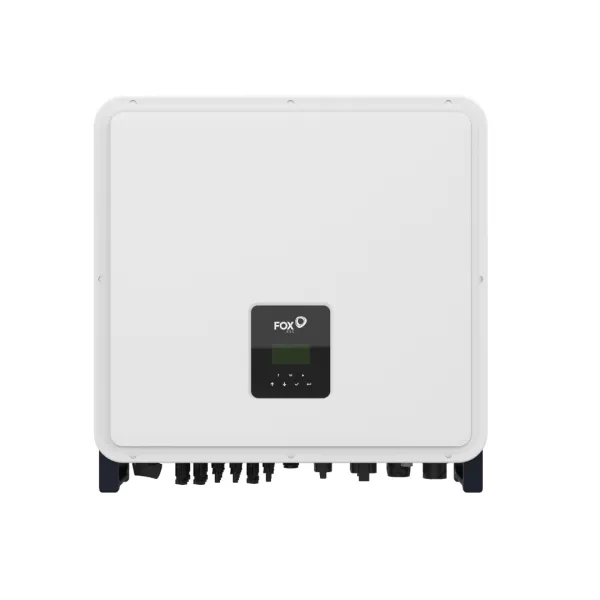
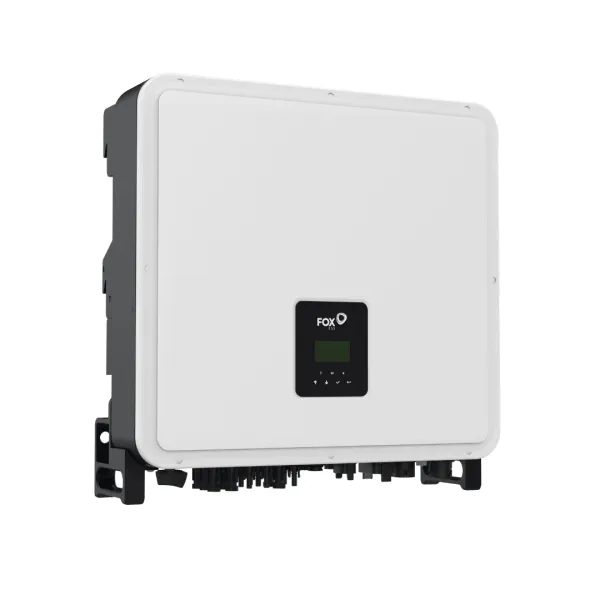
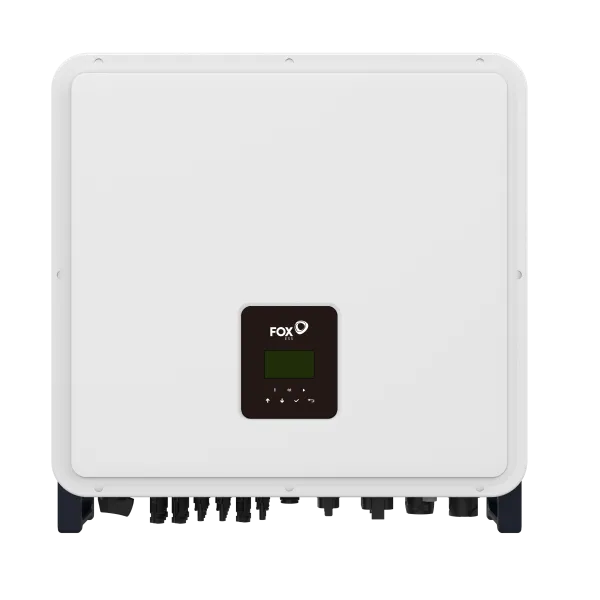
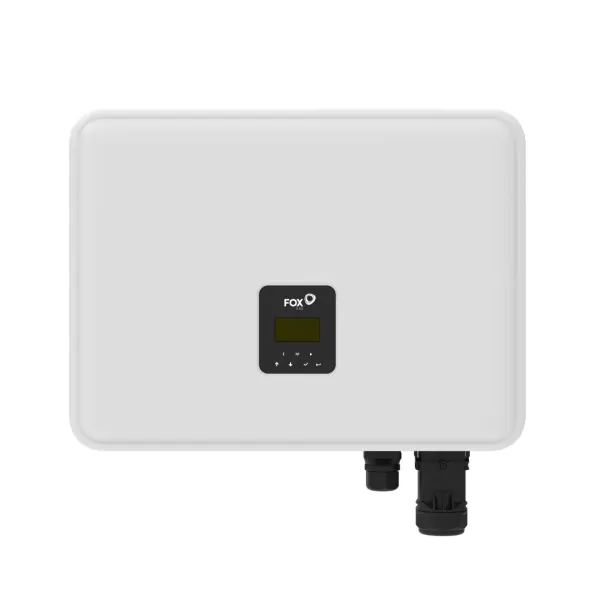
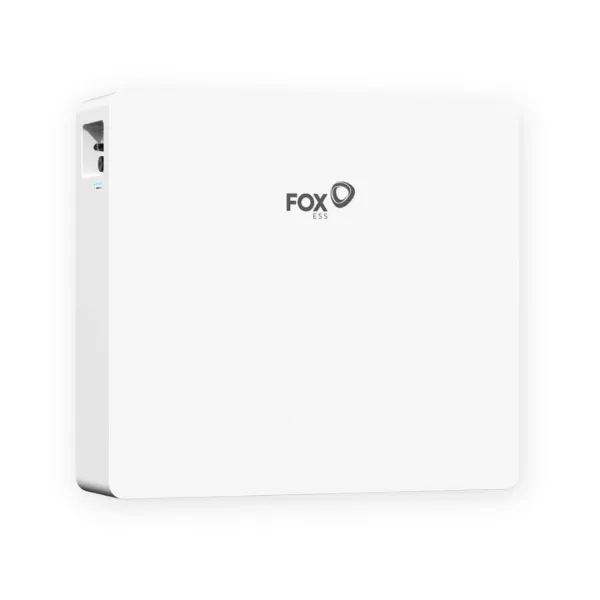
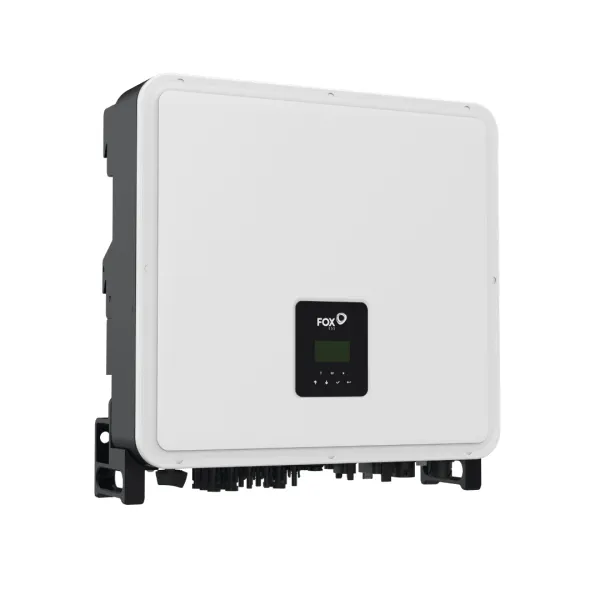
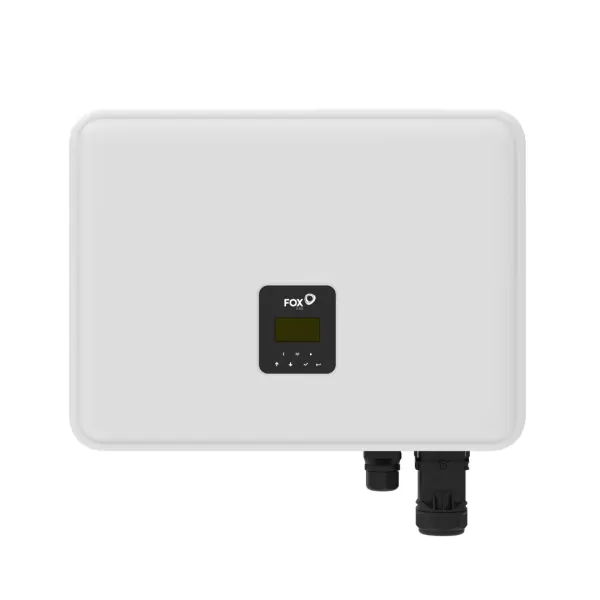
Setting up a backup system depends on two conditions: you need a hybrid inverter equipped with an emergency output, and an energy storage system connected to it. In the FoxESS lineup, the single-phase H1 series is available in the 5–6 kW range, while the three-phase H3 and P3 series are available in the 5–15 kW range, and all of them support emergency operation.
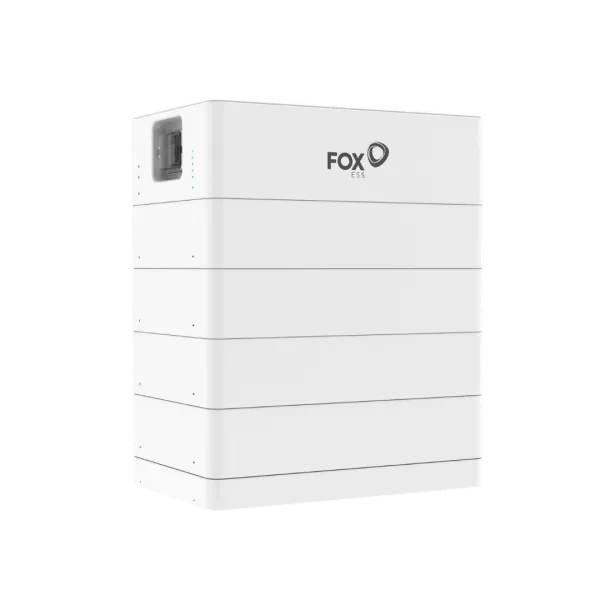
The deciding factor in your choice isn’t the solar panel’s power output, but rather how much load needs to be supported during a power outage. The power output of the emergency output typically matches the inverter’s rated power, so a 5 kW unit will not deliver more than 5 kW even during a power outage. FoxESS inverters use high-voltage LFP batteries. Always check compatibility based on the manufacturer’s list, because with a non-FoxESS battery, emergency mode typically won’t even start, and the battery won’t charge, since the FoxESS environment is proprietary.
What should you pay attention to when connecting the EPS output?
The emergency power circuit must never be connected back to the utility-side distribution panel, as this causes backfeeding and creates a life-threatening situation. The correct solution is a separate sub-distribution panel to which only the designated load circuits are connected, equipped with its own circuit breakers and a ground fault circuit interrupter (GFCI).
The cable cross-section must be sized based on the inverter’s rated emergency operating current, not on the total household power input. It is also important to note that the grounding points for the grid and emergency outputs are not shared by all devices; therefore, the grounding configuration must be checked separately.
If the goal is to power the entire home, a transfer switch is required. A manual transfer switch is a more cost-effective solution, but someone must be home; the FoxESS EPS Box performs the switch automatically and requires only three wires to connect to the inverter. The box selects between the grid and emergency power supplies for the load. The manufacturer specifically notes: in island mode, the load must not exceed the inverter’s maximum output power.
Proper configuration and isolation of the neutral conductor during EPS operation
In normal operation, the system has exactly one neutral-to-ground connection at the connection point. In emergency mode, however, the inverter acts as a small generator and requires its own reference point.
The ground fault circuit interrupter monitors the difference in current between the phase and neutral conductors and trips only when this difference occurs. Without a reference point, the ground fault current has no return path, so the neutral conductor current remains virtually unchanged, and the protection does not activate.
The solution is a separate isolating relay that closes the local neutral-to-ground bridge when the power grid fails and opens it when power is restored. Two permanent connections must never exist in the system, as this would trip the residual current circuit breakers. During commissioning, measuring the neutral conductor current and the neutral-to-ground voltage is a mandatory step.
Full-system backup or a separate emergency load circuit?
You can choose from four levels, and the difference is not a matter of preference, but of cost and risk.
The simplest option is a dedicated emergency outlet: it’s inexpensive, but it can only power one or two devices. In practice, the most commonly recommended solution is a separate sub-distribution panel with three to eight designated circuits, such as lighting, refrigerator, freezer, boiler control, and router. The advantage is that high-power loads are physically isolated, so accidental overloads cannot occur.
A full-house power supply is more convenient but requires discipline: the owner must constantly keep the load below the rated capacity. This is cheaper with a manual transfer switch but more convenient—though more expensive—with an automatic transfer switch.
One fact that settles the debate: overloading the emergency circuit cuts off the backup power for at least five minutes, and repeated occurrences can cause permanent damage to the inverter. If you’re planning to add a storage system to your solar array now, a separate sub-distribution panel offers the best value for money and can be expanded later to a whole-house solution.
Which high-power loads can cause problems?
Two types of loads cause problems, and they must be handled separately.
The first is motorized loads. During direct startup, the inrush current of an electric motor can reach 600–800 percent of its rated value; thus, a 1-kW well pump may draw 6–8 kW for a split second. This surge can trip the emergency circuit breaker, even if the continuous power consumption is low. With a soft starter or variable-frequency drive, the starting current can be limited to 300–400 percent.
The second group consists of large, continuous resistive loads: electric water heaters, ovens, induction cooktops, and electric vehicle chargers. These draw 2–11 kW continuously and can drain the battery in a matter of hours. Heat pumps are a special case: modern inverter-driven compressors start up smoothly, but during the heating season they continuously draw 1–3 kW, so it only makes sense to include them in the emergency circuit if you have a high-capacity storage unit.
The recommendation is simple: these loads should be excluded from the emergency power circuit. If the solar panels are generating power, some of them can be reconnected during the day, but it’s not worth planning on them.
How does SOC affect runtime during a power outage?
Operating time is calculated using a simple formula: available energy divided by the current load. The battery’s SOC value indicates how much energy is actually available, while the set minimum determines how low the charge level can go.
Let’s look at an example with a 10.4 kWh storage system. If the power outage begins at 80 percent charge and the Min SOC is 10 percent, then roughly 7.3 kWh is usable. With an average emergency load of 500 W, this amounts to about 13–14 hours; with a load of 1.5 kW, however, it’s only 4–5 hours. When calculating, it’s advisable to account for a 5–8 percent loss due to the inverter’s efficiency and to add in daytime recharging separately.
FoxEss energy storage systems are modularly expandable, so if this is insufficient, the operating time can be extended by increasing the SoC battery capacity.
The Meaning of SOC in Battery Operation
SoC stands for State of Charge. It expresses, as a percentage, how much of the available capacity remains: 100 percent means a fully charged battery, while 0 percent means an empty battery. The inverse of this is the depth of discharge, which is simply 1 minus SoC.
For lithium iron phosphate cells, voltage is not a good indicator of charge level because the discharge curve is nearly flat over most of its range. Therefore, SoC is an estimate made by the battery management system, not a direct measurement: it is calculated from current, voltage, and temperature data.
The practical implication: while the data sheets for commercial LFP batteries specify a depth of discharge of 90–95 percent, an SoC range of 10–90 percent is recommended for daily cycling, as this results in a longer service life. For emergency backup, it’s advisable to set a higher lower limit so that there is sufficient charge to restart the system in the event of a power outage.
Size the FoxESS backup system appropriately!
Sizing involves four steps, each of which involves calculations.
First, list the devices that will be included in the emergency power circuit and add up their continuous power consumption. A typical basic package (lighting, refrigerator, freezer, boiler control, router, and a few outlets) has a peak power consumption of 400–800 W, but an average of only 250–350 W, since the compressors run cyclically.
Second, identify the appliance that draws the highest startup current: the inverter must be able to handle two to three times its rated peak load capacity.
Third, determine how many hours of power are needed. An average of 300 W over 24 hours equals 7.2 kWh.
Fourth, divide this by the usable SoC range and efficiency: with an 80 percent SoC range and 90 percent efficiency, this equates to approximately 10 kWh of rated capacity.
This figure explains why a storage system of around 10 kWh and a 5 kW inverter are the most common starting points for residential systems. If this is too much, don’t increase the storage capacity; instead, remove circuits from the emergency distribution panel.
SOLARKIT Recommendation: Here’s what the installer should pay attention to during installation and commissioning
In our experience, most problems arise not from the equipment itself, but from the details of the installation. These five points are the most common recurring sources of error.
Start with an on-site survey of the existing residential distribution panel, even before the material specifications are finalized. Route the emergency circuits to a separate sub-distribution panel, sizing the cable for the emergency circuit’s rated current.
Document the neutral-to-ground configuration; during commissioning, measure the neutral-to-ground voltage in emergency mode and record the trip time of the circuit breaker.
Commissioning does not end with the settings: in accordance with IEC 62446-1, simulate a live grid disconnection, including the load that causes the largest inrush current.
Set the Min SoC (On Grid) reserve, and describe in the handover report to the customer what functions in emergency mode and what does not. Finally, clearly label the emergency distribution panel and the transfer switch, because during a power outage, in the dark, no one is going to look for a wiring diagram. The FoxESS energy storage test results provide a good benchmark for the expected performance you promise the customer.
Frequently Asked Questions
Does the FoxESS emergency power system work without a battery?
No. The emergency output only activates when an energy storage system is connected. A grid-connected system shuts down during a power outage due to islanding protection in accordance with EN 50549-1, even if the panels are still generating power.
How long will a 10 kWh storage system last during a power outage?
With an average emergency load of 250–350 W, it will last roughly a full day; at 1.5 kW, however, it will last only 5–6 hours. The exact runtime is determined by the battery’s initial state of charge (SoC) and the set lower limit, and is extended during the day by solar recharging.
Will the well pump or heat pump start in emergency mode?
It depends on the starting surge. For direct-start motors, the inrush current can reach 600–800 percent of the rated value, which can shut down emergency operation. With a soft starter or variable frequency drive, this can be limited to 300–400 percent, allowing the pump to be connected to the circuit.
Does emergency operation trigger the uninterruptible power supply (UPS)?
For most loads, yes, because the switchover takes place within 10–20 milliseconds. For servers, desktop computers, and medical devices, however, a separate UPS is still recommended, as these devices may reboot even within that timeframe.
Is a separate neutral-to-ground relay required for the emergency power circuit?
It depends on the device. Some inverters internally close the bridge when the grid fails, while installers have measured a floating neutral in emergency mode on others. In such cases, a separate relay is required that closes the connection only for the duration of the power outage. Two permanent bridges are prohibited because they will trip the circuit breakers.