Outdoor Installation of Energy Storage Systems: Temperature, IP Rating, and Installation Guidelines
The location for a battery purchased to complement a solar power system is rarely obvious: in many homes, there simply isn’t a free wall in the garage or utility room. Therefore, the first question is always whether an energy storage system can be installed outdoors and what environmental factors might affect an outdoor battery.
In this article, we’ll go over what the IP rating of energy storage systems means and what IP protection level is recommended for outdoor installation. We’ll also dedicate a separate section to the temperature range within which an outdoor battery operates safely: how cold temperatures affect performance and charging, what happens at excessively high temperatures, and below what temperature in degrees Celsius it’s advisable to design a heated storage unit.
Finally, from a practical standpoint, we’ll look at where and how a FoxESS battery can be safely installed outdoors, when mechanical protection is necessary, what spacing and ventilation rules must be followed during outdoor installation, and what the most common mistakes are when installing an energy storage system outdoors. The information provided here is based on manufacturer data sheets and relevant standards, not on general advice.
Can an energy storage system be installed outdoors?
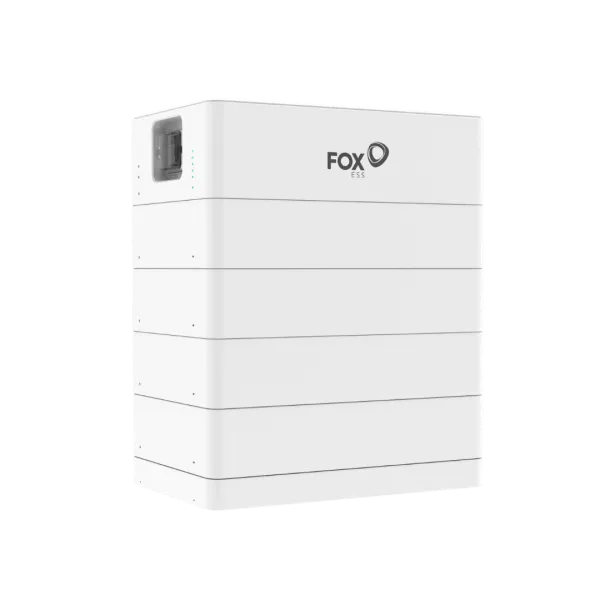
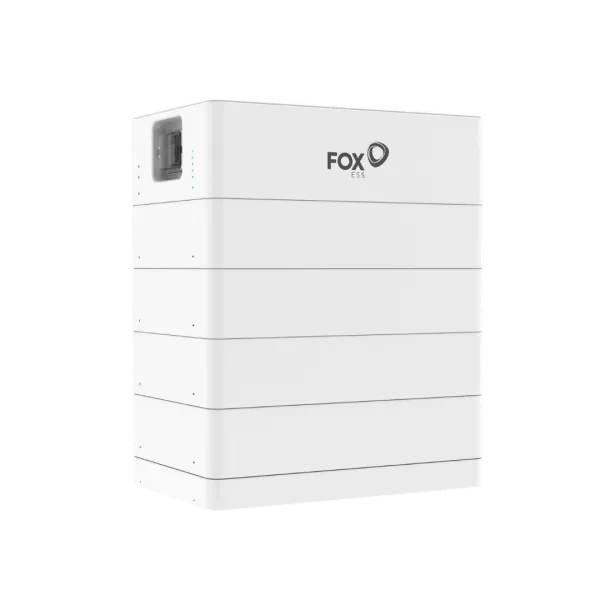
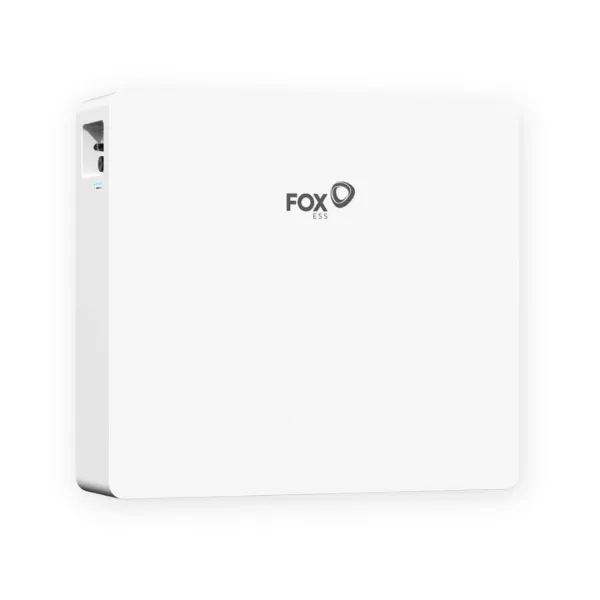
In short: yes, but not all of them. Installing an energy storage system outdoors is only an option if the manufacturer has specifically certified the given model for this purpose, and this is stated in the data sheet. A significant portion of today’s residential LiFePO₄ batteries meet these criteria: according to the FoxESS EP12’s manufacturer’s data sheet, the module has an IP65 rating, is cooled by natural convection, and permits installation in both outdoor and indoor locations. This is also confirmed by the international distributor’s documentation: the durable, IP65-rated design makes the module suitable for both indoor and outdoor installation.
However, the rating alone does not mean you have free rein. According to international installation practices, prolonged exposure to direct sunlight is not recommended, as continuous heat stress reduces efficiency, accelerates aging, and shortens the service life; therefore, it is advisable to choose a shaded, well-ventilated location or a protective structure. It’s also worth clarifying the warranty terms before signing a contract, as most battery manufacturers make warranty validity contingent on approved outdoor installation.
What environmental factors can affect an outdoor battery?
A unit located outdoors is subjected to entirely different stresses than one in a heated garage. Four groups of factors should be considered separately.
Heat and direct sunlight. Direct afternoon sunlight is the most critical factor, as it can raise the battery’s internal temperature well above the ambient air temperature; prolonged heat exposure accelerates aging and degrades long-term performance.
Cold. In cold weather, the available capacity decreases and charging performance deteriorates; the BMS may limit, slow down, or even disable charging.
Moisture and condensation. Due to daily temperature fluctuations, moisture condensing inside the casing forms pathways between conductive surfaces, triggering corrosion on circuit boards, connectors, and temperature sensor wires.
Dust, salt, and air pollution. In environments with humid, salty air, deposited particles oxidize the connectors and the enclosure, which increases contact resistance, causes localized heating, and ultimately leads to connection failures.
None of these factors alone precludes the use of outdoor batteries, but together they clearly explain why every reputable manufacturer recommends a shaded, well-ventilated location protected from precipitation. We address the risk of mechanical damage in a separate section.
What does the IP rating of energy storage devices mean?
IP stands for Ingress Protection. In Hungary, the classification is defined by the MSZ EN 60529:2015 standard, and internationally by IEC 60529; the protection levels are determined through practical testing.
The code consists of two digits: the first indicates the level of protection against solid objects and dust, while the second indicates the level of protection against water; in both cases, a higher number signifies stronger protection.
However, it’s important to be aware of one limitation. IP protection deals exclusively with the ingress of solid objects and moisture; it provides no information regarding UV resistance, chemical resistance, or explosion protection. Therefore, even an enclosure with a high protection rating does not eliminate the need for shading.
What IP protection rating is recommended for outdoor installation?
For outdoor use, IP65 is the entry-level rating: this rating provides complete protection against dust and protection against low-pressure water jets from any direction. Given typical precipitation conditions in Hungary, this covers rain, splashing water, and dust.
In more exposed locations, IP66 provides greater protection, as this rating also protects against powerful water jets.
In residential applications, IP65 is the standard: the FoxESS EP12 Plus’s factory data sheet also specifies this rating, with natural convection cooling, for wall-mounted or floor-standing installation, indoors or outdoors. This provides sufficient protection as long as the unit is not exposed to a constant stream of water, placed in a flood-prone pit, or left in a snow-drifted nook. Before installation, check the entire system, not just the heat exchanger: the junction box used to connect multiple modules is also IP65-rated, and the cable entries must meet the same standard.
What is the safe operating temperature range for an outdoor battery?
You’ll find two separate ranges listed in the manufacturer’s data sheets, and it depends on which version we’re discussing. For the standard model, according to the FoxESS EP12 data sheet, charging is permitted between 0 and 55 °C, and discharging between -10 and 55 °C. The heated EP12 Plus has a significantly wider range: both charging and discharging can take place between -25 and 55 °C, because the built-in heater brings the cells into the safe range before charging begins. Neither of these values represents ideal operating conditions, but rather the operational limits: the optimal range for lithium cells is much narrower, roughly between 15 and 35 °C.
How does cold weather affect the performance and charging of energy storage devices?
Discharging and charging are two different processes. You can discharge the battery even in cold weather, but you’ll get less energy: below freezing, the recoverable capacity can drop to 50–70 percent of the nominal value because internal resistance increases.
Charging, however, has a strict limit. When charged below freezing, lithium ions do not incorporate properly into the anode; instead, metallic lithium precipitates on its surface, which causes irreversible, cumulative capacity loss and cell failure. For this reason, a high-quality BMS disables charging below zero degrees and only allows it to resume once the cells have warmed up.
What happens to the battery at excessively high temperatures?
There is no such sharp cutoff point on the upper end; here, gradual degradation is the problem. Generally, above 35 °C, the chemical processes within the cell accelerate, leading to faster degradation and greater thermal stress. There is measurement data to support this: when the operating temperature was raised from 25 °C to 55 °C, the degradation of maximum charge capacity increased from 4.22 percent to 13.24 percent after 260 cycles. The device compensates for this with a protective mechanism: in high heat, generally above 40 °C, the control system reduces the charging and discharging power, and at the upper limit of 55 °C, it shuts down. This ensures safe operation, but it reduces the usable capacity precisely on the hottest summer days.
At what temperature in Celsius should a heatable storage system be designed?
The answer is simple: 0 °C. This is the threshold below which charging becomes risky, and below which most manufacturers explicitly prohibit charging without effective heating. In practice, therefore, the question isn’t how cold the coldest night gets, but whether the temperature of the cells regularly drops below freezing at the chosen location.
In an unheated outdoor location during a temperate winter, this is to be expected, which is why a heated battery is needed here. The FoxESS EP12 Plus heated model solves exactly this problem. You can read about real-world installation experiences and independent measurementsin the FoxESS energy storage test summary.
Where and how can a FoxESS battery be safely installed outdoors?
Start with the structure. The FoxESS EP12 Plus module measures 710 × 640 × 185 mm and weighs 98 kg; it can be mounted on a wall or installed on the floor. Only a load-bearing wall or a stable foundation can safely support this weight.
The placement of the energy storage system is then determined by three factors:
-
Shade and ventilation: a shaded, well-ventilated location or under a protective structure where the unit is not exposed to direct sunlight all day.
-
Water and snow: Elevated above ground level, mounted on a fixed bracket or reinforced foundation, and away from areas prone to flooding and sprinklers.
-
Fire safety distance: According to international installation practices, an outdoor energy storage unit must not be placed closer than 0.9 meters to doors or windows, and it must not be installed in living areas or bedrooms at all. It must also not be placed on escape routes or in hallways.
On the FoxESS energy storage product page, you can check the exact weight and the manufacturer’s approved installation method for each model before choosing a wall. Also avoid narrow, enclosed recesses: air must be able to circulate around the naturally convection-cooled unit.
H3: When Is Mechanical Protection Necessary?
Mechanical protection is required wherever the cladding may be subject to impact. Three typical scenarios include: vehicle traffic (parking spaces, garage entrances, yard maneuvering); facades accessible from public areas that are not enclosed; and paths where snow or ice slides off the roof.
In such cases, the solution is an impact-resistant post, a metal railing, a concrete curb, or a lockable cabinet. Building permit procedures treat this as a separate item: the site plan must indicate the location of the battery, the distances from doors and windows, and the impact protection as well. The IP rating does not help in this regard, as it only applies to protection against dust and water ingress. If using a lockable cabinet, make sure ventilation is maintained; otherwise, you’ll lose performance due to overheating.
What distances and ventilation rules must be followed during outdoor installation?
The exact values are always specified in the installation manual, but the general guidelines are similar across the market. The installation instructions for a typical residential energy storage system specify at least 30 cm of clearance above and below the unit, 10 cm on each side, and approximately 120 cm of space in front of the unit for installation and maintenance work; it also excludes escape routes and bedrooms, and prohibits direct sunlight.
When installing multiple modules, the fire safety standard specifies a separate rule: there must be a minimum distance of 0.9 meters between residential units, unless the manufacturer’s fire safety testing permits a smaller distance.
If the inverter is also installed outdoors, do not place it directly above the battery. An inverter enclosed in a cramped, poorly ventilated cabinet heats the air, and the battery absorbs this heat, causing the system to constantly struggle against elevated temperatures. When selecting FoxESS inverters, therefore, be sure to check the recommended installation clearances as well.
An enclosed cabinet alone is not a solution. With LiFePO4 cells, the goal is not gas venting but heat dissipation; therefore, passive or active ventilation must continuously ensure air exchange. On flood-prone property, raise the unit higher—up to one meter above ground level.
Common Mistakes When Installing Outdoor Energy Storage Systems
Most of these mistakes stem not from the product itself, but from the design.
-
Confusing the IP rating with weather resistance. The IP code only applies to the ingress of solid objects and moisture; it provides no information about UV resistance and does not address the thermal effects of sunlight at all.
-
Unheated modules in an unheated location. If the cells cool below freezing in the winter, the BMS disables charging, and part of the winter energy production is fed into the grid without being utilized.
-
Enclosed, unventilated box. Air must circulate around a naturally convection-cooled unit; otherwise, the thermal protection will reduce its output.
-
Installation near a door or window. Fire safety regulations require a minimum distance of 0.9 meters, and correcting this later is expensive.
-
Unverified structural integrity. A module weighing nearly 100 kg cannot be mounted on a drywall wall or a subfloor without concrete reinforcement.
-
Rushing the selection process. Under the Home Energy Storage Program, you can apply for a non-repayable grant of up to 2.5 million forints, and the funding may run out quickly; however, failing to verify the data sheet due to time constraints can have repercussions for years to come.
Before you sign, ask for the construction plan specifying the exact location, distances, and storage unit type.
Frequently Asked Questions
Can any energy storage system be installed outdoors?
No. Only models whose data sheet specifies “outdoors” as the installation location. The FoxESS EP12 data sheet permits both outdoor and indoor installation. Don’t make a decision without the data sheet: the validity of the warranty may depend on it. Always plan to use a heated version for unheated outdoor locations.
What IP rating is required for outdoor installation?
For outdoor use, IP65 is the entry-level rating: complete protection against dust and protection against low-pressure water jets from any direction. In more exposed locations, IP66 provides extra protection, as it also protects against strong water jets.
Does the battery charge below freezing?
The standard model does not: manufacturers prohibit charging below 0 °C, and the BMS will also disable it. The heated version does; the FoxESS EP12 Plus can be charged and discharged between -25 and 55 °C because the heating system warms the cells first.
Should I place it in a sunny or shaded spot?
In the shade. Prolonged exposure to sunlight reduces efficiency and accelerates aging, and at around 40 °C, the controller reduces the charging and discharging power. An eave, a canopy, or a north-facing wall is ideal.
How far should I place them from doors and windows?
International fire safety standards require a minimum distance of 0.9 meters from doors and windows, and the same distance between multiple modules. It must not be installed in living areas, bedrooms, or along escape routes.