Sizing Industrial Energy Storage Systems: Based on kWh, kW, and Load Profile
If you design energy storage systems for industrial clients, the accuracy of your sizing isn’t just a technical issue—it directly impacts the project’s return on investment, client satisfaction, and your own track record. A correct understanding of kWh, kW, and load profiles is the foundation upon which a truly effective industrial energy storage system is built.
In this article, we’ll walk you through the key steps of sizing: we’ll show you what capacity and power mean in practice, why one cannot replace the other, and how you can analyze an industrial consumer’s actual energy needs. We’ll discuss the roles of peak load, average consumption, and operating time, as well as design considerations for combining industrial energy storage with solar panels, and we’ll conclude with specific SOLARKIT tips to help ensure that the system you design truly pays off for your customer.
Accurate Sizing of Energy Storage Technologies in Industrial Settings
When designing industrial energy storage systems, the first and most important step is to understand what energy storage technologies are available and how they influence the sizing process. BESS (Battery Energy Storage System) is a key technology for the efficient integration of renewable energy sources and for enhancing the stability of power systems. These systems can be based on various battery technologies, including lithium-ion, sodium-sulfur, or lead-acid batteries, each of which offers different advantages in terms of performance, lifespan, and cost.
In industrial projects today, LFP (lithium iron phosphate)-based technology is now almost exclusively dominant. LFP batteries minimize the risk of overheating and fire and can withstand up to 6,000 cycles before their performance decreases by 20 percent. This long service life, combined with low maintenance requirements, provides a reliable foundation in industrial environments. Therefore, when applying energy storage technologies in industrial settings, not only capacity but also the technology’s long-term stability is a key consideration.
What does kWh mean in the context of industrial energy storage capacity?
The kWh—or kilowatt-hour—is the unit of measurement for energy storage capacity: it indicates the total amount of energy the system can store and discharge. Determining capacity is key to the sizing process—it represents the total amount of stored energy, measured in kilowatt-hours. If the goal of energy storage is to balance daily peak periods, then a larger capacity may be required.
For small businesses, systems with a capacity of 10–50 kWh are typically sufficient; medium-sized industrial facilities and commercial properties require solutions ranging from 50 to 500 kWh; while larger factories and industrial plants may require systems with capacities of several MWh. These values are, of course, only starting points—actual sizing must always be based on actual measured consumption data. Determining the required capacity is therefore one of the first and most important technical steps in any industrial energy storage project.
What does kW represent in the context of industrial battery energy storage?
While kWh refers to the “tank,” kW—kilowatts—determines the “tap flow rate”: how quickly the energy storage system can absorb (charge) or release (discharge) energy at any given time. Determining the system’s power (kW) means ensuring the system is capable of meeting the necessary energy production and consumption during peak periods. Monitoring power output enables a rapid response to changes in consumption demand.
Here’s a practical example: if an industrial plant has a peak load of 200 kW, but this lasts only 2 hours per day, then a capacity of 400 kWh and a minimum power output of 200 kW are required. If, for example, 250 kW of power is needed for 2 hours, the optimal system configuration consists of two 125 kW/258 kWh units, which provide a total of 250 kW of power and approximately 516 kWh of storage capacity for a 4-hour period.
When designing industrial battery energy storage systems, kW and kWh values must never be treated independently of one another—the ratio between the two, known as the C-rate (1C means the battery can discharge its entire stored energy in 1 hour. while 0.5C means it can do so in two hours), directly influences the battery’s rate of aging and long-term operating costs.
The difference between kWh and kW, in simple terms
One of the most common sources of sizing errors is the confusion or interchanging of the concepts of kWh and kW—even among experienced designers, it happens that one value is interpreted in place of the other. It’s worth clarifying these two units of measurement once and for all, because from the perspective of sizing an industrial energy storage system, this is one of the most important cornerstones of the project.
The kilowatt (kW) measures power—that is, how quickly energy is consumed or generated at a given moment. In the case of energy storage systems, kW refers to the maximum power that the batteries are capable of delivering or absorbing at a given moment.
The kWh, on the other hand, denotes the total amount of energy that the system can store or deliver over time. It is essential for understanding how long the system can maintain continuous power output or how long it can provide a backup in the event of a malfunction.
The simplest analogy: kW is like the flow rate of a faucet, while kWh is like the size of a tank. It’s no use having a large tank if the faucet flows only slowly—and conversely, it’s no use having a strong faucet if the tank is empty. When sizing an industrial energy storage system, both parameters must be determined simultaneously and in relation to one another.
The relationship between kW and kWh can be clearly illustrated with a concrete example: if a battery has a capacity of 10 kWh, it can supply 10 kilowatt-hours of energy before it needs to be recharged. For a 5 kW system, this means that the stored energy is discharged over 2 hours at full load (10 kWh ÷ 5 kW = 2 hours).
In an industrial setting, this relationship is particularly critical because the plant’s continuous production schedule requires you to know exactly when, for how long, and at what power level the energy storage system can bridge peak load periods or grid outages. A poorly chosen kW/kWh ratio results in either lower-than-required capacity or wasteful, underutilized capacity—both of which reduce the project’s return on investment.
Load Profile: The Foundation for Sizing an Energy Storage System
If kWh and kW values are the “two legs” of sizing, then the load profile is the very foundation upon which they stand. It’s no use knowing the theoretical relationships if you don’t know when, for how long, and with what degree of fluctuation an industrial consumer draws power. When designing an energy storage system, the two most important factors are the company’s consumption profile—that is, how consistent its electricity consumption is, whether there are monthly or weekly fluctuations and peak periods, and how energy consumption changes on weekends.
The answer in every case lies in a thorough understanding of energy consumption patterns, production processes, and corporate goals. In a modern industrial environment, energy is not merely a cost but a strategic resource. This perspective fundamentally determines how the sizing process should be approached: not by working backward from a product catalog, but by working forward from measured consumption data.
The first, fundamental step in sizing the system is to align the energy storage device with actual or projected consumption. It is important to consider what storage duration to expect and how long the charging and discharging times should be—2, 4, or 6 hours. This decision directly determines both the required capacity (kWh) and the power output (kW).
How can an industrial consumer’s energy demand be analyzed?
The best starting point for creating a load profile is measured consumption data broken down into quarter-hour intervals, which is referred to in Hungary as the T-curve. Consumption data read every 15 minutes, when arranged in a time series, forms a curve—this is called the T-curve, or load curve. One of its main applications is the design of solar power systems. Grid distribution companies generally include consumption sites with a contracted capacity exceeding 3×80 A or 50 kW in their remote metering programs.
Based on 15-minute energy consumption data and a preliminary demand assessment, experts can accurately calculate the ideal size of the energy storage system for a given energy consumption pattern. This approach eliminates guesswork and grounds the project’s energy strategy in real operational data.
Changes in load patterns are a critical factor that affects the efficiency of the battery system. A thorough analysis of an industrial facility’s energy needs and a forecast of future demands can help in designing the appropriate system. It is advisable to examine at least a 12-month data set so that seasonal variations—heating season, summer peak, production shutdowns—are all reflected in the analysis, and the sizing account for these as well.
The Role of Peak Load, Average Consumption, and Operating Time in Sizing
When analyzing the load profile, three key parameters must be considered simultaneously: peak load, average consumption, and operating time. Each of these determines the required system size from a different perspective, and if any one of them is ignored, the final result will be an incorrect sizing.
Peak load determines the system’s power requirement (kW). For many industrial consumers, the largest cost is not the energy consumed but the capacity reservation fee. Even if a factory rarely uses high-power equipment—only a few times a week or a month—it must still reserve capacity based on peak consumption. If a plant typically uses 1 MW but its power demand spikes to 1.5–2 MW a few times a month, the annual availability fee must be paid based on this peak value. The energy storage system addresses this issue with its peak shaving function: it automatically provides additional power during peak loads, so the grid’s peak power does not appear in the capacity reservation.
Average consumption and operating time together determine the required capacity (kWh). In the first phase of investment planning, we collect the available data—the most important cornerstone of which is the quarter-hourly historical consumption data, which corporate customers can request from their electricity provider. This data clearly shows intraday, weekly, and monthly minimums, as well as peak consumption periods.
Peak shaving offers two direct benefits to the customer: first, it allows for a reduction in contracted capacity, which results in lower availability fees; second, it helps avoid penalty charges for exceeding contracted capacity, which can indeed appear on the energy bill. Furthermore, if the customer’s energy contract is spot-based or contains a significant proportion of market-priced components, battery charging can also be optimized through scheduling: the battery can be charged during cheaper periods and used to supply the customer’s own consumption during more expensive periods, thereby reducing the amount of energy drawn from the grid during high-price periods.
What data is needed to design an industrial energy storage system with solar panels?
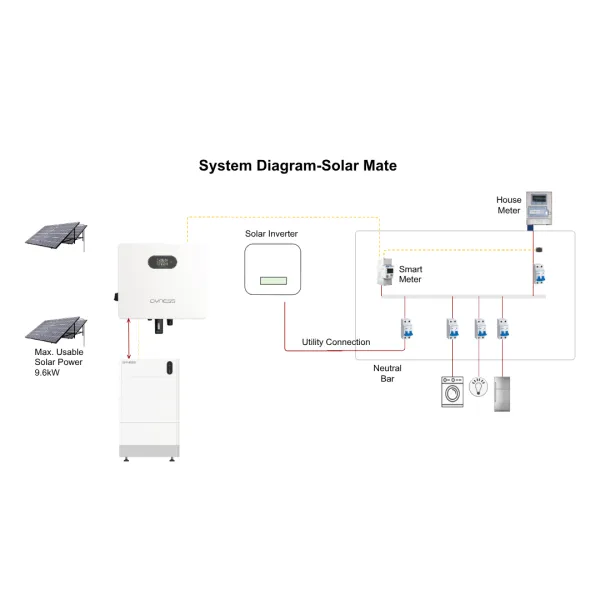
When planning industrial energy storage combined with solar panels, the data requirements are more complex than for a standalone storage project, as the interaction between the solar generation curve and the consumption profile must also be modeled. Data required for accurate sizing: electricity bills for the past 12 months, the roof plan and orientation, a shading analysis, and the utility connection point details.
In addition, the operating schedule must be taken into account. If consumption typically occurs during the day, coinciding with peak generation—for example, between 6 a.m. and 6 p.m. in a single-shift operation—the battery is less critical, as the self-consumption rate can be as high as 70–85%. If the facility also generates power at night or is on a peak-power-based tariff, the battery significantly improves cost-effectiveness.
Therefore, when sizing the solar array and energy storage system together, the analysis must take into account not only the characteristics of the installation site but also the customer’s technical connection requirements and the possibilities for feeding power back into the grid. An AC-side industrial energy storage system requires a permit even when installed with an existing solar panel system, and in certain cases, utility providers may limit the inverter’s power output, which is an important consideration during sizing.
SOLARKIT Tips: How Can a Well-Sized Industrial Energy Storage System Pay for Itself?
Sizing alone does not guarantee a return on investment—the system must also be tailored to actual consumption needs and make optimal use of available revenue streams. Below, we’ve compiled the factors that, based on the experience of SOLARKIT’s designers, are worth keeping in mind for every industrial energy storage project.
1. Combine peak shaving with increasing self-consumption. These two strategies reinforce each other: shaving off peak load reduces the capacity charge, while increasing self-consumption reduces the amount of energy drawn from the grid. One of the greatest business benefits of energy storage is peak shaving—a properly sized industrial battery energy storage system helps support the supply during periods of peak load, thereby reducing the demand for grid power.
2. In the absence of a feed-in permit, energy storage is virtually indispensable. Many industrial solar systems do not have a feed-in permit, so a portion of the energy that could be generated is wasted—the curtailed energy can account for as much as 40–60 percent of the total generateable amount during the summer months. By integrating energy storage, this energy can be utilized in a controlled manner. If the customer has reverse power protection in place, this factor alone can be decisive in the investment decision.
3. Take theactual lifespan of the batteries into account. A professional LFP-based system can withstand as many as 6,000–8,000 cycles without significant capacity loss, which translates to stable operation over a 15–20-year period. This also means that the system not only generates savings in the first 5–6 years but continues to deliver long-term benefits for another decade thereafter.
4. Be sure to ask for professional recommendations regardingthe type of industrial battery . Different operating profiles—such as nighttime production, shift changes, and seasonal fluctuations—may require different C-rates and storage durations, and this plays a key role in selecting the right solution.
Frequently Asked Questions
What kWh capacity does an industrial energy storage system require?
The required capacity cannot be determined in general terms—in every case, the analysis must be based on the customer’s actual consumption data. Medium-sized industrial facilities and commercial properties typically require systems ranging from 50 to 500 kWh, while larger factories and industrial facilities may require solutions with capacities of several MWh. To determine the exact size, at least 12 months of historical consumption data broken down by quarter-hour is required, from which peak load, average consumption, and operating hours can all be determined.
What is the difference between kW and kWh when sizing an energy storage system?
The two units of measurement represent two different dimensions of energy storage, and both are essential for sizing industrial energy storage systems. The kilowatt (kW) measures power—that is, how quickly energy is consumed or generated at a given moment. The kilowatt-hour (kWh), on the other hand, represents the total amount of energy that a system can store or deliver over time. Simply put, kW shows how quickly a system delivers energy, while kWh shows the total amount.
What is a load profile, and why is it essential for planning industrial energy storage?
The load profile, also known as the T-curve or load curve, is a time series constructed from consumption data recorded every 15 minutes, which shows the intraday, weekly, and seasonal variations in an industrial consumer’s energy demand. This data set allows for the precise determination of when and how high peak loads occur, and consequently, the required power and capacity of the energy storage system. Without a load profile, the sizing of industrial battery energy storage cannot be performed reliably.
When is it advisable to combine industrial energy storage with solar panels?
Installing energy storage capacity is particularly justified if the intraday consumption peak does not coincide with the solar system’s peak production, or if consumption is significantly lower on weekends than on weekdays. In the case of anti-isulation protection—when the solar system cannot feed power back into the grid—energy storage becomes virtually indispensable, as curtailed, unsaved energy represents a direct loss of generation. An AC-side industrial energy storage system requires a permit even when used with an existing solar power system; therefore, the conditions for grid connection must be evaluated in parallel with the sizing process.
How does the C-rate affect the service life of an industrial battery?
The C-rate is the rate of charge and discharge relative to the battery’s rated capacity. The higher the C-rate—that is, the faster the battery is charged or discharged—the greater the load per cycle, and the faster the cell ages. A professional LFP-based system can withstand as many as 6,000–8,000 cycles without significant capacity loss—which translates to stable, continuous operation over a 15–20-year period. When sizing an industrial energy storage system, the kW/kWh ratio must therefore be optimized not only in terms of consumption requirements but also in terms of the planned battery lifespan.