Advantages and price trends of half-cell solar panel systems
The solar panel market is constantly evolving, and today it is not only the amount of energy a solar panel system produces that matters, but also how efficiently and reliably it does so in the long term. One of the most significant innovations in recent years is twin-cell, or half-cell, solar cell technology, which is playing an increasingly important role in both residential and industrial investments.
It is important to clarify that when we see "twin-cell" technology described, manufacturers and distributors typically mean the same solution that most people know as half-cut solar cells. In other words, the two terms are used synonymously in practice.
The purpose of the half-cut solution is to reduce losses, improve performance even under unfavorable conditions, and increase the service life of the system. This is particularly important when investment decisions are made not only on the basis of the initial price of the solar panel system, but also on the basis of long-term return on investment and operational reliability.
In the following chapters, we will explain in detail what twin-cell technology is, how it works, what its advantages are over conventional solutions, and when it is worth choosing this technology when designing a new solar panel system.
What is a twin cell, or half-cell solar panel system?
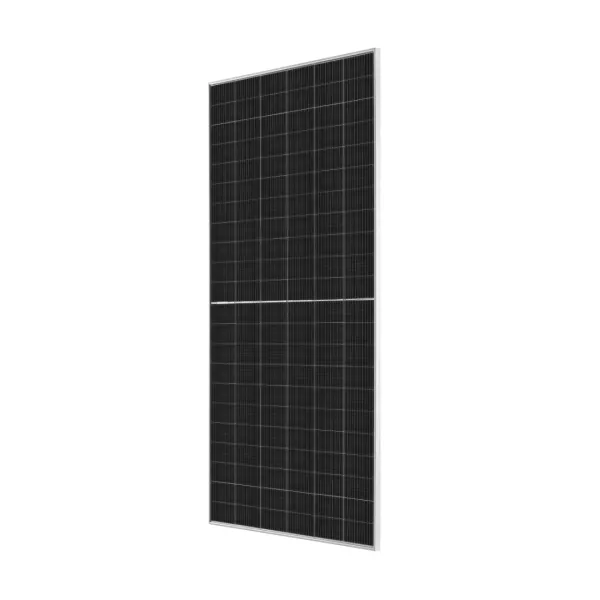
Twin cell (half-cell) technology is an advancement in solar cell manufacturing technology: full-size cells are cut in half to create two half-cells. This solution affects not only the structure of the panel, but also the design and operation of the solar system. In modules built from half-cells, they are arranged separately, but with the same panel size, more smaller cells can be accommodated, resulting in up to 120-144 half-cells in a typical module, compared to traditional 60-72 cell panels.
The idea behind the half-cell design is that each half-cell generates less electrical current, reducing resistance losses in the wires and the entire panel, which increases the overall efficiency of the module. At the same time, the structure of such panels allows them to be divided into two independent parts, which ensures better performance even in shaded or partially covered conditions.
Simply put, a half-cell panel works as if two smaller panels were placed one under the other on the same surface. This helps the system generate more energy even during shaded periods of the day or in low light conditions, while reducing heat loss and increasing reliability.
How does twin-cell technology work?
The essence of twin-cell, or half-cell, technology is to reduce the size of the cells and optimize their arrangement within the solar module. In conventional panels, full-size cells are arranged in rows, while in half-cell modules, these cells are cut in half, creating smaller cells. This not only changes the mechanical structure, but also has a significant impact on the electrical behavior of the panel.
What happens at the electrical level?
In a half-cell design, the cells divided into two parts generate a lower current within a given panel, while the voltage remains virtually unchanged. This is important because electrical losses within the wires are proportional to the square of the current – meaning that if the current decreases, the losses decrease even more. As a result, the panel is able to generate energy more efficiently because it loses less energy in the form of heat.
Difference compared to conventional panels
In a traditional panel, all cells are arranged in the same row, so if one cell is shaded, it can significantly reduce the performance of the entire row. In half-cell modules, the cells are divided into two parts and run in separate circuits, so partial shading has less impact on the performance of the entire panel. This is why twin-cell technology is not only more efficient but also more shade-tolerant.
Half-cell technology differs from traditional cells in that it conducts electricity with lower losses, which optimizes production in the long term, even under unfavorable conditions.
What are the main advantages of a twin-cell solar panel system?
The twin-cell or half-cell solution is not just a technological innovation, but also offers tangible benefits in the operation of a modern solar panel system. The electrical and mechanical properties resulting from the division of the cells into two parts improve performance, reliability, and long-term operational safety. The most important advantages are described in detail below.
Better performance in low light conditions
One of the biggest advantages of half-cell panels is that they deliver more stable performance in low light conditions. In the morning and evening hours, in cloudy weather or at lower angles of incidence, the smaller cells operate at lower current, resulting in less loss. As a result, the system starts producing energy earlier and finishes later in the day, which translates into a measurable increase in energy yield on an annual basis.
Greater shade tolerance and reliability
Unlike conventional panels, the twin-cell design divides the module into two electrically separate parts. This means that if one part is shaded—for example, by a chimney, tree, or neighboring building—the other half of the panel continues to operate efficiently. This is particularly important for single-family homes and more complex roof structures, where reliable operation is a key factor.
Longer service life and fewer microcracks
During the manufacture of half-cells, less mechanical stress is placed on the cells, which reduces the chance of microcracks forming. In addition, the lower current results in less heat load, so the panels age more slowly. This means more stable performance and lower maintenance risk in the long term, which is an important consideration for both residential and industrial systems.
Increased efficiency thanks to split cells
The reduction in electrical losses directly improves the efficiency of the panel. Due to the half-cell design, less energy is lost in the form of heat, so panels of the same size can provide a higher actual yield. This is particularly advantageous when roof space is limited and every square meter counts in the design.
Twin-cell or conventional solar panels? Let's compare!
When choosing a solar panel system, the question often arises as to whether it is worth choosing modern twin-cell technology or whether a conventional solution is sufficient. To make this decision, it is important to clearly understand the technical and practical differences.
Traditional panels are made up of full-size cells, where the cells connected in a row are highly dependent on each other. If one cell is shaded or performs poorly, it reduces the output of the entire row. In contrast, the split cells of twin-cell panels operate at lower current, and the module is divided into two separate parts, which significantly reduces losses.
In terms of efficiency, the twin-cell solution typically provides higher actual yields, especially in cases of partial shading or weaker light conditions. Although the initial prices may be slightly higher, the better annual production and longer service life mean that the investment often offers a more favorable return. Therefore, twin-cell technology is typically the better choice for limited roof space, more complex shading environments, or long-term planning.
What types of properties are dual-cell solar panel systems recommended for?
Twin-cell (half-cell) technology is now practically the default solution for high-quality solar panels. It is no coincidence that most well-known manufacturers have switched to this technology: the design reduces losses and typically provides more stable performance in real-world conditions, where there is always some shade or different orientations. For this reason, half-cell panels should no longer be considered a "special advantage," but rather the basis of a modern solar panel system.
In the case of family homes, twin-cell panels are particularly advantageous if the roof is partially shaded, fragmented, or oriented in multiple directions. In such environments, the half-cell design provides better shade tolerance and more stable energy production, resulting in long-term reliable operation in residential systems.
In residential and smaller commercial properties, there is often a need to extract as much energy as possible from the available surface area. Due to the higher efficiency of twin-cell panels, adequate performance can be achieved even with a smaller roof area, which is an important factor in the design process.
Half-cell technology is also an advantage for industrial facilities, especially if the system is high-performance, designed for the long term, and continuous, predictable production is important. Due to lower heat load and mechanical stability, such systems are better suited to continuous use.
Overall, twin-cell solar panel systems are an ideal choice for residential, domestic, and industrial use, especially when roof conditions are not ideal or when long-term security and performance are key factors in the investment.
Return on investment and investment considerations
When deciding on a modern twin-cell solution, it is not only the initial price of the solar panel system that counts, but also how efficiently and stably the system generates energy and over what period of time. This is where the advantages of half-cell technology really come into their own, as better partial load operation and lower losses have a positive long-term impact on return on investment.
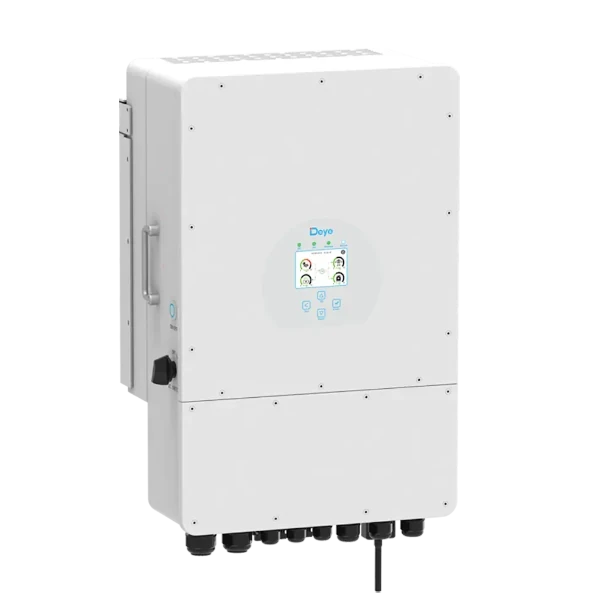
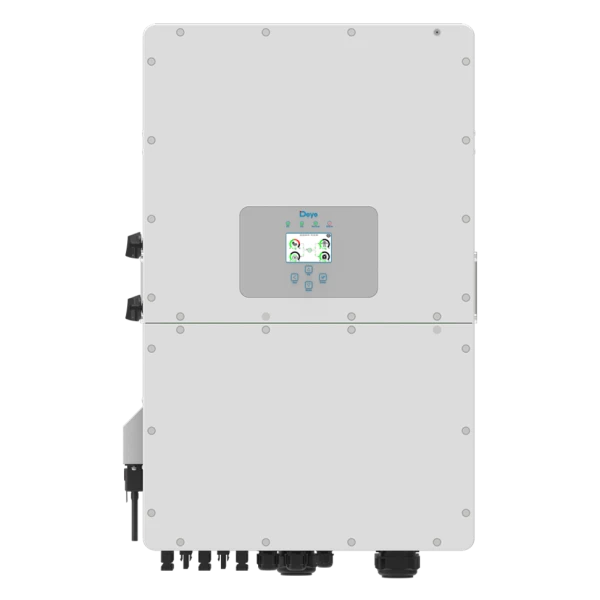
Twin-cell panels generally involve a slightly higher investment cost, but the additional annual production, lower degradation, and longer service life often result in a more favorable total life cycle cost. This is especially true when the system is connected to a modern inverter or even a hybrid solution that allows for battery expansion.
How much does a 3 kW solar panel system cost?
A 3 kW system is typically designed for smaller, residential use, for example to partially cover the basic electricity needs of an average family home. The price of a 3 kW solar panel system is influenced by several factors: the type of panels chosen (e.g., twin-cell, monocrystalline), the quality of the inverter, and the technical characteristics of the property in question.
In the case of half-cell panels, the investment cost may be slightly higher, but due to their higher efficiency, adequate performance can be achieved even on smaller roof areas. This is particularly important when the size or orientation of the roof is limited. With a well-designed system, the payback period is typically between 8 and 12 years, but this can be significantly improved if a larger proportion of annual consumption is replaced by own production.
What does it mean when a solar panel system is 5 kW?
When we say that a solar panel system is 5 kW, we are referring to the system's nominal peak power. A solution of this size is not only suitable for covering basic consumption, but can also serve part of the energy requirements of electric heating, heat pumps, or electric car charging.
A 5 kW twin-cell system can be an excellent choice for average or smaller family homes or properties where long-term self-sufficiency is the goal. Such systems often require a hybrid design or battery expansion, which further increases the self-consumption ratio. Proper sizing and the selection of high-quality components are key factors for economical and stable operation.