The Meaning of BESS and How the Systems Work
As renewable energy sources gain ground, we’re hearing a portmanteau term more and more often: BESS. If you’re considering a solar power system—whether for your home or on an industrial scale—you’re bound to come across this term sooner or later, since battery energy storage is now a key component of modern energy systems. The concept behind a BESS system is simple, but its impact is enormous: it allows us to store electricity that has been generated or purchased at a low cost, and use it when we actually need it.
In this article, we’ll walk you through exactly what the BESS acronym stands for, how such a system works in practice, and what its main components are. We’ll explore its applications in the energy sector, why it’s indispensable alongside renewable energy sources, and what benefits it offers in the corporate and industrial sectors.
We’ll also discuss the challenges involved in such an investment, how BESS differs from other energy storage solutions, and what technological trends are shaping the future of this field. At the end of the article, we’ll summarize when it’s truly worth considering a BESS system and answer the most frequently asked questions.
What is BESS, and what does this term mean?
BESS is an acronym for Battery Energy Storage System. BESS is therefore not a specific brand or product, but a collective term: it encompasses any system that stores electrical energy using rechargeable batteries so that it can later be fed back into the grid or directly to the user at the appropriate moment. In the industry, the term is often used interchangeably with "battery energy storage" or "battery storage."
It is important to distinguish between the terms BESS and ESS (Energy Storage System). ESS is a broader category: it encompasses any energy storage solution, whether chemical, thermal, kinetic, or gravity-based. BESS, on the other hand, specifically refers to electrochemical battery storage, the dominant technology of which today is the lithium-ion battery, and within that, increasingly, lithium iron phosphate (LiFePO₄) cells. The latter has seen explosive growth because it offers a higher level of safety, longer lifespan, and a more favorable environmental footprint than earlier nickel-based lithium-ion solutions.
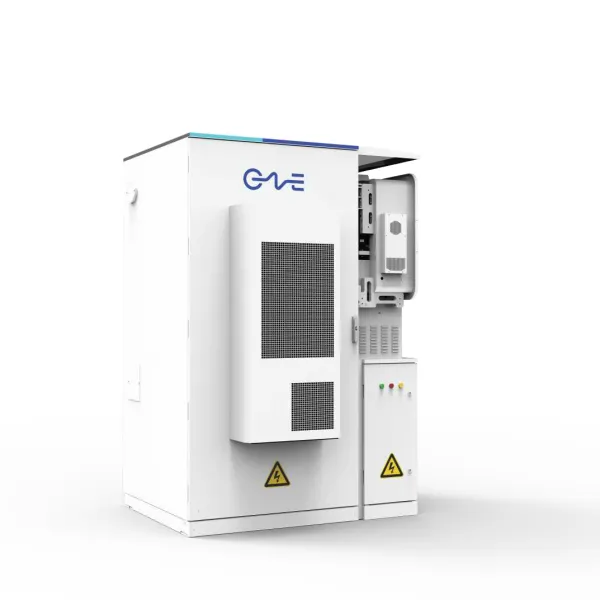
The size and range of applications for BESS systems vary widely. There are residential units for home use with a capacity of a few kilowatt-hours, medium-sized commercial and industrial (C&I) systems ranging from tens of kilowatts to several megawatts, as well as massive, grid-scale power plants capable of handling hundreds of megawatts of power and gigawatt-hour-scale capacity. The global BESS market is growing explosively: by 2025, the world’s installed battery energy storage capacity reached 267 GW of power and 610 GWh of energy capacity—clearly demonstrating that the technology is no longer an optional add-on, but a fundamental component of modern energy systems.
How a BESS system works
The logic behind a BESS system is simple: it charges, stores, and then discharges. The process begins when an energy source—typically a solar panel system, a wind turbine, or the utility grid—supplies electrical current. This current usually arrives in the form of alternating current (AC). Since batteries can only be charged with direct current (DC), the bidirectional power converter (PCS) or hybrid inverter built into the system converts this AC current to DC, thereby storing the energy in the battery cells in chemical form.
When power is needed—for example, after sunset, during peak grid hours, or during a power outage—the process runs in the opposite direction. The PCS or hybrid inverter then converts the stored direct current back into alternating current and feeds it back into the grid or supplies the consumer’s equipment directly. This entire cycle is monitored by an intelligent control system, known as the EMS (Energy Management System), which makes real-time decisions about when to charge, when to discharge, and at what rate. In this way, it is able to take into account current electricity prices, weather forecasts, consumption patterns, and grid demands.
Modern lithium-ion battery-based solutions, particularly systems based on LiFePO₄ chemistry, typically operate with a round-trip efficiency of 85–95%—meaning that 85–95 percent of the stored energy is returned to the consumer. This efficiency makes energy storage solutions economically competitive and allows a well-sized system to pay for itself in as little as 3–7 years, depending on usage patterns and local electricity prices.
Key components of a battery energy storage system
A complete BESS system is not merely a collection of batteries, but a tightly integrated, multi-layered architecture. The following five components are found in every modern system:
-
Battery modules and cells – This is the heart of the system, where chemical energy storage takes place. The cells are connected in series and in parallel to form modules, which are then assembled into racks, and finally into complete battery banks. LiFePO₄ chemistry dominates the market today due to its safety and longevity advantages—a good example of this is the dyness energy storage product family.
-
Battery Management System (BMS) – Monitors the battery. It continuously monitors the cells’ voltage, temperature, state of charge (SoC), and state of health (SoH), prevents overcharging, deep discharge, and overheating, and balances differences between cells.
-
Power Conversion System (PCS) / Hybrid Inverter – The bidirectional converter that converts DC to AC and back. This component connects the batteries to the grid and the loads. You can read more about this topic in the article on FoxESS inverters and energy storage.
-
Energy Management System (EMS) – The brain of the entire system, which coordinates the operation of the BMS, PCS, and other components, and optimizes the charging and discharging strategy.
-
Thermal management and safety systems – HVAC (heating, ventilation, and air conditioning), fire suppression and fire alarm equipment, and sensors that ensure proper operating temperature and safety. Without these, an industrial BESS system cannot operate safely.
Frequently Asked Questions About BESS Systems
The rapid development of BESS technology raises many questions from both residential and industrial users. Below, we explore the six most common topics to give you a clear picture of the technology’s practical benefits, limitations, and future.
What can BESS be used for in the energy sector?
One of BESS’s key strengths is its versatility. In the energy sector, it is primarily used in four areas: peak shaving, i.e., reducing consumer peaks; energy arbitrage, where electricity is stored during cheaper periods and sold or used during high-price periods; frequency regulation and ancillary network services, which maintain the grid frequency at the nominal value of 50 Hz; and as a backup power source in the event of a power outage. At a commercial or industrial site, these functions can even be combined into a single system—this is known in the industry as the “value stacking” approach, and it is precisely what makes a BESS system truly attractive from a financial perspective.
Why is BESS important alongside renewable energy sources?
The natural drawback of the sun and wind is that they are intermittent and variable sources. The capacity factor of a solar system is typically only 15–20%, depending on geographical conditions, while that of wind ranges from 30–50%—meaning they generate much less energy relative to their installed capacity, and not necessarily when consumption is needed. BESS fills precisely these gaps: it stores the surplus generated during the midday sun and releases it in the evening when peak demand from households and the grid occurs. From a grid perspective, this is critical because, with high penetration of renewable energy, traditional balancing capacities alone are no longer sufficient to ensure a stable supply. BESS is therefore not merely a useful supplement but a structural necessity in the energy transition.
What benefits does BESS offer in corporate and industrial settings?
In the commercial and industrial (C&I) segment, the payback period for a BESS system typically ranges from 3 to 7 years. The three main financial value streams are: reducing the demand charge, leveraging time-of-use (TOU) pricing through arbitrage, and ensuring backup power supply for critical processes. According to industry estimates, demand charges often account for 30–50% of the commercial electricity bill. A well-sized battery energy storage system can reduce these by as much as 15–30%. For an industrial manufacturer, one hour of unplanned downtime can result in losses of several million forints, so while backup power is difficult to quantify, it is a strategically invaluable advantage.
What challenges and limitations should be considered with BESS?
BESS technology is mature but not risk-free. The most serious technical challenge is thermal runaway: if a lithium-ion cell fails due to an internal defect, overcharging, mechanical damage, or overheating, a chain reaction can start that may lead to a fire; however, LiFePo4 chemistry is one of the safest technologies available. This risk is further minimized by state-of-the-art BMS, cooling systems (air conditioning, liquid cooling, immersion cooling), and fire suppression systems, as well as compliance with standards such as UL 9540, UL 9540A, NFPA 855, and IEC 62619. Additional constraints include high initial capital expenditure (CAPEX), cell degradation over the lifecycle, the bureaucracy involved in fire and building permits, and the complexity of proper sizing. Therefore, it is advisable to base every project on an expert audit rather than a one-size-fits-all design.
How does BESS differ from other energy storage solutions?
BESS’s main competitors are pumped hydro, compressed air energy storage (CAES), flywheel, and hydrogen-based storage. Pumped hydro is cost-effective on a large scale but is geographically highly constrained (requiring two reservoirs at different elevations), and requires a large land area—a 5 MWh system requires approximately 0.2 hectares of water surface and 21,000 m³ of water volume, whereas the same capacity as a BESS requires only 35 m³, which can be easily accommodated even in most industrial facilities. Flywheels are excellent for second-by-second frequency regulation, but not for long-term storage. Hydrogen storage is promising for multi-day or seasonal storage, but it is still immature and expensive. The advantages of BESS include modular scalability, fast response times, location-independent installation, and high cycle efficiency—which is why it has become the fastest-growing energy storage solution globally.
What trends are shaping the future of BESS technology?
Three major trends will dominate in 2026. First: chemical diversification. LiFePO₄ remains the dominant technology, but sodium-ion (Na-ion) cells are showing rapid development—CATL, BYD, Hithium, and Envision have already launched commercial Na-ion BESS products, which offer a competitive alternative with a more favorable raw material profile, a wider temperature tolerance (ranging from –40 to +70 °C), and a longer lifespan (15,000–20,000+ cycles). Solid-state batteries are also nearing commercial use. Second: the rise of system-level, hybrid solutions—in the future, the norm will no longer be a single chemistry, but rather a task-specific combination. Third: new demand generated by the rapid growth of AI-controlled EMS and data centers, which makes BESS a critical infrastructure. According to BloombergNEF, the price of Li-ion battery packs hit a historic low in 2025—a decline of approximately 8% over the course of a year, and the trend continues.
SOLARKIT recommendation: Now is the time to consider a BESS system
If you have a solar panel system or are currently planning one, the question today is no longer whether battery energy storage is worth it, but when you should take the plunge. On the Hungarian market, several factors clearly favor residential and commercial BESS solutions, and by 2026, these will all point in the same direction.
The key factor: the phase-out of net metering. An increasing number of households are being excluded from annual net metering and are switching to gross metering. This means that the surplus solar power generated at noon is fed back into the grid at a nominal price of a few forints, while in the evening, they buy back electricity that is significantly more expensive. In this situation, a properly sized battery provides immediate, tangible savings, as you use your own generation for your own consumption.
You should consider a BESS if:
-
You already have a solar panel system in place or are planning one, and you want to maximize the local use of your own generation.
-
Your evening or nighttime consumption is high (heat pump, air conditioning, electric car, cooking, other household appliances), which cannot be directly covered by daily production.
-
You work at a commercial, industrial, or agricultural site where capacity charges are high or processes are sensitive to power outages—here, backup power and peak shaving are separate sources of revenue and savings.
-
You want to remain independent of grid disruptions, and it is critical that basic functions remain operational even during a potential power outage.
-
You’re thinking in terms of a long-term energy strategy—a high-quality BESS system operates reliably for 10–15 years and can be prepared for future needs with new, expandable system components.
In SOLARKIT’s experience, a truly effective system is not the cheapest battery package, but one that is technically tailored to your specific needs, your existing PV system, your consumption profile, and your grid connection. That is why we always recommend a preliminary professional assessment—not a cookie-cutter package offer, but an engineering design. An energy storage system is truly worthwhile if it covers your peak consumption periods, stores a significant portion of your daily production, and is compatible with your existing infrastructure.
Frequently Asked Questions (FAQ)
1. How long does a BESS system last, and when does it need to be replaced?
A modern, lithium-ion-based BESS system typically has an expected lifespan of 10–15 years, or 4,000–8,000 charge-discharge cycles, during which its capacity gradually decreases (degrades). LiFePO₄ chemistry outperforms this: high-quality cells can complete as many as 6,000–10,000 cycles with 70–80% capacity retention. The manufacturer’s warranty typically covers 10 years or a specified number of charge cycles, whichever comes first. The exact lifespan is also influenced by the depth of discharge (DoD), temperature, and usage profile.
2. Can a BESS system be connected to an existing solar panel system?
Yes, but it matters how. Based on your existing system, two approaches are possible: a DC-coupled solution, where the battery is connected directly to the solar panel side via a hybrid inverter, or an AC-coupled solution, where the energy storage system is connected to the grid—the so-called “AC” side—via a separate inverter. For retrofit installations, the AC-connected solution is typically simpler because there is no need to replace the existing inverter. The choice is always determined by the consumption profile, the type of inverter, and the planned capacity—which is why it’s worth requesting a professional assessment.
3. Is a BESS system dangerous in the house or garden?
A modern BESS system is safe when properly installed and maintained. LiFePO₄ chemistry has excellent thermal stability and is much less prone to thermal runaway than older NMC or NCA cells. Manufacturers employ multiple layers of safety: BMS monitoring, temperature control, overvoltage and overcharge protection, and compliance with international standards (UL 9540, IEC 62619). Installation must always be performed by a qualified professional, and the unit should be mounted in a well-ventilated location protected from direct sunlight and moisture.
4. What capacity BESS system do I need for my home?
The most common capacity for residential systems ranges from 5 to 15 kWh, with the average choice being 8 to 13 kWh. To determine the exact size, you should consider three factors: your annual electricity consumption (in kWh), the peak output of your solar panel system, and your consumption profile (when you use the most electricity). If you have high evening and nighttime consumption—for example, from a heat pump, charging an electric car, or air conditioning—it’s worth planning for the higher range. Oversizing isn’t ideal either: it makes the system more expensive without providing any real benefit.
5. How long does it take for a residential BESS system to pay for itself in Hungary?
The payback period depends heavily on electricity prices, consumption patterns, and the cost of the system. For an average residential system with a 10 kWh capacity, the payback period on a market basis (without grant support) is typically between 7 and 12 years under Hungarian conditions. This timeframe can be significantly shortened if your evening and nighttime consumption is high (heat pump, electric car, air conditioning), or if some form of government or EU funding is available at the time of purchase. It is also worth factoring in the impact of being excluded from net metering, because without it, the yield of your existing solar panel system decreases significantly—in this case, battery energy storage essentially restores the value of your own production. The exact return on investment should always be determined through a customized engineering calculation, as every household’s consumption profile is different.