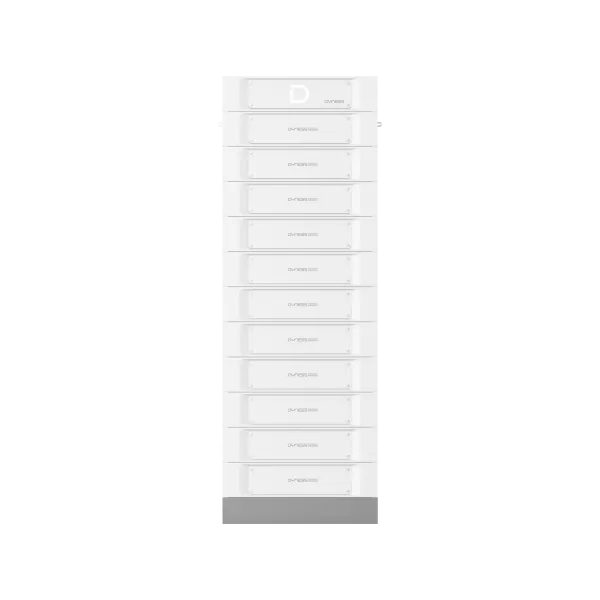
Dyness battery models: efficient and safe energy storage
A solar power system generates more value if you can use the electricity it produces even after the sun has set. Energy storage solves this problem: it stores the surplus generated during the midday peak and releases it in the evening or during a power outage. Among the solutions available on the market, Dyness is one of the globally recognized manufacturers; it is headquartered in Suzhou, China, and serves over one million users worldwide.
In this article, we’ll explore what Dyness energy storage systems are, how modern energy storage systems work, and the benefits of choosing a Dyness battery. In a separate section, we’ll discuss home and industrial/commercial applications, as well as why monitoring isn’t an optional add-on but a fundamental requirement for efficient operation.
In the second half, we review the main technical parameters, installation and maintenance considerations, and help you decide who would benefit most from a Dyness energy storage solution, whether it’s a single-family home or a business.
What are Dyness energy storage systems?
Dyness is a globally active Chinese manufacturer specializing in energy storage solutions, which has been focusing specifically on residential and industrial energy storage systems since 2017. The company uses lithium iron phosphate (LiFePO4) cells, which are considered the industry standard for safety and long lifespan: a chemically and thermally stable chemistry with a long service life.
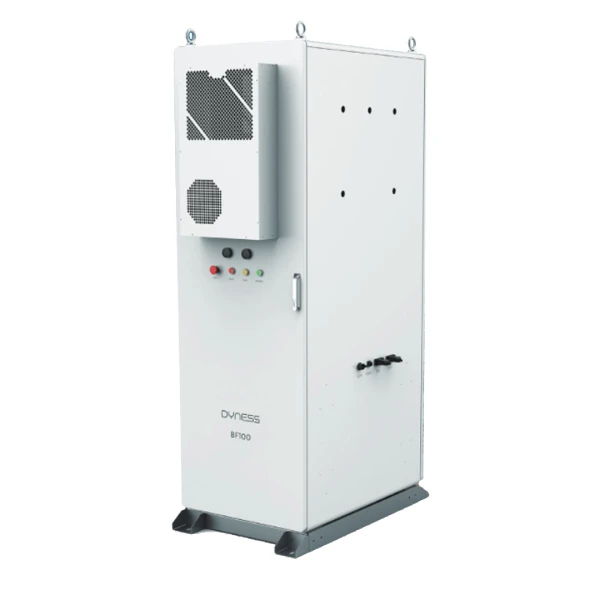
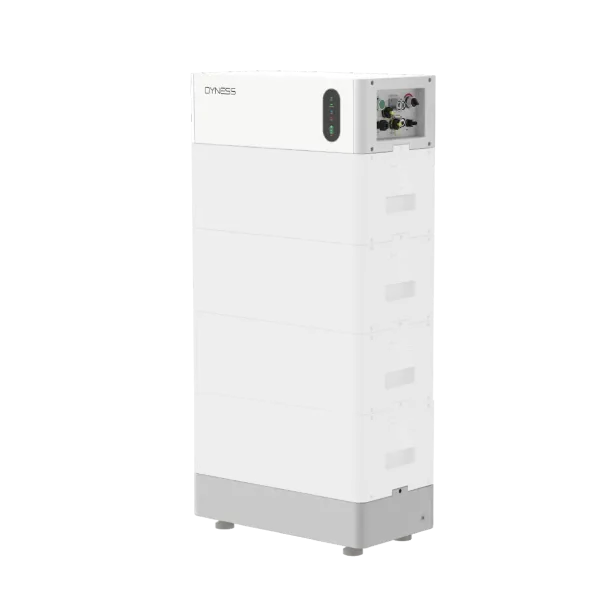
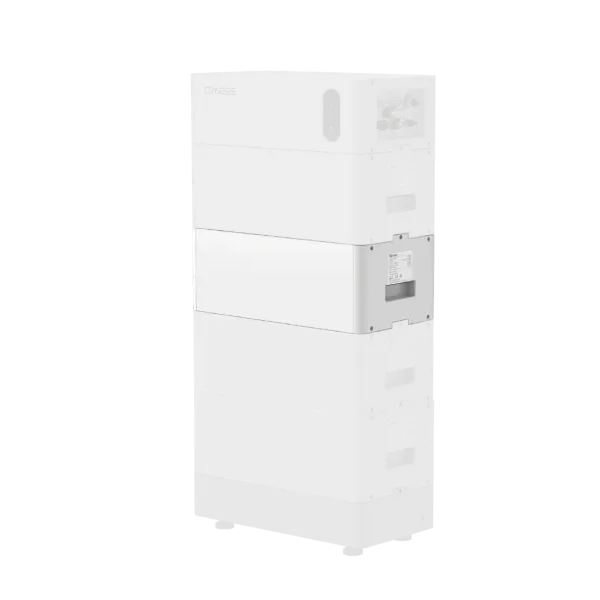
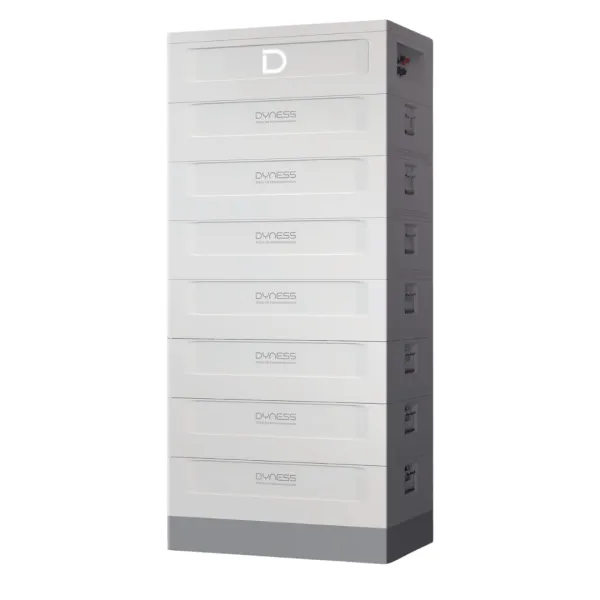
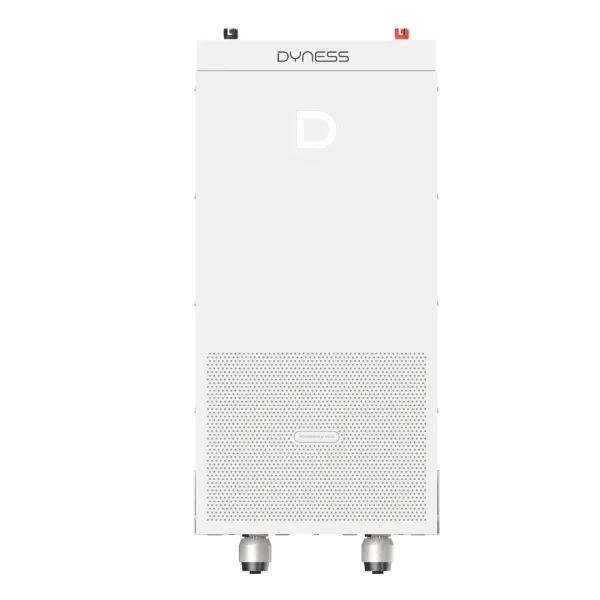
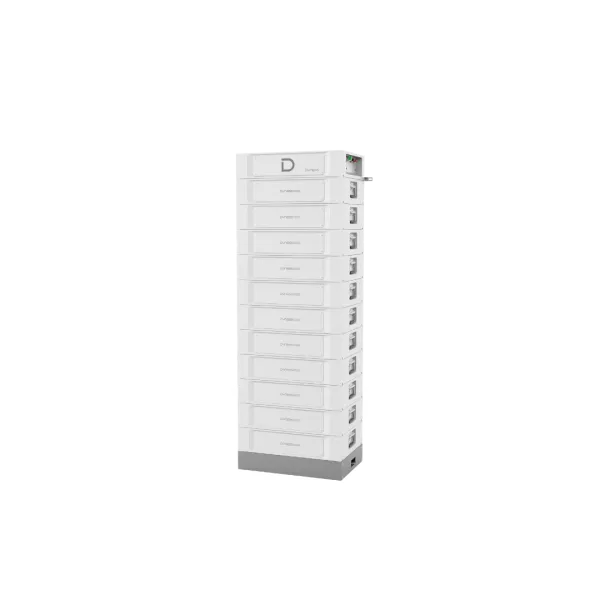
The product portfolio is divided into two main branches. Residential solutions include the modular low-voltage Powerbox and PowerCube series, which can be scaled from 2.4 kWh to systems exceeding 25 kWh, as well as the Tower and Stack100 high-voltage families. At the other end of the spectrum are the industrial and commercial (C&I) BF and DH series, which can be expanded up to several MWh.
One of the most important features is that Dyness energy storage models are generally compatible with the market’s leading inverter manufacturers, including Solis, GoodWe, Sofar, Victron, and SMA. The entire system is connected via a dedicated monitoring app (Dyness APP), which tracks charging and discharging data in real time. The standard manufacturer’s warranty is 10 years for residential products (5 or 10 years for industrial products), which is a strong commitment by industry standards.
How does a modern energy storage system work?
The component connecting the solar panel and the energy storage system is always an inverter; more specifically, in most modern systems, it is a hybrid inverter. Solar panels generate direct current (DC), while household appliances and the grid operate on alternating current (AC). The hybrid inverter performs this conversion in both directions: during the day, it charges the battery directly on the DC side, and in the evening, it converts the DC power coming from the battery into usable AC power. Since this all takes place within a single device, the energy loss resulting from the double conversion can be minimized.
The brain of the system is therefore the inverter, which makes real-time decisions: if the solar panel generates more than the house consumes, the surplus goes into the battery; if consumption is higher, the battery discharges the stored energy; if the battery runs out, the system switches to the grid. In the event of a power outage, the hybrid inverter—which features On-OFF grid switching and an islanding function—automatically disconnects the house from the grid and powers critical circuits using the stored energy.
This entire operation is supported by continuous communication: the Battery Management System (BMS) monitors cell voltages, temperature, and state of charge, while the inverter regulates the charging and discharging currents accordingly.
What are the benefits of aDyness battery?
Dyness systems use lithium iron phosphate cells, making them thermally stable and, according to the literature, rated for 4,000–8,000+ cycles. Thanks to their modular design, capacity can be expanded starting at 2.4 kWh; IP54–IP65 protection allows for outdoor installation; and the 10-year manufacturer’s warranty exceeds the market average. All this is complemented by built-in monitoring, which provides real-time data on the system’s status to your smartphone.
Dyness batteries for home use
The daily electricity consumption of an average Hungarian single-family home ranges roughly between 8–15 kWh, with consumption peaks typically occurring in the morning and early evening—precisely when the solar panels are no longer generating power. Dyness’s residential portfolio is built precisely on this principle: it charges the batteries during the day with surplus energy and powers the household from them in the evening, thereby significantly increasing the self-consumption rate.
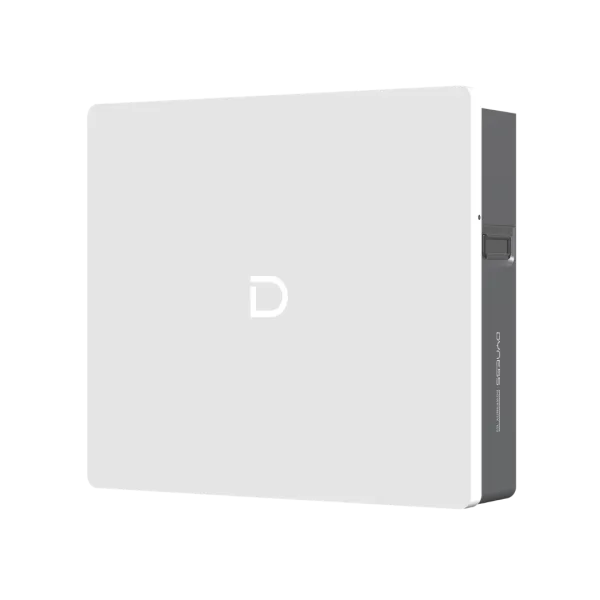
The most popular home model currently is the Powerbox G2, which consists of 10.24 kWh units and can be expanded to up to 50 units connected in parallel, meaning a total capacity of 512 kWh. Thanks to its IP65 rating, it is suitable for both outdoor and indoor installation, available in wall-mounted or floor-standing versions. It features a built-in heating element that ensures charging down to –20 °C, so operation is not interrupted even under Hungarian winter conditions. The factory-installed intelligent aerosol fire suppression system responds within 5 seconds.
For smaller properties, the modular Powerbox series models starting at 2.4 kWh are the best fit, while for larger, high-consumption properties (heat pumps, electric vehicle charging), the high-voltage Tower or Stack100 families are recommended. When making a selection, it is advisable to consider the size of the existing solar panel system, the type of inverter, and annual consumption—not just the kWh.
Dyness energy storage systems in industrial and commercial settings
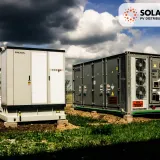
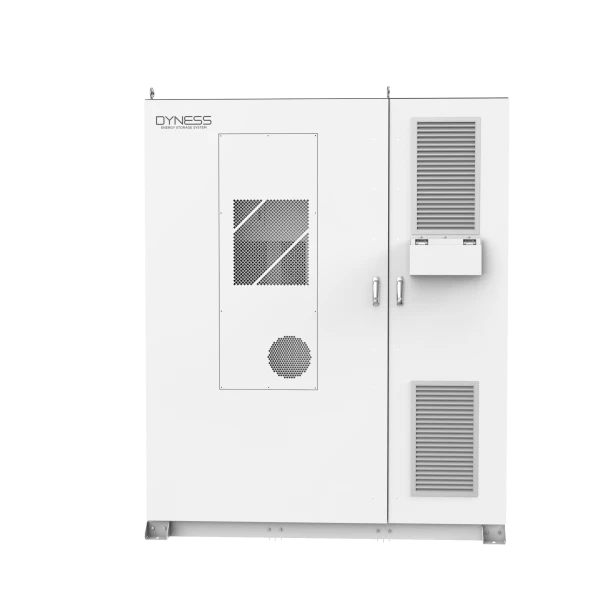
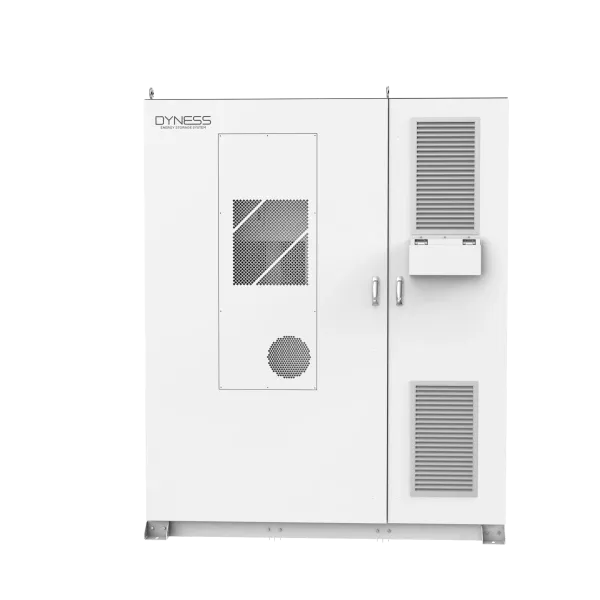
In corporate energy management, peak-period electricity prices, capacity charges, and business continuity are the three main cost and risk factors. Dyness’s industrial and commercial (C&I) portfolio addresses precisely these needs: the product line is scalable from 35.84 kWh to 5 MWh, depending on whether it is a small workshop, a mid-sized business site, or a standalone energy storage power plant.
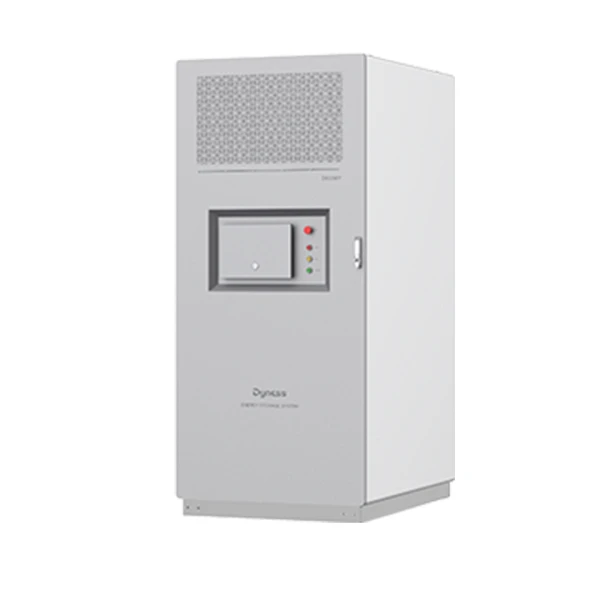
The three most common applications are peak shaving (reducing consumption during peak hours), load shifting (charging during off-peak hours and discharging during peak hours), and backup operation (providing backup power in the event of a grid outage). The Dyness DH100F and DH200F all-in-one systems—depending on the configuration—integrate the battery pack, PCS, BDU, and MPPT into a single cabinet, with a switchover time between on-grid and off-grid modes of less than 20 ms. For larger projects, the STACK100 and BF200 series can be scaled up to several MWh.
According to Solar Power Europe’s forecast, the European C&I energy storage market will grow dynamically, at a multiple-fold rate, through 2028. As a specific Hungarian reference, a Dyness DH200Y system was installed at the site of a 500 kW automotive supplier. The brand received the EUPD Top Brand Storage award in 2025 in Romania, Poland, and the United Kingdom, which underscores its professional recognition across Europe.
Why is energy storage monitoring important alongside solar panel systems?
A solar panel + battery system only delivers a return on investment if you know exactly what is happening on the roof and along the walls. According to the literature, monitoring provides real benefits in three areas: it optimizes energy consumption, detects malfunctions at an early stage, and supports informed consumer decisions with real-time data. Without this, the system operates “blindly”: a faulty solar panel could reduce output for weeks, and the problem would only become apparent on the electricity bill.
The most important metrics displayed by a high-quality monitoring system are: State of Charge (SOC), cell voltages, temperature, bidirectional efficiency, and daily energy flow. Dyness’s proprietary app (Dyness APP) and the web-based Dyness Portal are built on cloud-based technology and provide this data in real time, making the energy flow between the solar panels, battery, grid, and home visible.
A particularly practical benefit is that monitoring helps you understand how much the solar panel actually generates during a given season, under specific weather conditions, and with a particular roof orientation. This is important because optimizing the storage size can only be accurate if you know how much actual surplus energy needs to be stored. Monitoring is therefore not an option, but a tool for verifying the system’s financial and technical performance.
Key technical specifications of Dyness batteries
When making a purchase decision, it is not enough to look at capacity; actual performance and lifespan are determined by several interrelated parameters.
The cell chemistry for all Dyness products is currently lithium iron phosphate (LiFePO4), which is thermally stable and has a long lifespan. The nominal voltage for residential low-voltage series is typically 51.2 V (Powerbox, Powerbox G2, DL5.0C), while the Tower and H3 high-voltage families operate in the 192–576 V range. The usable depth of discharge (DoD) for most modern Dyness models is between 90–95%, meaning that in practice, 9–9.5 kWh can be used from a 10 kWh unit.
The cycle count ranges from 4,000 to as high as 8,000 at 80–90% DoD, which translates to over 10 years of operation based on one cycle per day—a claim supported by the 7–10-year manufacturer’s warranty. The protection rating for outdoor models is IP65; the Powerbox G2 features self-heating down to –20 °C and an intelligent aerosol fire suppression system that extinguishes cell-level failures with a 5-second response time.
The BMS (Battery Management System) includes numerous protection functions, including: overcharge, deep discharge, overcurrent, overheating, short circuit, and cell balancing. International certifications include CE, UL, IEC62619, EN62477, and EN62109, and distribution in Europe is supplemented by permits compliant with the grid connection requirements of the respective countries.
Installation and maintenance considerations for the Dyness energy storage system
Installation must always be performed by a qualified electrician or certified solar panel installer—attempting a DIY installation is not only dangerous but also automatically voids the manufacturer’s warranty. The first step in the process is sizing: the designer must have precise knowledge of the household’s annual and daily consumption profile, the capacity of the existing solar panel system, and the type of inverter.
Regarding the installation location, most Dyness models feature IP65 protection, so they can be mounted on a wall, placed on the floor, or installed indoors or outdoors. The optimal charging temperature for LiFePO4 cells is 0–45 °C; therefore, several models (such as the Powerbox G2) have built-in factory self-heating, which allows for safe charging even down to –20 °C. According to the literature, generally at least 30 cm of free space should be left around every lithium battery for heat dissipation and maintenance, but the manufacturer’s installation guide is considered the installation standard in all cases. Grounding, circuit breakers, and cable sizing must comply with local standards (in Hungary, MSZ HD 60364).
Maintenance is minimal due to the LiFePO4 chemistry. The BMS automatically regulates charge and discharge cycles, balances the cells, and monitors temperature. What the owner should check regularly: capacity degradation, error messages, and firmware updates in the Dyness app. Keeping the environment clean and checking ventilation once a year is sufficient. A professional annual inspection is good practice and helps maintain the 10-year warranty.
Who is the Dyness energy storage solution recommended for?
An energy storage investment pays off best when it precisely matches your consumption profile and the current regulatory environment. In Hungary, the gross settlement system introduced in 2024 fundamentally changed the business logic of solar panels: the price of surplus energy fed back into the grid is far lower than the price of purchased electricity, so the return on investment depends on the proportion of self-generated energy used for self-consumption.
In a residential setting, the Dyness battery solution is primarily recommended for those who already have or will soon have a solar panel system, and whose daily consumption is concentrated in the evenings and on weekends. It is an especially good choice for single-family homes with heat pumps, households that also charge electric vehicles, and properties where voltage fluctuations or power outages are common.
On the commercial and industrial side, the Dyness C&I portfolio is primarily recommended for businesses where peak-period power charges are significant or where power outages pose a business continuity risk, such as manufacturing plants, agricultural logistics sites, and retail facilities. Before making a decision, it is advisable to request an energy audit and check the list of approved inverters from the distribution network operator (E.ON, MVM).
Frequently Asked Questions
1. What capacity Dyness battery should I choose for an average family home?
A typical Hungarian family home with four occupants, consuming 12–15 kWh per day, can generally cover most of its evening and nighttime consumption with a battery having a usable capacity of 8–10 kWh. The exact sizing depends on the output of the existing solar panels, the household’s daily consumption profile, and whether a heat pump or electric vehicle is part of the consumption.
2. How long does a Dyness battery last?
Dyness models are built with lithium iron phosphate (LiFePO4) cells, which, according to the manufacturer’s specifications, can withstand 4,000–8,000+ cycles at 80–90% DoD. Calculating one cycle per day, this translates to a minimum of 10–15 years of operation. The standard manufacturer’s warranty is 5–10 years, which can be extended to 10 years for a 5-year warranty. Actual lifespan is primarily influenced by temperature, depth of discharge, and charging current control—all of which are automatically managed by the BMS.
3. Which inverters are Dyness energy storage systems compatible with?
Dyness’s low-voltage product families (Powerbox, Powerbox G2, PowerCube) are compatible with Solis, GoodWe, Sofar, LuxPower, Deye, Victron, and SMA hybrid inverters.The high-voltage Tower and H3 series are typically compatible with Solis, Deye, and other HV-compatible hybrid inverters. In Hungary, always check before making a selection to ensure that the specific inverter is listed on the approved inverter list of E.ON or MVM distributors.
4. Can the Dyness battery be installed outdoors?
Yes, most Dyness residential models have an IP65 rating, so they can be mounted on a wall or placed on the floor, both indoors and outdoors. The Powerbox G2 model features built-in self-heating to ensure charging down to –20 °C, making it suitable for Hungarian winter conditions. However, it is important to avoid placing it in locations exposed to direct sunlight or prolonged moisture whenever possible; the manufacturer specifies the installation requirements in detail in the installation manual.