What kinds of features might a modern battery-based energy storage system have?
As an installer, you’ve noticed that customers today don’t just ask about capacity—they also want to know what a battery energy storage system can do beyond just storing energy. The differences lie in the control system, operating modes, and integrations, and a large portion of common complaints stem not from the hardware itself, but from incorrect tariff windows, incomplete metering, battery communication errors, or unclear reserve levels.
In this article, we’ll go over what makes a system “modern,” what to look for when designing backup and EPS outputs, and how smart energy management works. We’ll discuss increasing self-consumption, scheduled charging and discharging, operation adapted to dynamic rates, load shifting, and setting up zero export.
We’ll review remote monitoring and troubleshooting, the role of SOC and SOH values, the integration of EV chargers, smart homes, and heat pumps, as well as systems that support multiple operating modes. Finally, we’ll summarize what to look for when selecting a system, as well as the questions your customers ask most frequently.
What can a “modern” battery energy storage system do?
If a customer asks what a battery energy storage system can do, the answer starts with its structure. A BESS system consists of four main components. The battery cells store energy electrochemically, while the BMS monitors the charge level and protects against overcharging and deep discharge. The inverter performs DC–AC conversion in both directions, while the EMS uses data from the BMS to determine when, at what current, and for how long the system should charge or discharge. Communication between the BMS and the inverter is critical, because without a functioning BMS, the battery can be damaged very quickly.
The operation of a battery energy storage system therefore depends on the control system, and this is what makes a system “modern.” Modern energy storage functions typically appear as operating modes: self-consumption, feed-in priority, backup, peak shaving, and scheduled forced charging and discharging. You must configure these to meet the customer’s needs during commissioning.
Battery backup operation during a power outage
It’s a good idea to clarify with the customer during the initial consultation that the solar panel system alone cannot power the house during a power outage. An inverter connected to the grid without a battery will shut down in such cases because it has nothing to switch to. Battery backup during a power outage only works with a hybrid inverter and a storage system: when the grid goes down, the backup system continues to power the designated circuits from the battery.
What does the backup or EPS output function mean?
The EPS (Emergency Power Supply) output is a separate backup output on the inverter, typically used to power the refrigerator, router, lighting, heating controls, and a few outlets. Most hybrid inverters switch to battery power in roughly 10–20 ms in EPS mode; higher-quality models do so in under 10 ms. It’s advisable to verify the spec sheet values under actual load conditions, and for sensitive devices, a separate online UPS is recommended.
During the design phase, identify the protected circuits and compare them with the EPS output’s continuous and short-term peak power ratings. Verify the number of phases, clarify the grid connection specifications during the design phase, and set the backup mode and minimum charge level during commissioning.
Smart Energy Management System for Solar Panels
The energy management system (EMS) controls the flow of energy between the solar panel, the battery, the household, and the grid. A smart energy management system for solar panels not only reacts to real-time measurements but also plans ahead. For example, a forecast-based control system estimates production based on the weather forecast for the installation site and charges the storage unit in the afternoon only to the extent necessary to meet nighttime and morning demand. It reserves the remaining capacity for the next day’s midday surplus, which would otherwise be lost due to feed-in limits.
A smart energy storage system can go even further. The EcoFlow HEMS combines consumption and generation forecasts with dynamic tariff data and uses this information to make charging and discharging decisions. For the smart energy storage system to make sound decisions, you must accurately specify the location, metering point, and feed-in limit during setup.
Maximizing Self-Consumption: Optimizing Solar Power Generation
Without storage, a significant portion of daytime generation feeds into the grid because many households are unoccupied during the day. Without a battery, a single-family home typically uses 20–40 percent of its solar-generated electricity on-site; with a properly sized storage system, this figure increases to 60–80 percent in most cases. In a typical simulation, the self-sufficiency rate rises from 40 to 70 percent with the installation of a storage system. Optimizing solar power generation is therefore primarily a design task.
How can you increase your own consumption of solar energy?
If an energy storage system is installed alongside solar panels, size the storage capacity based on actual consumption data, not on a general average. An oversized storage system increases the cost of the proposal, and beyond a certain capacity, the return on investment decreases. An oversized solar array similarly reduces the self-consumption rate, even when combined with storage. Recommend to the customer that flexible loads—such as electric cars or heat pumps—be scheduled to coincide with peak generation. When sizing the solar panel and battery combination, take seasonal variations and the feed-in limit into account, as the annual average may mask significant summer and winter fluctuations.
Scheduled Battery Charging and Discharging
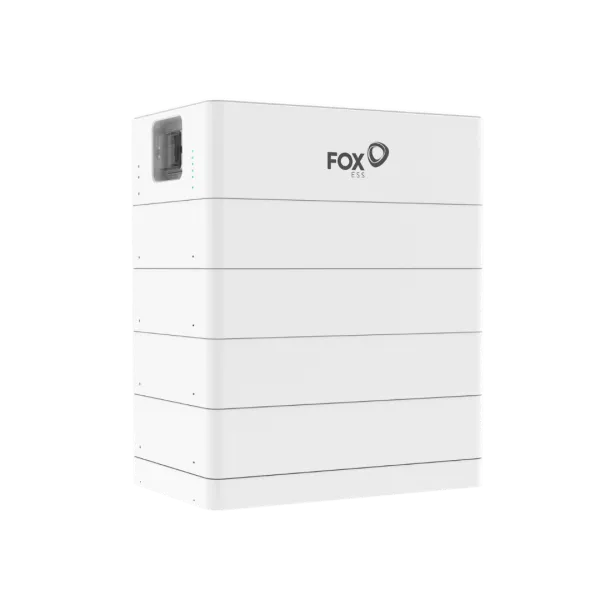
When operating a battery storage system on a scheduled basis, you set predefined time windows for when the storage system should charge and when it should discharge. In the FoxESS scheduler, for example, “Force Charge” charges the battery from solar panels or the grid to a target charge level, typically during off-peak hours. Force Discharge supplies power to loads and, if enabled, also feeds power back into the grid down to a preset lower limit. Outside of these time windows, the system runs in its default mode, which is factory-set to self-consumption mode.
One common source of error in battery charge control is an incorrectly specified rate window. Align the time windows with the peak and off-peak periods of the customer’s rate plan, taking into account weekend and seasonal variations, and then test the system for a full day. It’s a good idea to review the energy storage system’s logs monthly for the first three months, and then after every rate change.
Operation Adapted to Dynamic Electricity Rates
Dynamic electricity rates follow the wholesale market. In the EU, for example, the Electricity Directive ties such contracts to day-ahead and intraday market prices and requires that any provider serving more than 200,000 end users offer this option. You can only sign up for this with a smart meter, and the provider must inform the customer in advance about the options, costs, and risks. It’s worth mentioning this to you as well, because during peak hours, the price may be higher than usual.
How can you take advantage of cheaper energy?
Dynamic pricing is worthwhile for those who can shift their consumption to off-peak hours. A battery-based energy storage system handles this without any action on the customer’s part: it charges from the grid during off-peak hours and powers the home using stored energy during peak hours.
Automatic Tariff Optimization
More advanced systems automatically retrieve market prices. According to a May 2025 report by ESS News, a specialized energy storage portal, EcoFlow’s energy management system (HEMS) launched by EcoFlow on the European market works with the dynamic tariffs of the EPEX SPOT and Nord Pool power exchanges and decides on its own when to charge and when to discharge based on consumption and generation forecasts. When preparing a quote, verify that the selected system supports these tariff types in the customer’s market as well.
Load shifting – shifting energy consumption over time
Load shifting refers to shifting consumption over time: the total amount of energy used remains roughly the same, but the household consumes it during cheaper periods instead of during peak hours. The battery charges during hours with low rates or high solar generation, and during peak hours, it supplies consumers with the stored energy. This way, the surplus renewable generation during the day is utilized in the evening hours as well, and there is no need to feed it into the grid at a low price.
Don’t confuse this with peak shaving. Peak shaving reduces the highest instantaneous grid draw, so it’s mainly useful with power-based rates, whereas load shifting is effective with time-of-use rates. Where both are relevant, set them up together. Typical examples of shiftable loads include EV charging, washing machines and dishwashers, water heating, and pre-starting cooling and heating systems.
Zero Export and Feed-in Limitation
Feed-in restriction keeps the power fed into the grid below a specified limit, while zero export is the strictest form of this, where that limit is zero.
What does zero export mean?
Zero export means that the system remains connected to the grid but does not feed any active power back into the grid at the connection point. The feed-in limit is typically specified by the grid operator; always request this in writing. In some cases, the customer may choose this option for economic reasons.
How does it work?
At the connection point, a current transformer (CT) or a meter communicating via RS-485 continuously measures the net power, and the inverter adjusts its output accordingly. With a storage system, the surplus power goes into the battery, but only up to the charging power and available capacity; therefore, even with a fully charged battery, it may still be necessary to limit generation. During commissioning, pay attention to the power input per phase, because a zero sum across all phases does not mean there is no power feed-back on any single phase. The measurement must cover all loads and generators, and a tested fallback behavior must be in place in case of measurement or communication errors.
Remote Battery Monitoring and Troubleshooting
Manufacturer cloud platforms also serve as service tools for installers. Remote battery monitoring automatically tracks key parameters: for example, a well-configured cloud portal monitors battery voltage, state of charge, temperature, current, imbalance between cells, and internal faults, and sends an email alert when an alarm is triggered. Customizable alert rules can also be set up. It’s a good idea to specify a hysteresis for these rules so that values fluctuating around the threshold don’t flood your inbox with alerts. You can also request notifications if the connection to the system is lost.
Troubleshooting is also simpler. Status codes visible remotely on the cloud platform allow you to determine whether an on-site visit is even necessary, and for compatible inverters, software updates can be performed without an on-site visit. This reduces operating costs and improves system availability. Furthermore, battery monitoring data also serves as a customer engagement tool for future expansions.
Remote Monitoring of Energy Storage: SOC and SOH
SOC (State of Charge) is the battery’s current charge level, expressed as a percentage of its total charge capacity. SOH (State of Health) is the battery’s current capacity as a percentage of its rated capacity: a new cell starts at 100 percent and decreases over time and with charging cycles. Both values are estimated by the BMS, but estimating SOH is more difficult, especially for LFP cells, due to their flat voltage curve.
During remote monitoring of energy storage systems, the SOH trend is the most telling data point. Above 90 percent, the battery performs almost as if it were new; between 80 and 90 percent, degradation has little to no impact on normal operation. High temperatures, high charge/discharge currents, and deep cycles indicate faster aging, while gentler operation—maintained within the roughly 20–80 percent range—helps preserve capacity. A single weak cell can drag down the apparent SOH of the entire pack, so it’s also worth monitoring cell-level data. The performance of a battery energy storage system can thus be tracked for years, which is also helpful when it comes to warranty issues related to energy storage, since manufacturers typically tie the warranty to a specific level of remaining capacity.
EV Charger Integration
The system’s energy management coordinates the EV charger with the solar panel and the storage unit. The EcoFlow PowerPulse 2 charger, for example, uses dynamic rate data to find the cheapest charging time.
Solar Panel + Battery + Electric Vehicle
The electric vehicle is one of the household’s largest—yet easily scheduleable—consumers. During surplus solar charging, the wallbox activates based on data from the utility meter when the surplus consistently exceeds the minimum charging power. Due to the 6 A minimum specified by IEC 61851, this amounts to approximately 1.4 kW on a single phase and approximately 4.1 kW on three phases. The charger, which is capable of automatic 1/3 phase switching, can therefore charge even with a smaller surplus, which is especially important on overcast days.
Charging Priorities
You can control the order of priority between the solar battery and the car through settings. In an advanced energy management system, for example, you can specify the charge level up to which the home battery takes priority, as well as how much stored energy can be transferred to the car above that level. During fast or scheduled charging, discharging the home battery can be disabled. It’s worth using this feature because charging through the battery typically results in a 5–10 percent conversion loss.
Smart Home and Heat Pump Integration
The heat pump can also be used as a heat storage device: it uses excess solar power to heat domestic hot water to a slightly higher temperature or to preheat the buffer tank, rather than feeding the excess into the grid at a low price. This is the purpose of the SG Ready interface, for example, which was introduced by the German Heat Pump Association (BWP) in 2012. It provides four operating states via two potential-free contacts: disabled, normal operation, boosted operation, and forced start. When the set surplus threshold is reached, the energy management system requests enhanced operation; however, this is only a recommendation—the heat pump’s own controller decides whether to initiate it.
Smart home devices connect using similar logic. The EcoFlow HEMS, for example, also manages smart outlets, allowing flexible loads to be adjusted to match peak generation. Before installation, always check whether the heat pump’s controller supports the SG Ready input, as older models may require an expansion card or an external controller.
Multiple Operating Modes in a Single System
A modern energy storage system supports multiple operating modes, which can be combined with one another. Taking FoxESS systems as an example: in Self-use mode, the solar panel first supplies the loads, then charges the battery, and only feeds the surplus into the grid. In Feed-in Priority mode, the surplus goes primarily to the grid, while in Limited Feed-in mode, it goes to the battery. In Backup mode, the system charges the battery up to a preset reserve level and does not discharge it below this level. In Peak Shaving mode, it limits grid consumption based on a consumption limit and a charge threshold.
The scheduler applies time windows to these basic modes, supplemented by forced charging and forced discharging. This flexibility allows the same hardware to operate with different settings depending on the season or tariff. EcoFlow also offers its own AI-controlled operating modes, designed for cost optimization or prioritizing solar energy. Today’s energy storage systems no longer operate with a single fixed setting: a smart energy storage system adjusts its operating mode to the situation.
What should you look for when choosing a solar energy storage system?
Don’t just look at battery capacity
Nominal capacity alone doesn’t tell the whole story. The actual usable energy is the product of capacity and the allowable depth of discharge (DoD): a 10 kWh battery delivers approximately 9 kWh at a 90 percent DoD. Equally important are the continuous power rating (kW), which indicates how many loads it can support simultaneously, as well as the cycle efficiency and the warranty, which is typically specified in terms of cycle count or years until a certain residual capacity is reached—for example, 70 percent. For outdoor installation, be sure to check the temperature range and IP rating; we’ve covered this in detail in our article titled “Outdoor Installation of Energy Storage Systems.”
Inverter and Battery Compatibility
A smart energy storage system will only operate reliably if communication between the inverter and the BMS has been validated. Inverter manufacturers maintain official compatibility lists, and in some cases, connecting an untested battery may void the inverter’s warranty. When assembling a solar energy storage system, therefore, always start with the manufacturer’s list. The situation is simpler if the inverter and battery come from the same manufacturer as a single system: examples of such solutions include the EcoFlow and FoxEss energy storage systems.
Frequently Asked Questions About Modern Energy Storage Features
Does the smart, battery-powered energy storage system continue to operate during a power outage?
Yes. In the event of a power outage, the battery backup operates via the inverter’s EPS output, and the energy storage system’s control unit uses the battery down to the set minimum charge level. For remote access, the router and communication devices must also be on the protected branch, which is why they are included among typical EPS consumers.
Can the battery be charged from the grid?
Yes, where local regulations permit it. A battery storage system can be forced to charge from the grid up to a target charge level, typically during off-peak hours. This is particularly useful with dynamic pricing.
Can battery charging control be set in advance?
Yes. In the energy management system’s scheduler, you can specify time windows for forced charging and forced discharging, along with target and minimum charge levels. Outside of these time windows, the system runs in default mode, and the windows should be aligned with peak and off-peak tariff periods.
Can an electric vehicle charger be integrated into the energy storage system?
Yes. The smart energy management system controls both the solar panels and the wallbox: it charges using excess solar power, and you can set it to prioritize either the home battery or the car. During fast charging, the discharge of the home battery can be disabled.
Can the operation of the battery energy storage system be monitored remotely?
Yes. On the manufacturers’ cloud platforms, you can view SOC and SOH values, temperature, and error codes in real time; you’ll receive alerts; and, for compatible devices, the software can also be updated remotely. On the FoxESS cloud platform, for example, modern energy storage functions—including operating modes and scheduling—can be configured from there.