CATL Batteries for BESS Systems: A New Milestone in SOLARKIT’s Energy Storage Solutions
CATL is the world’s largest battery manufacturer, and CATL BESS systems designed for industrial and commercial projects are now available in SOLARKIT’s product lineup. In this article, we’ll explain why this marks a new level in commercial and industrial energy storage, and what the memorandum of understanding signed between SOLARKIT and CATL means for you. We’ll also explain why the three-year, 1 GWh energy storage capacity is important for installers.
We’ll demonstrate how a CATL BESS solution can be integrated with an existing or new solar panel system. We’ll go over when it makes sense to consider CATL batteries: for industrial consumers and corporate energy management, for optimizing self-consumption of solar power, and for reducing grid peak loads—that is, during peak shaving.
We’ll also cover the engineering consulting you’ll receive from Solar Kit’s experts when planning a BESS project. We’ll show you how we handle project preparation, installation, and commissioning all under one roof. Finally, we’ll discuss why it’s advantageous to choose a CATL BESS energy storage system through a wholesale distributor. If you’re planning a C&I project, you’ll find all the key decision-making factors here.
CATL Batteries: A New Level in Industrial and Commercial Energy Storage
If you’re planning an industrial or commercial energy storage system, the identity of the cell manufacturer is no minor detail, as the system’s lifespan, safety, and warranty coverage all depend on it. According to data from South Korea’s SNE Research, CATL accounted for 30.4% of global energy storage battery shipments in 2025, marking its fifth consecutive year as the market leader. The manufacturer’s technology is in use in approximately 2,300 energy storage projects worldwide.
CATL’s BESS systems are based on lithium iron phosphate (LFP) cells, which are known for their long cycle life and thermal stability. For its flagship EnerOne outdoor, liquid-cooled cabinet, the manufacturer specifies up to 10,000 cycles for the cells, and the cooling system maintains the temperature difference between cells within 3 °C, which directly extends their lifespan.
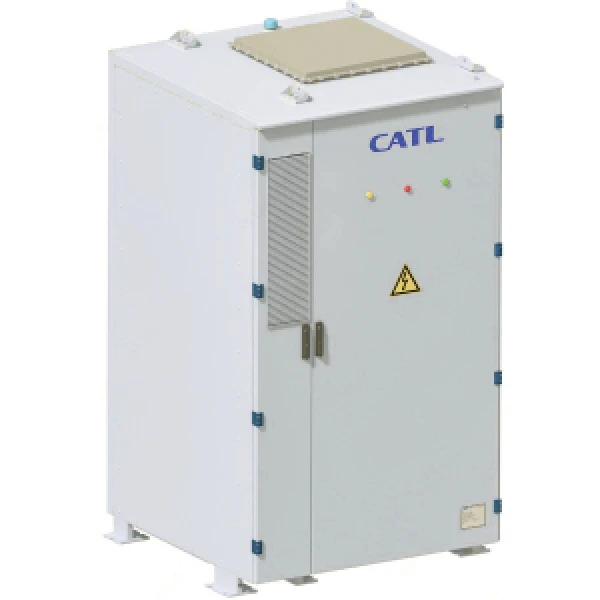
Our current product lineup includes EnerOne+ cabinets with capacities of 254.6 and 407.3 kWh, as well as the EnerC+ containerized system with a capacity of over 4 MWh. The cabinet design is typically suited for the needs of factories, commercial buildings, and microgrids, while the containerized EnerC system is designed for larger industrial sites and solar farms. The system is modularly scalable, ranging from 100–200 kilowatt-hours to installations of several MWh. You can view the full product line on the CATL energy storage page.
The manufacturer’s presence in Europe is also growing. Trial production of battery cells began on September 22, 2026, at CATL Hungary’s factory in Debrecen. Once completed, this will be CATL’s largest manufacturing base outside of China, although it will primarily supply cells to European automakers.
What does the signing of the memorandum of understanding between SOLARKIT and CATL mean for our partners?
SOLARKIT and CATL have signed a memorandum of understanding (MoU) that calls for a total of 1 GWh of energy storage capacity over three years. It’s important to understand exactly what this document means: the MoU is a declaration of intent that sets out the shared goals and the planned volume. Actual deliveries will take place through individual orders and contracts.
As a contractor or installer, you’ll feel the impact in three areas.
Predictability: With a pre-agreed volume, it’s easier to align inventory and delivery schedules with your projects. This is particularly important for commercial and industrial bids, where deadlines are tight and you need to know when the storage unit will arrive before submitting your bid.
A more direct relationship with the manufacturer: The agreement aims to shorten the path to the manufacturer for technical questions, such as clarifying data sheets, certificates, or system integration details.
Long-term reliability: When used properly, CATL storage units can operate for up to 15 years. For an investment planned over such a long period, it’s important that the distributor is backed by a multi-year partnership established directly with the manufacturer.
For you, this means in practice that you can offer your client a CATL BESS system with a more predictable supply chain for your next industrial or commercial project. If you’re currently preparing a proposal, it’s worth consulting with our sales representative about expected delivery times as early as the planning phase.
1 GWh of energy storage capacity for 3 years: why is this important for contractors?
At first glance, 1 GWh may seem like an abstract number, so it’s worth translating it into project terms. This capacity is roughly equivalent to 2,450 EnerOne+ cabinets, each with a capacity of 407.3 kilowatt-hours, spread over three years. As a contractor, the most important aspect of this is that your supplier can plan based on a pre-agreed volume.
The current state of the market illustrates why this matters. According to international market research, global energy storage battery production nearly doubled by 2025, yet demand grew even faster than supply. CATL itself indicated in the fall of 2025 that its production capacity was fully utilized and that it was working on expansion. In this environment, installers whose distributors work with volumes fixed at the manufacturer level have an advantage.
Demand is also growing rapidly in Europe. According to data from SolarPower Europe, 36 GWh of new battery storage capacity was installed on the continent in 2025—48% more than a year earlier—bringing the total installed capacity above 100 GWh for the first time. The commercial and industrial segment grew by 77% to 4.7 GWh. According to the organization’s medium-case scenario, annual European installations could approach 140 GWh by 2030. Meanwhile, only a small fraction of the commercial and industrial solar systems installed in recent years have been paired with storage, meaning that most of the growth in this segment is still ahead.
In a market expanding at this pace, supply security can easily become a bottleneck. According to industry analyses, the biggest obstacles to storage projects today remain grid connection and slow permitting. If, on top of these, the delivery of BESS energy storage systems is also delayed, the project lead time will increase further. The same is true for larger CATL BESS projects planned alongside solar farms, where a delay in a single container unit can derail the entire schedule. A three-year volume plan agreed upon with the manufacturer reduces this risk. This allows you to commit to deadlines with your client with greater confidence and schedule your own team’s work more accurately.
CATL BESS Solutions for Solar Power Systems
CATL BESS delivers the greatest value when paired with a solar power system if its components are well-integrated with each other and with the existing infrastructure. A battery energy storage system consists of multiple layers. The BMS monitors the cells and modules, tracking voltage, temperature, and state of charge. In addition, there is the bidirectional power converter (PCS) and the EMS control system, which determines when the system should charge and when it should discharge. If you’d like to understand in detail how BESS systems work, read our separate summary.
In addition to the EnerOne+ cabinets, we select power electronics that match the project’s power requirements, and our engineers verify compatibility across the entire system. This ensures that the storage unit, the PCS, and the control system form a coordinated system right from the design phase.
You can connect the storage unit to the solar system in two ways.
AC connection: The storage system connects to the AC side via its own converter, allowing it to be integrated into an existing system without replacing the current inverter. According to an analysis by Energy-Storage.news, this is why most retrofit installations use AC connection. However, the cycle efficiency is lower due to multiple energy conversions.
DC-coupled: There are fewer conversion steps, so efficiency of up to around 98% can be achieved. The storage system can also capture energy that would otherwise be curtailed by the inverter’s power limit. This solution is more common in new installations and commercial and industrial projects; it is less suitable for retrofitting.
The most sensible approach depends on the existing system, grid connection conditions, and the intended use. A properly sized BESS energy storage system can thus utilize as much of the solar power generation as possible. It’s worth making this assessment early in the planning phase, because changing the connection method later on can involve significant rewiring and additional costs.
When should you consider using a CATL battery in a project?
CATL batteries aren’t justified in every project. They’re worth considering if the site has significant, easily measurable consumption; if solar generation and consumption occur at different times; or if the grid power charge is a major expense on the bill. The decision should always be based on the measured load profile, not on a rule of thumb. The following three scenarios are the most common. In all three cases, the same CATL BESS technology is used; the difference lies in the sizing and control strategy. Having at least one year’s worth of quarter-hourly measurement data greatly aids the planning process.
Industrial Consumers and Corporate Energy Management
At industrial sites, energy storage systems can perform multiple tasks simultaneously. According to our CATL product page, these systems are suitable for increasing self-consumption, reducing peak loads, operating in island mode, and stabilizing microgrids. In a large enterprise’s energy management strategy, the storage system thus becomes a flexible tool that can be adapted to the needs of daily operations. In an off-grid configuration, it can even take over power supply to critical loads in the event of a power outage.
The key is EMS control. It determines whether the battery should be used at any given moment to shave off peaks, store excess solar power, or serve as a backup. These different usage modes compete with one another. The capacity you reserve for peak load reduction cannot be utilized during evening hours when electricity prices are high or on the balancing market. A well-configured EMS reassesses these trade-offs on a daily basis. Therefore, it’s worth determining during the planning phase which usage scenario is the most important for the site.
For large consumers, scalability is also important. CATL’s product range extends from cabinets with a capacity of a few hundred kilowatt-hours to containers with a capacity of several megawatt-hours. This allows a site to expand its storage capacity incrementally as its consumption or solar generation increases. This reduces the initial investment risk and allows you to determine the scale of the next expansion based on data from the first year of operation.
Optimizing Self-Consumption of Solar Power Systems
A solar system generates the most power at noon, but a site’s consumption is often highest in the afternoon or early evening. The storage system bridges this time gap: it stores the surplus generated at noon and releases it when the site needs it.
Market data also points in this direction. According to an analysis by Ember, in 2025, wholesale electricity prices were negative during at least 5% of the hours in seven EU countries, and these hours typically coincided with high solar power generation. In the same year, electricity prices in the EU rose by only 3% during daytime hours—when generation is predominantly from renewables—but by 11% during hours dominated by gas-fired power plants. Put simply: the value of electricity generated during the day decreases, while that of evening electricity increases.
If you use a storage system to shift solar power generation to the evening, the proportion of self-consumption increases, and the amount of energy fed back into the grid at low prices decreases. This is particularly worthwhile at sites where daytime generation regularly exceeds current consumption—for example, at plants that shut down on weekends or at warehouse buildings with large roof areas. In such cases, it is advisable to size the storage system based on the typical daily surplus rather than on rare peak generation, as capacity sized for peak generation would remain underutilized for most of the year.
Grid Peak Load Reduction and Peak Shaving
For many industrial connections, part of the grid fee is the capacity charge, which is based on the highest average quarter-hourly power measured during the year. In other words, a single outlier quarter-hour can determine the amount payable for the entire year. In WEM Energy’s example, at a facility operating at 400 kW, a single 600 kW quarter-hour peak results in an additional cost of 24,000 euros, assuming an annual kW charge of 120 euros. The exact pricing varies by country and grid operator.
The essence of peak shaving is that the storage system discharges precisely during those quarter-hours when the load would otherwise exceed the set limit. This prevents the peak from appearing on the grid, allowing generation to continue uninterrupted.
Timing is the most critical factor here. If the storage system discharges too early, it cannot help during the actual peak. If it reacts too late, the peak will already be factored into the tariff. This is why a real-time monitoring system and forecast-based control are necessary. When it comes to sizing, the system’s capacity determines how much of the peak can be shaved off, while the amount of stored energy determines how long the system can sustain a prolonged load plateau. Peak shaving works even without a solar panel system, though solar panels can cover part of the midday peaks on their own.
Engineering Consulting for BESS Projects from Solar Kit Experts
The success of a BESS project is largely determined on the drawing board. A poorly sized or inadequately integrated storage system will struggle to deliver what it promised on paper. That is why, in addition to distributing CATL storage systems, we also provide engineering support throughout the entire project preparation phase.
During the pre-sales phase, we lay the technical and financial groundwork for the project using PV–BESS simulations with a quarter-hour resolution, multi-year yield forecasts, and grid and market data. For solar farms, you’ll receive one or two configuration options, complete with capital expenditure (CAPEX) estimates, payback period comparisons, and project-specific ROI calculations.
A comprehensive compatibility check is performed during the design phase. Our engineers examine everything from the solar inverters and PCS to the storage system and EMS, all the way to the end users, to ensure that all system components work flawlessly together. Detailed design extends to the selection of cables. We also prepare the documentation required for distribution network approval, including single-line diagrams, data sheets, and the EMS integration plan. Our proprietary EMS software controls the storage system, the PCS, and the solar inverters as a single integrated system.
A dedicated team provides the technical expertise. A designated Key Account manager guides you through the process from the initial consultation to the final decision. Roland Dányi, as an energy market and financing consultant, handles the return-on-investment calculations and trading logic. Norbert Babós, as Technical Director, is responsible for permitting documentation, EMS integration, and warranty coordination. This allows you to make a data-driven decision regarding a CATL BESS investment together with your client as early as the initial consultations.
Commissioning, installation, and project preparation—all from a single source
Many BESS projects run into delays during the phase between planning and commissioning. The foundation isn’t ready by the time the container arrives, a permitting document is missing, or a fault is discovered during on-site testing. According to a TWAICE analysis, customs clearance, crane lifting, scheduling, and the availability of grid connections can delay commissioning by as many as several months. That’s why it pays to have the entire process managed by a single provider.
For solar farm BESS projects, we follow a five-step process:
-
preliminary survey and proposal,
-
parallel preparation of manufacturing and utility documentation,
-
site preparation,
-
installation,
-
and finally, commissioning and the on-site acceptance report.
Prior to delivery, we provide advice on foundation work, trenching, and cabling, ensuring that the storage unit arrives at a site that is already prepared. We also outline the details of this process on our BESS Energy Storage for Solar Farms page.
Installation is performed by our partner or a contractor we recommend, and we provide documentation and technical supervision throughout the process. This is also a condition of the manufacturer’s warranty, so it’s important not to skip this step when installing a CATL BESS.
Commissioning begins with cold and hot commissioning in accordance with the manufacturer’s protocol. This is followed by validation of the Factory Acceptance Test (FAT), a capacity test, and the Site Acceptance Test (SAT) report. On-site inspections are truly critical. According to CEA data cited by TWAICE, during factory testing:
-
28% of the systems had a fault related to the fire alarm or fire suppression system,
-
15% had thermal management failures,
-
and 6% failed the capacity test.
After delivery, the system can be controlled remotely.
Why is it advantageous to choose a CATL energy storage system with a wholesale background?
CATL’s cell technology is among the best on the market; however, a functioning energy storage system requires not only cells but also a PCS, an EMS, and on-site integration. In our article titled “Comparison of Energy Storage Systems,” we also highlighted that CATL systems typically reach projects through integrators. As a result, responsibility for the BMS, PCS, and EMS can be divided among multiple parties. With our wholesale background, we keep this chain of responsibility under one roof: you receive the storage system, power electronics, and engineering support all from the same partner. If a CATL BESS reports a fault during operation, you don’t have to worry about whether to contact the manufacturer of the cells, the inverter, or the control system.
Scale matters, too. We started out as installers in 2016; today, we work with more than 1,000 active wholesale partners, have over 2,000 m² of warehouse space, and maintain native-language sales and business development representation in ten countries. To date, we’ve participated in the installation of more than 4,000 solar panel systems and have developed or sold more than 200 MW of capacity. As a B2B partner, you’ll always see up-to-date information on prices, inventory, and current discounts in our online store, and you can place your order online as well.
The manufacturer is also planning for the long term. According to CATL, the CATL Hungary factory in Debrecen plays a key role in the company’s efforts to strengthen its long-term presence in Europe. When partnered with a distributor that accompanies the project from planning through commissioning, choosing a CATL energy storage system means more predictable procurement and clear lines of responsibility for you.
Frequently Asked Questions
What is CATL BESS?
CATL BESS is a battery energy storage system from the world’s leading battery manufacturer, built on lithium iron phosphate (LFP) cells, an integrated BMS, and liquid cooling. Our product range extends from outdoor cabinets with capacities of a few hundred kilowatt-hours to containerized systems with capacities exceeding 4 MWh, making them suitable for commercial, industrial, and solar farm projects.
How long does a CATL energy storage system last?
With proper use, CATL storage systems can operate for up to 15 years. For the EnerOne product line, the manufacturer specifies up to 10,000 cycles for the cells, and the liquid cooling system maintains the temperature difference between cells within 3 °C, which directly contributes to their long service life.
What sizes are CATL storage units available in?
Our current product lineup includes EnerOne+ outdoor cabinets with capacities of 254.6 and 407.3 kilowatt-hours, as well as a 4,073.6 kilowatt-hour EnerC+ container system. The cabinets are suitable for factories, commercial buildings, and microgrids, while the container is designed for larger industrial sites and solar farms. We recommend the appropriate size based on the site’s measured load profile.
Can a CATL storage unit be integrated into an existing solar system?
Yes. For existing systems, we typically use AC connection, as this allows the storage unit to connect via its own inverter, eliminating the need to replace the existing solar inverter. For new installations, DC connection may also be an option, which achieves higher efficiency with fewer conversion steps. We recommend the appropriate choice based on the site’s specifications.
What does the agreement between SOLARKIT and CATL mean for the partners?
The memorandum of understanding provides for a total of 1 GWh of energy storage capacity over three years. This is a letter of intent; actual deliveries will be made based on individual orders. For our partners, this means a more predictable supply and more predictable delivery schedules for commercial and industrial projects.