Deye GB-W vs. BOS-G Pro: Which HV battery should you choose for a 60 kWh system?
If you’re working on a commercial or industrial project around 60 kWh, two Deye HV battery systems are worth considering: the proven BOS-G Pro and the newer Deye GB-W. Both are based on LiFePO4 cells and work with Deye inverters, but their system logic differs. This difference is reflected in the price and installation costs of a 60 kWh energy storage system. Below, we compare the two based on the manufacturers’ data sheets to help you make an informed decision.
First, we’ll briefly introduce the two systems, then we’ll compare their technical specifications side by side in a table. We’ll examine just how much simpler the cable-free, stackable installation is, and what solutions the manufacturer documents regarding thermal management and fire safety. We’ll also discuss why there is no difference between the two in terms of cycle life and warranty.
The cost comparison shows that the complete GB-W set is approximately 10% more affordable and also cheaper on a per-kWh basis. We’ll show you which configuration works best with which Deye hybrid inverter, and finally, we’ll provide a decision matrix to help you determine when the GB-W and when the BOS-G Pro is the better choice.
Deye GB-W and BOS-G Pro at a Glance: Two HV Batteries, Two System Architectures
Although both products are high-voltage batteries from Deye’s lineup, they are designed for projects of different sizes. The main difference lies in the size of the modules and how they are assembled, and this accounts for nearly all other differences in installation, safety, and price. Let’s first take a look at what each system entails.
What is the Deye BOS-G Pro?
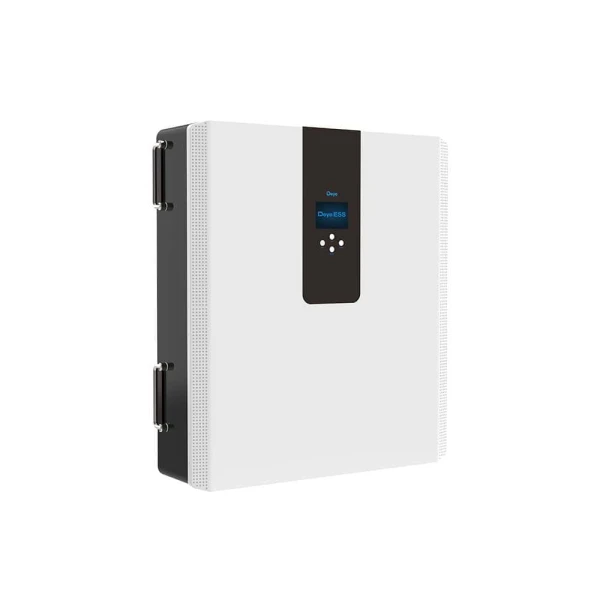
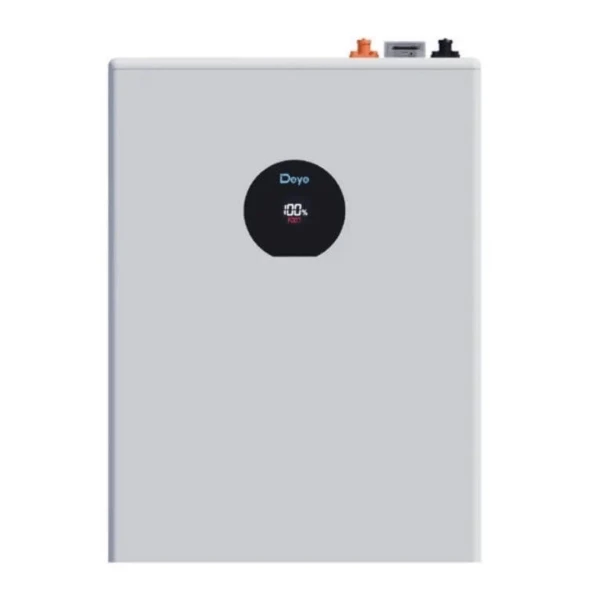
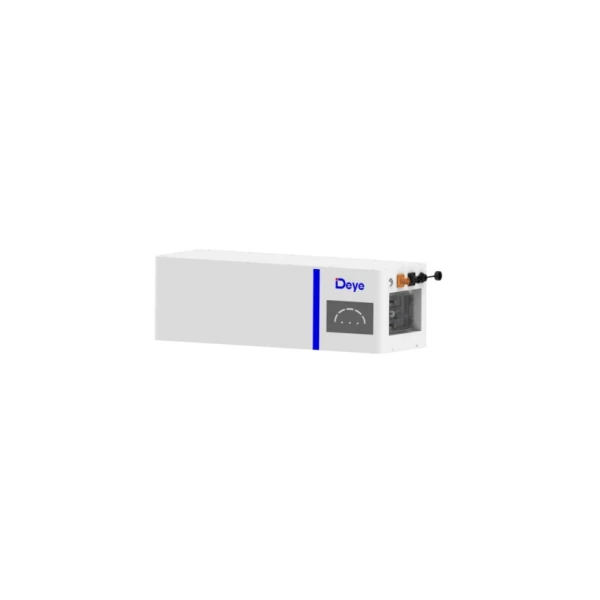
The BOS-G Pro battery module is a 5.12 kWh, 51.2 V nominal voltage, 100 Ah LiFePO4 battery. The modules are mounted on the shelves of a 19-inch rack cabinet; the cluster is managed by the BOS-G-PDU-2 controller, and communication takes place via the CAN 2.0 or RS485 protocol. A single cluster can accommodate 5–16 modules, allowing for a capacity ranging from 25.6 to 81.92 kWh; according to the manufacturer, up to 16 clusters can be connected in parallel. Due to the small module size, the Deye BOS-G is well-suited for smaller commercial systems; however, a capacity of 60 kWh requires 12 of these modules.
What is the Deye GB-W?
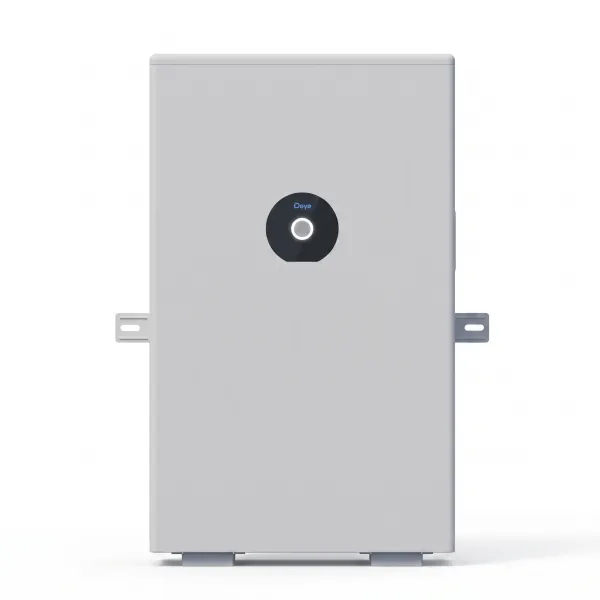
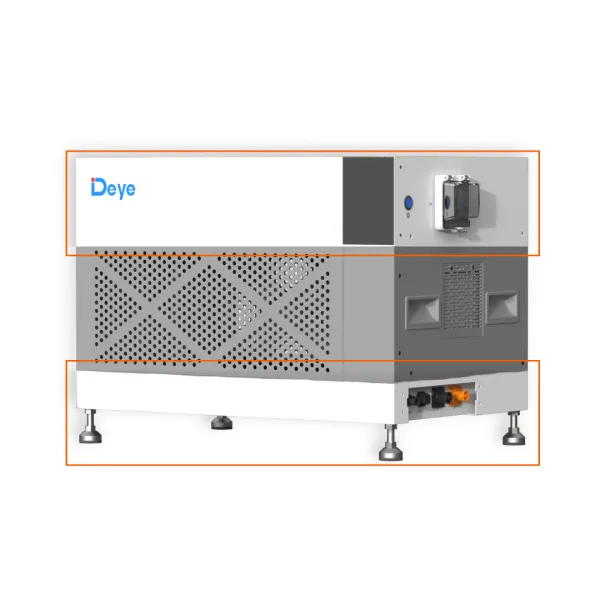
The Deye GB-W battery module is a 12.03 kWh, 51.2 V, 235 Ah LiFePO4 unit—more than twice the size of the BOS-G Pro module. The modules can be stacked on top of each other without wiring, and the cluster is controlled by the GB-W’s own PDU unit. A single cluster can contain 5–16 modules, providing a capacity of 60.1–192.5 kWh, and the Deye GB-W operates with a continuous charging and discharging current of 230 A. The manufacturer developed it specifically for small and medium-sized C&I energy storage systems, designed to work with Deye’s 30–125 kW HV hybrid inverters. Five modules are sufficient for 60 kWh, and this is where most of the GB-W’s advantages lie: fewer components, fewer connections, and faster installation.
Deye GB-W vs. BOS-G Pro Technical Comparison Table
In the table below, we have compiled the most important technical specifications of the two Deye energy storage systems side by side, based on the latest versions of the manufacturers’ data sheets. The data is taken from the Deye GB-W solution brochure dated July 2026 and the BOS-G Pro brochure dated April 2026. We have also listed configurations around 60 kWh in a separate row, as the differences are most striking at this size. We have highlighted in bold the specifications where the GB-W offers better performance.
|
Specification |
Deye GB-W |
BOS-G Pro |
|
Module Capacity |
12.03 kWh |
5.12 kWh |
|
Module nominal voltage |
51.2 V |
51.2 V |
|
Cell chemistry |
LiFePO4 |
LiFePO4 |
|
Number of modules for 60 kWh |
5 units (60.15 kWh) |
12 (61.44 kWh) |
|
Number of modules per cluster |
5–16 |
5–16 |
|
Capacity per cluster |
60.1–192.5 kWh |
25.6–81.92 kWh |
|
Assembly |
cable-free, stackable |
in a rack cabinet, with cabling |
|
Fire protection |
Package-level aerosol fire suppression, cell-level thermal insulation |
BMS protection |
|
Temperature monitoring |
cells and connections |
Cells (BMS) |
|
Cooling |
Natural air cooling with air ducts and dust filters |
Not specified in the data sheet |
|
IP rating |
IP20 |
IP20 |
|
Operating temperature |
Charge: 0–55 °C, Discharge: -20–55 °C |
Charge 0–55 °C, discharge -20–55 °C |
|
Cycle life |
≥6,000 cycles, 70% EOL |
≥6,000 cycles, 70% EOL |
|
Warranty |
10 years |
10 years |
|
Compatible inverter |
Deye 30–125 kW HV hybrid |
Deye HV inverters |
What does the energy storage comparison show? The basics are the same: both systems use LiFePO4 cells, 51.2 V modules, IP20 protection, and operate within the same temperature range; cycle life and warranty are also identical. The difference lies in the installation and operation. The BOS-G Pro keeps pace in cell technology, while the GB-W takes the lead in system-level design. The Deye GB-W requires less than half as many modules for 60 kWh, can be installed cable-free, is scalable up to 192 kWh in a single cluster, and comes with several built-in safety features. We’ll take a closer look at these in the following sections.
Installation: rack cabinet or cable-free, stackable battery modules
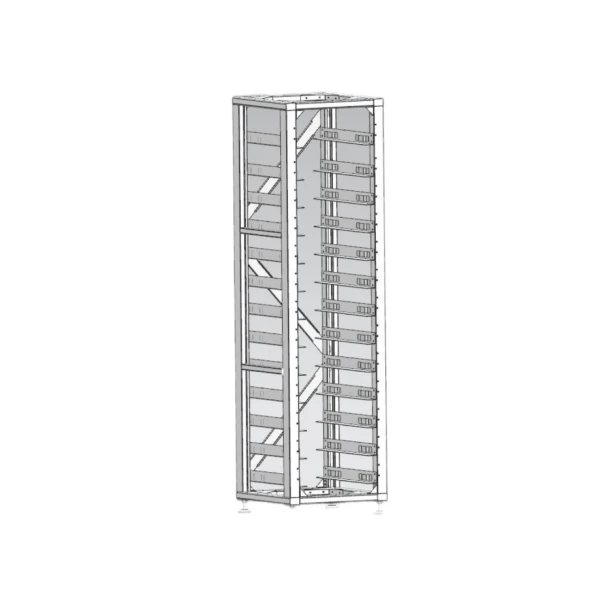
The BOS-G Pro modules are mounted on the shelves of a standard 19-inch rack cabinet; for a 60 kWh configuration, 12 battery modules and the PDU are housed in a single cabinet. This involves assembling the cabinet, inserting the modules one by one, and then connecting the modules to the BMS. This is a proven, well-documented solution, but each module represents an additional connection point that must be installed, inspected, and later maintained.
The Deye GB-W is based on a different approach. The manufacturer specifies a cable-free, stackable design: there is no separate cabling between the modules, and the stack can be easily assembled on the floor. For a 60 kWh system, five modules and the controller must be stacked on top of each other; no rack cabinet is required. A single GB-W module weighs 93 kg, which is worth considering when moving it on-site; however, only five units need to be lifted, as opposed to the twelve 46-kg modules of the BOS-G Pro. Fewer modules and fewer connections mean less installation time and fewer potential points of failure.
Maintenance is also simpler. The GB-W comes with a quick-release service panel, so according to the manufacturer, components can be replaced without disassembling the cluster, and individual modules can also be replaced separately. This means faster turnaround for the installer and less intervention by the operator over the course of an industrial energy storage system’s lifecycle. One aspect is the same for both systems: they have an IP20 rating, so they must be installed indoors in a dry, protected room.
Safety and Thermal Management in Industrial Energy Storage
Both systems are based on LiFePO4 cells, which are among the most thermally stable of lithium-ion technologies, and both are protected by a BMS against overcharging, deep discharge, overcurrent, and overheating. However, the Deye GB-W datasheet documents several additional built-in safety layers. The difference, therefore, lies not in the basic protection but in the extra layers built upon it.
Package-level aerosol fire suppression and cell-level thermal insulation
Aerosol fire suppression consists of a small, unpressurized unit that automatically activates when a preset temperature threshold is exceeded, releasing fine particles into the enclosed space. These particles interrupt the chemical chain reaction of combustion; they do not merely smother the flame. In the GB-W, this operates at the pack level—that is, separately in each module. It is important to note that the aerosol does not stop thermal runaway but rather slows the onset of a fire. This is why it is complemented by cell-level thermal insulation, which slows the spread of heat from an overheating cell to neighboring cells. This is a particularly important consideration in commercial and industrial settings, where the battery is often located inside an operational building near employees. The BOS-G Pro data sheet does not mention a separate fire suppression system.
Dual Temperature Monitoring and Natural Air Cooling
The GB-W’s BMS monitors not only the temperature of the cells but also that of the connections. Connection points can overheat due to loose or oxidized connections, so this dual monitoring addresses a common source of failure. Cooling is provided by natural air cooling via directed air ducts and a dust filter. The dust filter helps keep the air ducts clean, whether in a workshop or a warehouse. According to the manufacturer, the temperature difference between cells remains below 4 °C. This is important because, according to research, uneven temperatures cause the cells to lose capacity at different rates, which degrades the performance of the entire industrial energy storage system over the long term.
Cycle Life and Warranty: Where There Is No Difference
There is no difference between these two systems. The manufacturer specifies at least 6,000 cycles for both up to 70% EOL under identical test conditions (25 °C, 0.5C charge and discharge), and both are covered by a 10-year warranty. 70% EOL means that at the end of the specified number of cycles, the battery can still store at least 70% of its original capacity. This is not the end of its operational life, but rather the limit of the lifespan guaranteed by the manufacturer. Assuming one full cycle per day, 6,000 cycles equate to more than 16 years.
The actual cycle life depends on the depth of discharge, temperature, and load, which is why the consistent thermal management described in the previous section is so important. The bottom line: by choosing the Deye GB-W, you don’t sacrifice anything in terms of lifespan or warranty compared to the BOS-G Pro, but you get the same performance at a more affordable price.
Cost Comparison for a 60 kWh Energy Storage System
The price of a single battery module on its own can be misleading, so it’s worth comparing the complete, operational systems. We calculated the cost of a system around 60 kWh using both product lines, including all necessary components. The calculation is based on SOLARKIT’s October 2026 prices.
System price including all necessary components
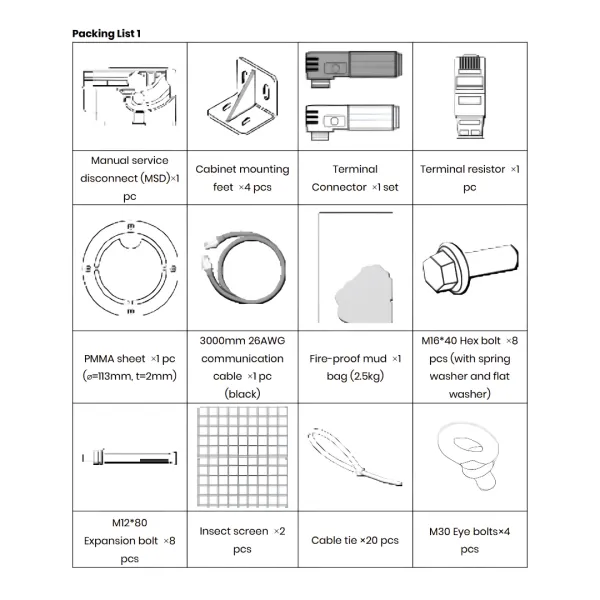
For the BOS-G Pro, a 61.44 kWh system requires 12 modules, one BOS-G-PDU-2 HV controller, and one 3U-HRACK rack cabinet, which houses the BMS and all 12 modules. For the GB-W, 5 modules and one GB-W-PDU controller are sufficient for 60.15 kWh. Depending on the installation, this is accompanied by the GB-W-Base mounting base and accessory kit, which includes floor mounting hardware, a cover plate, and service rails. Based on this comparison, the complete GB-W set is approximately 10% cheaper than the BOS-G Pro set. Since prices are subject to change, the current Deye GB-W price is listed on the product page, and all components of the system are available in the Deye energy storage category.
What does the price per kWh show?
The BOS-G Pro set has a capacity that is approximately 1.3 kWh greater, so it’s worth looking at the unit price as well. On a per-kWh basis, the difference is nearly 10%, meaning the GB-W’s price advantage does not stem from its lower capacity. In addition, fewer components need to be procured, shipped, and installed, which can also be reflected in the installation labor costs. Fewer items also simplify the quoting and ordering processes. If you have a project exceeding 60 kWh and need a BOS-G Pro alternative, request a quote for the complete GB-W set.
Which GB-W configuration is compatible with which Deye hybrid inverter?
The GB-W is compatible with Deye’s 30–125 kW HV hybrid inverters, as well as the 100 and 125 kW PCS units. When pairing with an HV battery, not only the capacity matters, but also the cluster voltage. The battery-side current of Deye’s 30–50 kW SG02HP3 series hybrid inverters is up to 160 A. The 5-module, 60 kWh configuration has a nominal voltage of 256 V, so it can deliver approximately 41 kW of power at this current. Therefore, this configuration is suitable for 30–40 kW inverters; larger inverters require more modules, meaning a higher voltage.
If you’re still planning your capacity, our article “Sizing Industrial Energy Storage: Based on kWh, kW, and Load Profile” walks you through the calculation step by step.
GB-W60 through GB-W192: Inverter Compatibility Table
The manufacturer recommends the following pairings; this table also serves as a list of Deye GB-W-compatible inverters:
|
Deye Inverter |
Recommended Configuration |
Modules |
Capacity |
|
SUN-40K-SG02HP3-EU-BM4-P |
GB-W60 |
5 units |
60.1 kWh |
|
SUN-50K-SG02HP3-EU-BM4-P |
GB-W72 |
6 units |
72.1 kWh |
|
SUN-60K-SG02HP3-EU-EM6 |
GB-W96 |
8 units |
96.2 kWh |
|
SUN-70K-SG02HP3-EU-EM6 |
GB-W108 |
9 units |
108.2 kWh |
|
SUN-80K-SG02HP3-EU-EM6 |
GB-W120 |
10 units |
120.3 kWh |
|
SUN-100K-SG02HP3-EU-GM8/10 |
GB-W120 |
10 units |
120.3 kWh |
|
SUN-125K-SG02HP3-EU-GM10 |
GB-W156 |
13 units |
156.4 kWh |
The logic behind the table is simple: each additional module increases the cluster voltage by approximately 51 V, allowing for higher power output at the same current. For a 50 kW inverter, 6 modules—or approximately 72 kWh—are therefore recommended.
If your project falls between two configuration options, or if you’re planning to connect multiple clusters in parallel, we’d be happy to assist you in pairing the Deye hybrid inverter with the GB-W.
When is the BOS-G Pro the better choice, and when is the Deye GB-W?
Both are reliable Deye HV batteries, but they are designed for slightly different project sizes. If you’re wondering which Deye battery to choose for a specific project, the table below shows, based on the same criteria, which one is the better choice in each case. We’ve also put together two short checklists following the table.
|
Criteria |
Deye GB-W |
BOS-G Pro |
|
System Size |
60–192.5 kWh per cluster |
25.6–81.92 kWh per cluster |
|
Inverter |
Deye 30–125 kW HV hybrid, 100/125 kW PCS |
Deye HV inverters |
|
Price around 60 kWh |
Approx. 10% cheaper |
– |
|
Installation |
5 modules, cable-free |
12 modules in a rack, with cabling |
|
Fire Protection |
Package-level aerosol fire suppression |
BMS protection |
|
Lifespan and warranty |
≥6,000 cycles, 10 years |
≥6,000 cycles, 10 years |
|
Minimum installation |
60 kWh |
25.6 kWh |
|
Parallel expansion |
Not specified |
up to 16 clusters |
When should you choose the Deye GB-W?
The GB-W is the better choice if at least one of the following applies to your project:
-
You need a commercial energy storage system of 60 kWh or more, with up to 192 kWh in a single cluster.
-
You’re using a Deye 30–125 kW HV hybrid inverter or a 100/125 kW PCS unit.
-
Capital costs matter: for around 60 kWh, you’ll pay about 10% less for the complete system.
-
Quick installation and fewer connection points are important.
-
Due to site conditions or safety requirements, built-in, system-level fire suppression is an advantage.
When should you choose the BOS-G Pro?
The BOS-G Pro remains a good solution if:
-
You have a project under 60 kWh, starting as low as 25.6 kWh, because the smallest GB-W configuration is 60 kWh.
-
You need exactly 60 kWh to pair with a 50 kW inverter: due to the BOS-G60 Pro’s higher voltage, the manufacturer pairs it with a 50 kW inverter; with the GB-W, this requires a 72 kWh configuration.
-
You can expand an existing BOS-G Pro system with the same module type.
In short: for systems starting at 60 kWh, when choosing between the Deye GB-W and the BOS-G, the GB-W is the better choice for most projects. It’s cheaper, installs faster, comes with more safety features, and you don’t have to compromise on lifespan or warranty. Do you have a project around 60 kWh? We’ll send you a quote for the GB-W and help you pair it with the right inverter.
Frequently Asked Questions About the Deye GB-W and BOS-G Pro
Can the Deye GB-W be used for smaller systems?
No, the GB-W’s minimum configuration is 5 modules, or 60.1 kWh. A cluster must contain at least this many modules because the manufacturer specifies the cluster’s operating voltage as 208 V. If your project requires a storage system smaller than 60 kWh, the BOS-G Pro is the right choice, as it can be configured starting at 25.6 kWh in 5.12 kWh increments.
Which Deye hybrid inverters are compatible with the GB-W?
The GB-W is compatible with Deye’s 30–125 kW HV hybrid inverters, as well as the 100 and 125 kW PCS units. The system configuration must be adapted to the inverter’s power rating: the 5-module, 60 kWh version is designed for 30–40 kW inverters; 6 modules are recommended for a 50 kW inverter, and 13 modules for a 125 kW inverter.
Can the Deye GB-W HV battery be installed outdoors?
No, the GB-W has an IP20 rating, so it must be installed indoors in a dry, protected location. IP20 provides basic protection against solid objects but does not offer protection against water. According to the manufacturer, the system can be charged between 0 and 55 °C and discharged between -20 and 55 °C; this should also be taken into account when selecting a location.
Can the GB-W system be expanded later?
Yes, it can be expanded from 5 to 16 modules in a single cluster, which corresponds to a capacity ranging from 60.1 to 192.5 kWh. The modules can be stacked on top of each other without cables, making expansion simple. Since each new module increases the cluster’s voltage, you should always verify before expanding that the new configuration is compatible with the existing inverter.
What is the cycle life and warranty for the Deye GB-W?
The manufacturer specifies at least 6,000 cycles to 70% EOL at 25 °C with a 0.5C charge and discharge rate, and offers a 10-year warranty. At one full cycle per day, this translates to more than 16 years of operation. These figures match those of the BOS-G Pro, meaning that by choosing the GB-W, you’re not sacrificing anything in terms of lifespan.