How does a virtual power plant with solar panels and a battery work?
More and more households are generating electricity with solar panels and storing it in batteries; however, these small systems individually have little impact on the power grid as a whole. A Virtual Power Plant (VPP) uses software to connect many distributed generators, storage units, and consumers, allowing them to operate as a single power plant for the grid. First, we’ll clarify the concepts behind the term VPP and explain why there is a growing need for it as renewable energy generation expands.
Next, we’ll go through the types of devices that can be connected to a VPP, ranging from solar panels and battery energy storage systems to electric vehicles and heat pumps. The operation of a virtual power plant can be broken down into four steps: data collection, aggregation, optimization, and control—we’ll explain each of these in turn. We’ll also explain the role of the aggregator, which offers the portfolio’s flexibility to the system operator and the energy market.
The SOLARKIT recommendation section will discuss why the combination of solar panels and batteries provides the most flexibility in a virtual power plant. The article concludes with brief answers to the most common questions to help you quickly get up to speed on the topic.
What is a VPP energy management system?
A VPP is not a building or a turbine, but rather a software-based control layer. It is an energy management system that forecasts, aggregates, and then controls the generation, storage, and consumption of many small devices according to the needs of the grid or the market. The literature therefore describes it as an information and communication system, not as a physical power plant. Its main task is to make better use of renewable generation and to sell the resulting flexibility on the energy market.
What does the term “Virtual Power Plant” mean?
“Virtual Power Plant” translates to “virtual power plant” in Hungarian. The term dates back to 1997, when Shimon Awerbuch used the concept of a “virtual utility” to describe how the benefits of many small, distributed energy sources could be harnessed within a single system. One of the early, widely cited pilot projects is associated with the Fraunhofer Institute: 36 wind, solar, biogas, and cogeneration units were managed as a single power plant, supplying electricity to 12,000 households 24 hours a day.
The term “virtual” refers to the fact that there is no single site, smokestack, or turbine. The devices are scattered and typically operate behind consumers’ meters; they are often owned by individuals or companies and are connected via cloud-based software. The term “power plant” indicates that, from the grid’s perspective, this fleet behaves as a single resource and provides services that were previously provided by traditional power plants.
In short, VPP stands for the software-based coordination of distributed energy resources (DER). These include solar panel systems, residential and industrial batteries, electric vehicles, and controllable loads.
Not all VPPs are the same. According to technical classifications, the simplest form is a utility program in which individual devices respond separately to grid signals. At a more advanced level, the devices respond as a fleet, acting as a single unit. At the highest level, the fleet also participates in the wholesale energy market while operating in coordination with the local distribution network.
What is a virtual power plant, and why is it needed?
If I had to answer in one sentence what a virtual power plant is: it’s many small generators, storage units, and consumers that software connects into one large, controllable resource. The second part of the question—why it’s needed—stems from the proliferation of renewable energy sources.
The output of solar panels and wind turbines depends on the weather. According to the International Energy Agency (IEA), in a scenario aligned with national climate goals, the electricity system’s need for flexibility will double between 2022 and 2030. Meanwhile, the phase-out of easily controllable conventional power plants will reduce the system’s inertia and its ability to provide reliable regulation.
Distributed energy resources are individually too small for the system operator to see and utilize them. A virtual power plant (VPP) solves precisely this problem: it makes these assets visible and controllable, allowing a significant portion of grid flexibility to come from households and business sites. Since these assets are located where the electricity is actually consumed, the VPP also reduces the load on the overburdened transmission grid.
An analysis by the U.S. Department of Energy (DOE) shows that this is not just theory. According to the analysis, most VPP capacity today operates through demand response programs. Tripling this capacity by 2030 could cover 10–20 percent of peak load and save roughly $10 billion in grid costs annually. The same analysis concluded that a VPP consisting of behind-the-meter batteries and EV chargers provides peak capacity at roughly half the net cost of a large-scale battery farm or a gas-fired peaker plant.
What types of devices can be connected to a VPP?
Virtually any device that generates, stores, or consumes power in a controllable manner can be connected to a VPP, provided it can be remotely measured and controlled. It is worth distinguishing between two groups: one can only reduce its own consumption, while the other is also capable of actively supplying power. The home battery occupies a special place because it is suitable for both roles. The list ranges from residential solar panels all the way to industrial processes.
Solar Panel System as a Virtual Power Plant with Energy Storage
Solar panels are the most widespread distributed energy source, but their output is weather-dependent, so they cannot be relied upon in the same way as a power plant that can be started according to a schedule. Next Kraftwerke, one of Europe’s largest VPP operators, also warns that while such feed-in is measurable and predictable, the nature of the generation makes participation in flexibility markets nearly impossible.
A smart inverter allows generation to be monitored, programmed, and curtailed remotely as needed. This is downward regulation: the solar panel can reduce feed-in, but it cannot increase it. This can be useful when there is an oversupply on the grid, but it is not sufficient on its own to meet peak-time demand.
A virtual power plant (VPP) with solar panels is therefore truly valuable when it includes energy storage. According to a technical summary, the solar system primarily serves the home; the battery adds flexibility; and the VPP, as a third layer, coordinates the operation of many such homes.
Storage also reduces losses. Where many solar panels feed power back into the low-voltage grid, the voltage rises, and the inverters are forced to curtail production. According to a study, with smart inverters and an optimally sized battery, this forced reduction in output—and the resulting financial loss—can be reduced by 47 percent. A solar-powered virtual power plant thus utilizes solar energy that would otherwise be lost, and through energy storage, the surplus generated during the day becomes a reserve for the evening.
Battery Energy Storage
The battery is the most versatile component of a VPP because it can act as both a consumer and a generator: it charges during periods of excess generation and discharges during peak demand. A virtual power plant based on battery storage can adjust its output more quickly than thermal power plants, which is particularly valuable where rapid load changes occur on the grid. Industry experts therefore consider the storage system to be the backbone of virtual power plants: without it, the VPP would lack the rapid responsiveness needed to react to changing grid conditions.
Without energy storage, a VPP would largely be capable only of curbing consumption. A virtual power plant with a battery, however, can also feed energy back into the grid. In a joint program by Ava Community Energy and Sunrun, for example, 1,200 residential customers receive a fixed fee for discharging their batteries during the evening peak every weekday.
Meanwhile, the owner’s interests are not compromised. According to a summary by Aurora Solar, most programs retain a charge level of about 20 percent for the household by default, and in the event of a power outage, the system automatically switches to supplying the home and no longer supports the grid. To get the full picture, it’s important to note that every draw on the system represents an additional charge-discharge cycle, which gradually accelerates the aging of battery storage systems.
In addition to residential units, larger, industrial- or grid-scale BESS systems can also be part of the portfolio. The same software can therefore manage both residential energy storage units and large storage fleets, and to the grid, all of this appears as a single resource.
Electric Cars and EV Chargers
An electric car spends most of its time stationary: according to a gridX analysis, it is parked roughly 95 percent of the time. If it is connected to a charger during this time, its battery becomes a flexible resource.
The most common form today is one-way smart charging (V1G). In this case, the charger adjusts the charging power and timing to match generation or grid load—for example, during peak solar generation or during off-peak hours. According to the International Energy Agency, smart charging reduces peak load and also minimizes the need to curtail renewable generation. However, flexibility is limited because it depends on the car’s charge level upon arrival and when the owner needs the desired range. Smart charging can also be adjusted to time-of-use rates, allowing the owner to charge during the cheapest hours. With fast charging, however, there is virtually no flexibility, as the goal is to charge as quickly as possible.
The next step is bidirectional charging (V2G), where the car also feeds power back into the grid. The IEA considers the potential of this technology to be significant: according to a study conducted in San Francisco, by 2050, V2G could prevent three-quarters of transformer overloads compared to unregulated charging, and half compared to one-way smart charging.
However, the lack of standardization and regulation is still slowing the adoption of bidirectional charging. For this reason, in most virtual power plants, EV chargers currently function primarily as controllable loads: they do not feed energy back into the grid, but by timing their charging, they significantly reduce the load on the grid.
Heat Pumps and Other Controllable Loads
At first glance, a heat pump is a simple load, but from a VPP perspective, it also functions as a storage device. According to a review of the literature, the thermal mass of a building can store energy in the form of heat, allowing the building itself to function as a virtual battery: the indoor temperature corresponds to the charge level within the comfort range, while the thermal mass corresponds to the capacity.
In practice, this means that the heat pump preheats or pre-cools the building during periods of abundant renewable energy production and reduces its operation during peak times, while maintaining a comfortable indoor environment. Buildings with high thermal mass maintain a comfortable indoor temperature for longer periods even when external conditions change, so the brief reduction in heat pump operation goes almost unnoticed. With a buffer tank or domestic hot water storage tank, the flexibility increases further because heat production is decoupled from electricity consumption over time. According to a recent study, this capability is most effective when combined with solar panels, a battery, and a thermal storage tank.
This possibility is not merely theoretical. In a development project funded by the U.S. Department of Energy, researchers are working on a prototype heat pump integrated with a thermal storage tank, designed to operate for three hours with a peak demand 20 percent lower than that of a conventional air-source heat pump.
The same logic applies to other heat storage-type appliances, such as water heaters, electric space heaters, and refrigeration units. However, the degree of flexibility varies from building to building, as the potential offered by the mass of the heat storage system depends largely on the type of building.
How VPPs Work and Industrial Consumers
Industrial and commercial consumers constitute one of the oldest pillars of virtual power plants. According to a summary by the World Economic Forum, VPP participants include large consumers—such as factories—whose owners commit to reducing their consumption during periods of high demand.
The operation of the VPP system here is based on the scheduling of processes. According to Next Kraftwerke’s planning guide, processes such as grinding and melting, feed pumps, cooling, heating, and drying processes, data centers, and power-to-X technologies can be made flexible, while emergency power sources and storage systems are particularly well-suited for integration into a virtual power plant.
The benefits come from two directions. Energy-intensive operations can be shifted to off-peak hours, and the flexibility offered to the grid generates revenue, which the operator shares with the asset owner. According to Next Kraftwerke, consumer-side flexibility—such as peak shaving—is a highly sought-after service that transmission and distribution system operators can also purchase.
There are also real limitations. According to a recent literature review, technological constraints on interruptible industrial loads allow only for short and infrequent dispatch windows. The same study also showed that if these loads are combined with battery storage, the portfolio can already meet the requirements for fast frequency reserve services. The storage system covers fast, short-duration calls, and the production process adjusts only when technologically feasible.
How a VPP (Virtual Power Plant) Works
The easiest way to understand how a VPP works in practice is to think of it as a single process. The software compiles an aggregated picture from the data received from the devices, calculates the optimal schedule based on this, and then sends instructions back to the devices. The operation of the virtual power plant can thus be broken down into four continuously repeating steps, which are present across all time scales, from next-day planning to real-time intervention. We’ll go through these below.
Data Collection
It all starts with measurements. The VPP must constantly know how much power the solar panel is generating, what the battery’s charge level is, whether the electric vehicle is plugged in, and how much power the site is consuming. This data is provided by inverters, battery controllers, smart meters, and on-site gateways.
According to a Rocky Mountain Institute (RMI) report on VPP measurements, the quality of the data is determined by several key factors: latency, resolution (e.g., 15-minute or 2-second data), and whether the devices communicate using a standardized protocol. Missing or out-of-range values require special attention. According to the RMI, accurate, regularly transmitted data is one of the prerequisites for a more mature VPP.
Manufacturers use a variety of communication protocols, so standards play a key role. At the local level, inverters typically transmit data via the SunSpec Modbus protocol, while the IEEE 2030.5 and OpenADR standards have become widespread for communication with the cloud and grid operators. According to a summary by the OpenADR Alliance, the two standards complement each other: OpenADR excels at the widespread transmission of signals, while IEEE 2030.5 excels at detailed control and status monitoring. The more devices that adhere to these standards, the cheaper and less error-prone it becomes to integrate new products and models.
The practical lesson: if you’re considering a VPP in the future, it’s worth choosing an inverter and storage system that offers an open, documented communication interface.
Aggregation
During aggregation, the software compiles data from many individual devices into a single, market-ready resource. This is necessary because a residential storage system is too small to trade directly: in wholesale and system-level service markets, the minimum bid size is typically several megawatts. An example from the United States illustrates this scale well: participation in Consolidated Edison’s demand response program requires a 50-kW commitment, which is generally unattainable for a single household.
A VPP solves this by aggregating the individual flexibility of the assets into a single pool that represents the entire fleet’s control capacity and submitting this as a bid. From the market’s perspective, the aggregated portfolio thus behaves as a single large resource, and owners gain access to revenues that would be unattainable individually. In California, for example, the system operator (CAISO) has, since 2015, used a special participation model to allow assets individually under 1 MW to combine to reach the 0.5 MW threshold required to enter the market.
Mathematically, this is not a simple task. Due to the differing operational profiles of various types of devices—such as batteries, heat pumps, and EV chargers—it is generally not feasible to precisely calculate the combined flexibility range, so software uses approximation methods. For a homogeneous device fleet—such as an aggregation of battery energy storage systems—these methods work with good accuracy; however, for a mixed portfolio, they may yield overly conservative results, leaving some of the flexibility untapped.
Optimization
At the heart of a VPP is a cloud-based energy management system that decides what the fleet should do and when, based on the overall picture. To do this, it needs forecasts for consumption, market prices, and renewable generation. According to a report in IEEE Spectrum, many VPPs now use machine learning to forecast consumption flexibility, the output of solar panels and batteries, user behavior, and grid load events.
The planning process is layered. Based on the forecast, the operator submits a bid in the day-ahead market; during the day, it replans based on fresher data; and in real time, it corrects for actual deviations. The shorter the forecasting horizon, the smaller the error; therefore, the intraday market allows the operator to make corrections based on a more accurate forecast even before delivery. The difference between the committed and actual output must be settled in the form of energy, which can be costly. According to a study, rescheduling can reduce this discrepancy by up to 90 percent, depending on the season and strategy.
Optimization serves multiple goals simultaneously: maximizing revenue, minimizing costs, and ensuring reliable performance. The latter is particularly important because system-level service markets have strict reliability requirements, and failure to meet them can result in penalties or exclusion from the market. Good VPP energy management therefore takes into account the uncertainty of forecasts to avoid overbidding.
Control
In the final step, the decision is translated into physical action. The VPP operator uses real-time, automated control signals to activate individual devices to fulfill its market obligations. The software breaks down the aggregated bid into device-level instructions: which battery should discharge how much, and which heat pump should suspend operation for how long. This step is referred to in the literature as disaggregation: the aggregated control signal must be distributed among the members of the fleet.
The signal rarely goes directly to the equipment. Typically, it is received by the on-site EMS system or a gateway, which translates it into the inverter’s or charger’s own language. Through this, it is possible, for example, to set a feed-in limit, initiate demand-side operation, or retrieve telemetry data. According to a VPP training material, during periods of grid load, the operator sends a single signal, and up to several thousand devices respond within seconds or minutes.
The owner retains control throughout. These programs typically allow for user override; the VPP cannot exceed the set minimum charge level, and during a power outage, powering the home takes priority.
Control is also a security issue. According to a cybersecurity review, among common DER protocols, IEEE 2030.5 was developed from the outset with strict encryption requirements, whereas several vulnerabilities were identified in Modbus and DNP3, and only the latest versions comply with modern security standards. A reliable VPP is therefore based on encrypted, authenticated communication.
What is the aggregator’s role in a VPP?
The virtual power plant is a technical system, and the aggregator is the market participant that operates this system and conducts business on behalf of the fleet. According to IRENA, aggregators are new market participants that optimize the use of distributed energy resources and bring them to market as a single entity—a virtual power plant. The literature therefore often uses the two terms interchangeably. The term “energy aggregator” refers to the same type of participant.
What exactly does an energy aggregator do?
If you ask what an energy aggregator does, the most concise answer is provided by EU law. According to Directive 2019/944/EU, aggregation is an activity in which a natural or legal person combines the load or electricity generation of multiple consumers in order to sell, purchase, or auction it on any electricity market.
In practice, this involves several tasks. According to IRENA’s summary, the aggregator forecasts and sells the generation from these assets, schedules them to align with the intraday market, provides balancing services to transmission system operators, and, where a market exists, to distribution system operators as well. The aggregated fleet can also replace some peak-load power plants and smooth out load spikes caused by rapid fluctuations in renewable generation. It provides energy management services to owners, which can lead to savings on energy bills, and shares the revenue with participants.
A Belgian analysis illustrates the value of this: by implementing demand-side management with 40,000 residential heat pumps, 100 MW of upward regulation reserve can be secured at a cost of 0–14 euros per megawatt-hour, compared to the historical price of 32 euros for conventional reserves.
The directive also specifically mentions independent aggregators, which are not affiliated with the customer’s electricity supplier. Consumers may enter into an aggregation agreement with such an aggregator without their supplier’s consent, and the directive explicitly requires that customers receive a fair share of the benefits from this activity. Member States are responsible for establishing the detailed rules, so conditions may vary by country.
SOLARKIT Recommendation: Aggregating Solar Panels and Batteries Is Effective in a VPP
In this section, you can read our own recommendation. Since SOLARKIT sells energy storage systems, we intentionally base our argument on independent sources. In short: the combination of solar panels and batteries is effective in a VPP because the solar panels provide the energy, while the batteries provide the controllability. Together, they are capable of both ramping up and down, which neither could do on its own. The following two sections demonstrate this in practice.
Grid flexibility: storing excess solar power
Solar generation and consumption rarely coincide. According to a 2026 report by the European Union Agency for the Cooperation of Energy Regulators (ACER), the expansion of solar power is deepening the so-called “duck curve”: there are increasingly more hours with negative prices at noon, while price peaks are sharper in the morning and evening. In one example from Germany, on May 1, 2025, the evening price jumped above 400 euros/MWh following the midday low.
According to an analysis by Montel Analytics, the proliferation of negative prices is driven by record-high solar power generation, as well as a lack of storage facilities and flexible consumption. By the end of October 2025, more than 500 hours of negative prices were recorded in one of Sweden’s price zones, as well as in the Netherlands, Germany, Spain, Belgium, and France. According to a recent analysis examining the spring period, 46.8 percent of solar power generation in Germany already occurred during hours with negative prices.
This is where batteries come into play. If you store the midday surplus in a battery rather than feeding it into the grid, you’re not selling it at a depressed price, and the grid is relieved of the load. In a VPP, all of this happens in a coordinated manner across many homes simultaneously, and that’s true grid flexibility.
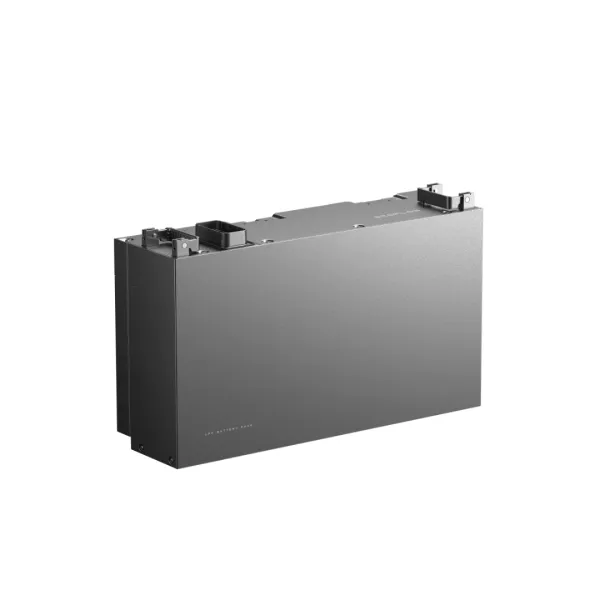
When selecting equipment, communication capabilities are key. According to the manufacturer, more than 17,000 systems from EcoFlow’s European PowerOcean series of energy storage units are in operation across Europe, controlled by the company’s proprietary home energy management software (HEMS). According to the manufacturer, eligibility for VPP participation varies by region and utility, so it’s worth checking in advance.
Feeding Power Back into the Grid During Peak Load
The true value of the storage system becomes apparent in the evening, when solar panels are no longer generating power, but consumption and prices are at their peak. At such times, the virtual power plant uses the solar energy stored in the batteries to power the household or feeds it into the grid, thereby replacing some of the expensive peak-load power plants.
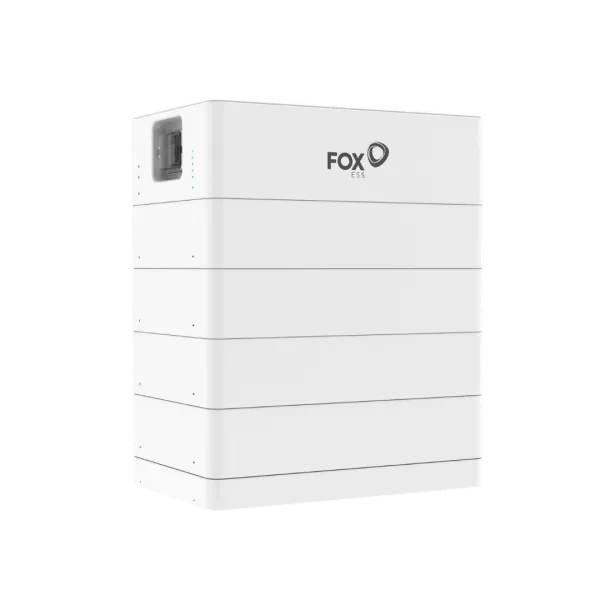
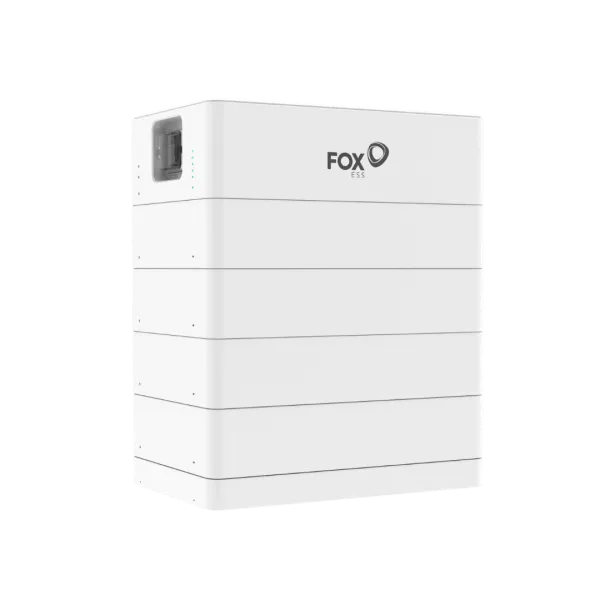
This works in practice as well. According to the manufacturer, FoxEss energy storage systems are already working with four VPP providers and nine distribution network operators in Australia, and in the United Kingdom, they can be connected to Axle Energy’s VPP. According to Axle’s description, the system typically discharges energy 4–8 times per month, and the owner retains full control over the battery via the app.
At industrial and commercial sites, reducing peak load can pay for itself. Where rates depend on the highest measured power, the battery keeps grid consumption below a certain threshold, thereby reducing the power charge. According to the U.S.-based Clean Energy Group, solar panels alone rarely reduce peak demand effectively, whereas a battery is fully controllable and therefore particularly well-suited for this task. We’ve written about this in detail in our article titled “Peak Shaving with Energy Storage.”
Our recommendation: Don’t wait until later to look for VPP capability. Already during the planning phase, choose a hybrid inverter and storage system that offers a standard, open communication interface, and check the warranty conditions under which the manufacturer allows external control.
Frequently Asked Questions About Virtual Power Plant Systems
What is the role of the EMS system in a virtual power plant?
The EMS, or on-site energy management system, monitors, controls, and optimizes a home’s or facility’s solar panels, battery, and loads as a single integrated system. In a virtual power plant, it receives signals from the VPP platform and executes them while adhering to local constraints, such as the set minimum charge level.
VPP and BESS Systems: What’s the Difference?
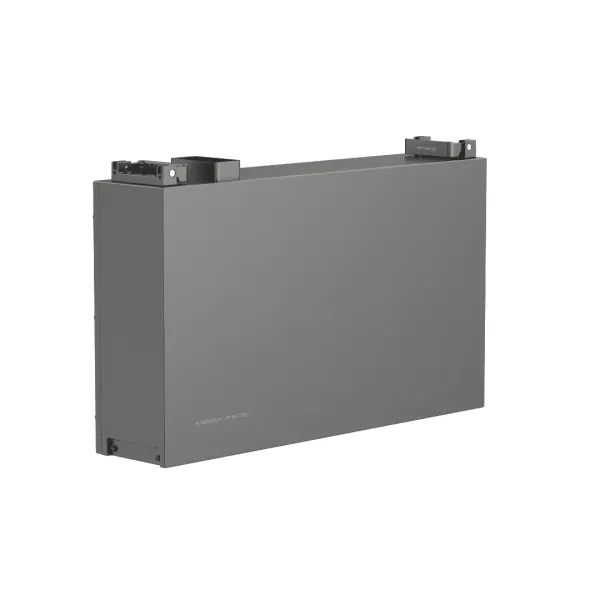
A BESS is a physical device—that is, a battery energy storage system—while a VPP is a software-based coordination system that manages many different devices as a single resource. A BESS system can be part of a VPP, so VPPs and BESSes are not alternatives to one another: the storage system is the hardware, and the virtual power plant is the layer that coordinates many such storage systems and brings them to market.
What is the difference between a VPP and a microgrid?
A microgrid operates within fixed boundaries and can disconnect from the grid to operate in island mode, thus supplying its consumers even during a power outage. A VPP, on the other hand, remains connected to the grid, aggregates devices scattered over a large area, and primarily serves the grid and the market.
Does VPP participation reduce battery lifespan?
Every load request represents an additional charge-discharge cycle, but the impact depends mainly on how the battery is used: damage is primarily caused by deep discharges and unfavorable temperatures, while shallow, well-controlled cycles cause significantly less damage. It’s worth checking whether the program maintains a minimum charge level and what the manufacturer’s warranty says about external control.
What do I need to connect my solar system to a VPP?
You’ll need an inverter and storage system that can be controlled remotely and provides real-time data, as well as an available VPP program in your area. In the EU, under Directive 2019/944/EU, you can enter into an aggregation agreement and request the installation of a smart meter even without your utility provider’s consent.