How to Install Solar Panel Grounding Without Errors
When installing solar power systems, one of the most critical—yet most frequently overlooked—tasks is the proper installation of the electrical grounding system. A poorly or incompletely installed grounding system can not only cause serious property damage but also pose a direct risk of accidents—whether from electric shock, fire, or power surges caused by lightning strikes. In this article, we’ll walk you through, step by step, why proper solar panel grounding is essential, how this is done for both new and existing systems, and what standards and regulations govern the installation process. We’ll show you how to measure grounding resistance, what steps are involved in a proper design process, and what typical mistakes—from poor wire selection to inadequate potential equalization—occur in most systems. At the end of the article, a SOLARKIT-specific recommendation helps you verify the inverter grounding to ensure that the installed system complies with current regulations in every respect.
Why is professional grounding of solar power systems important?
A solar system consists of more than just solar panels, inverters, and cables. Electrical grounding forms the foundation of electrical safety for the entire system—it is the element that receives the least attention in many installations, yet most accidents can be traced back to its absence or failure.
In a solar power system, grounding is not merely a technical detail, but the foundation of the entire safety concept. During normal operation, ideally no current flows through it—it becomes important when something goes wrong: an insulation fault, a lightning strike, a power surge, or a short circuit. In these situations, a properly designed grounding system is the only guarantee that people and equipment can remain protected.
Proper grounding is one of the most important elements of touch protection. Its purpose is to safely divert dangerous voltage to ground in the event of a fault, and this role is particularly critical in solar power systems.
Some utility companies make permission to connect solar systems to the grid contingent on the existence of a report certifying the touch protection measurement. This means that improper grounding can have not only safety but also legal consequences: the system may not receive a grid connection permit.
How does grounding work?
The essence of grounding is connecting certain parts of the electrical system to the ground, so that if a fault occurs—such as an insulation failure or a short circuit—the current can be safely dissipated into the ground. This prevents the voltage from rising to dangerous levels on equipment or fittings and reduces the risk of electric shock.
Potential equalization is a key element of touch protection that is closely related to grounding. Essentially, all large-scale electrically conductive parts—metal water pipes, gas pipes, heating systems, and metal-framed building structures—are connected to the main grounding terminal. This ensures that no dangerous potential difference can develop between these metal objects in the event of a fault, thereby preventing electric shock resulting from contact between the two points.
In solar power systems, this is further complicated by the specific characteristics of the DC side: solar power systems must always be considered live on the DC side (except in the case of systems equipped with DC disconnect optimizers installed under the panels), even when the system is disconnected from the AC side. This is a fundamental difference compared to a conventional household electrical system and a key reason for designing solar panel grounding with particular care.
Installing the Grounding System in a Solar Panel System
Installing grounding in a solar system is not simply a matter of laying a single cable—it is a complex, system-wide task in which every element is interconnected. A solar system has a single common grounding system: the mounting structure, the inverter housing, and the DC-side protective conductors are all connected to it. Potential equalization ensures that, in the event of a lightning strike, no dangerous voltage differences develop between different points in the system.
In practice, three main elements must be coordinated. First, the mounting structure: the aluminum rails and steel fasteners on the roof form a continuous, large-area metal surface that must be connected to the main grounding busbar. One point on the solar panels and support structures on the roof must be connected to the lightning protection grounding system and the building’s main EPH junction box using a copper conductor with a cross-section of at least 16 mm². Second, the inverter: the inverter’s protective conductor must be connected directly to the main grounding busbar with an appropriate cross-section, avoiding daisy-chain configurations. Third, the DC side: proper grounding of the surge arresters and pre-assembled AC/DC boxes is also essential for the system’s safe operation.
The material and size of the grounding probe—which establishes the physical connection to the ground—must be adapted to the on-site conditions. The type, moisture content, and structure of the soil significantly influence the measured resistance value, and in many cases, multiple electrodes must be connected to achieve an accurate result. It is important that the probe does not function as an isolated entity but becomes part of the entire system by connecting to the main grounding busbar.
Designing and installing retrofit grounding safely
In existing buildings where you plan to install a solar panel system, the design of retrofit grounding requires special attention. When installing a new PV system, it often turns out that the existing grounding does not meet current standards and needs to be supplemented or repaired.
The process of installing retrofit grounding typically consists of the following steps: the electrician first assesses the existing system, then—depending on the soil and property conditions—installs either rod grounding or ring grounding. Based on local soil conditions, the use of hot-dip galvanized rod grounding electrodes is recommended; the electrodes must be driven at least 3 meters deep, below the frost line. This is followed by pulling in the new grounding cable, then performing and documenting the measurements—the grounding resistance of the installed rod must always be measured, and if the value is insufficient, the rod must be driven deeper, in extreme cases up to a depth of 5–7 meters.
The installation and connection of retrofit grounding to the electrical system is never a DIY task—it must always be entrusted to a qualified electrician.
What regulations apply to grounding?
The electrical safety of solar power systems is governed by international standards, which are uniformly adopted by European Union member states and numerous other countries—whether under the MSZ, DIN, ČSN, SRPS, HRN, or other national prefixes. Therefore, regardless of the installation location, the same basic requirements must be followed.
The primary reference for the electrical installation of solar power systems is the IEC 60364-7-712 international standard. This document applies to the electrical equipment of PV systems, covering everything from PV modules to the connection point at the distribution panel or the utility grid, including the requirements for the installation of energy storage systems—such as batteries. The standard requires that all metal parts of the PV system—module frames, mounting structures—be connected to the protective earth (PE) system, ensuring potential equalization.
In the field of lightning protection, the IEC 62305 series of standards is the authoritative reference, which European member states have adopted under the designation EN IEC 62305. This is based on a risk-based methodology: whether lightning protection is necessary, and if so, at what protection level, must be determined by taking into account the dimensions and contents of the facility, the local lightning density, and the potential damage. Annex D of the standard specifically addresses the design of lightning protection for PV systems, including grounding rules for panel frames.
The design of grounding electrodes embedded in the ground is regulated by IEC 60364-5-54. For PV systems, the recommended grounding resistance should generally be less than 10 ohms; module housings, support structures, and other metal masses must be connected to an equipotential bonding system, and the lightning protection and electrical system grounding must be interconnected. IP protection is also a regulated factor: for outdoor enclosures, connectors, and equipment, selecting the appropriate protection rating is a fundamental requirement for long-term reliability.
Steps for designing a proper grounding system
The installation of solar panel grounding cannot begin with simply driving a probe into the ground—it must be the result of a well-structured process in which each step builds upon the previous one. The quality of the design directly determines whether the system will be truly safe and compliant with standards, or merely meet expectations on paper.
1. Assessment of the existing system and the site. First, it must be determined whether the building already has an existing lightning protection system, as the method of establishing equipotential bonding depends on this. At the same time, it is worth assessing the soil type: the soil type, moisture content, and structure significantly influence the measured resistance value—it is considerably easier to achieve the desired result in wet, clayey soil than in dry, stony, or sandy soil.
2. Measurement of specific soil resistance. It is advisable to perform this test before designing a new system. Measuring the soil’s resistivity must be performed before designing a new grounding system—the most common method for this is the Wenner method, in which four probes are placed at equal distances in the ground, and the resistivity can be calculated from the measured resistance. This data determines how many probes are needed and to what depth they must be driven.
3. Design and installation of the grounding system. All metal parts of the solar system must be connected in a star configuration: each individual structural element must be connected to the busbar via an EPH busbar, which runs all the way to the grounding probe and then connects to the building’s existing grounding system.
4. Designing the potential equalization system. The grounding of a solar panel system works well when it is integrated into the building’s overall potential equalization system and does not function as a separate solution—in the event of a lightning strike or fault, the greatest danger is not that high voltage appears at a single point, but rather that a large potential difference develops between two metal parts located close to each other.
Grounding resistance measurement
After installation is complete, measuring ground resistance is a mandatory step, and the results must be documented. Measuring ground resistance requires specialized equipment—the most common methods are the three-point and four-point procedures, in which probes are placed in the ground, the instrument applies a voltage between them, and the resistance is measured. For PV systems, the expected value should generally be below 10 ohms, while for larger ground-mounted systems, a resulting resistance of less than 1 ohm is the standard. If the measured resistance increases by more than 20–30 percent over time compared to the original value, it must be investigated and, if necessary, reduced by adding or replacing grounding electrodes.
Common mistakes in solar panel grounding design
The vast majority of grounding errors in solar panel systems are not unique, one-time problems—the same typical mistakes, omissions, and cost-cutting decisions recur time and again during installation. Below, we review the most common and, at the same time, most dangerous grounding errors.
Inappropriate selection of cables and connectors
An earthing system is only as strong as its weakest connection point. Where the conductor is particularly exposed to the elements—especially near the solar panel system, where temperatures can rise to as high as 60–70 degrees Celsius—the use of aluminum conductor is recommended, with a cross-section of at least 16 mm², as it has more durable external insulation than its copper counterpart. In other cases, installation must be done with a minimum 6 mm² copper cable.
An even more insidious mistake occurs when the mechanical fastening of the mounting structure seems sufficient to ensure electrical contact. The anodized aluminum layer or a painted surface can easily disrupt the electrical connection—this is not an aesthetic issue, but a measurable electrical parameter. In many cases, the metal frame of the solar panel may not make proper contact with the mounting structure, which can also cause a potential difference—clamping elements equipped with EPH pins provide a suitable solution for this, as they pierce into the module’s metal frame during installation, creating the necessary conductive connection.
Incomplete or poorly implemented potential equalization
If the mounting structure is not connected to the grounding system, it remains at floating potential: it can become energized during a lightning strike and poses a risk of electric shock in the event of a fault. A grounding fault is particularly dangerous because it is completely invisible during normal operation—it only becomes apparent when someone touches the metal part that has become energized.
DC-side surge arresters and AC-side protections only function effectively with proper grounding—circuit breakers can also only trip effectively if the grounding system is properly configured. Inadequate potential equalization therefore not only poses a direct life-threatening hazard but also compromises the effectiveness of all other protective devices.
Neglecting lightning protection and surge protection
A common oversight is failing to install proper grounding, isolating switches, and surge arresters during installation. Without touch protection, a potential insulation failure can cause an electric shock to anyone who touches the system. Without surge protection, a lightning strike or power surge can destroy the home’s equipment and the components of the solar system.
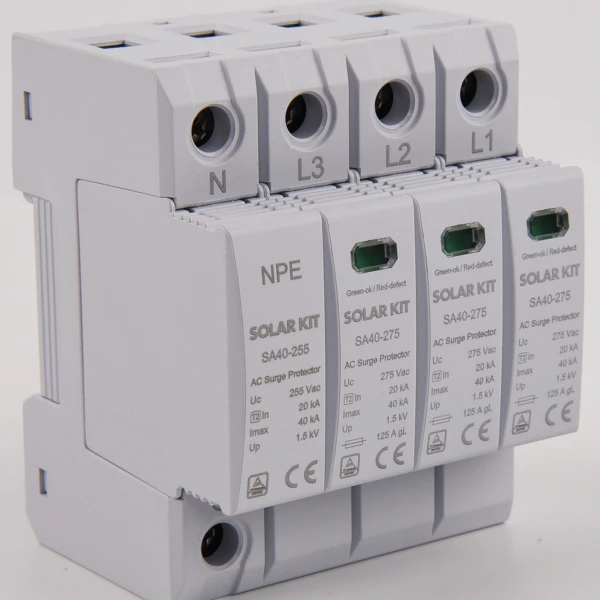
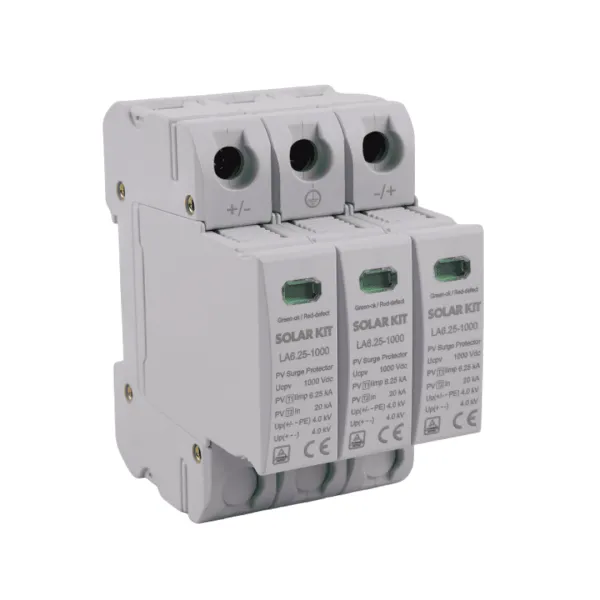
A surge arrester does not work at all without grounding: if the impedance of the discharge path is high, the protection is only superficial. Furthermore, surge arresters do not last forever—they need to be replaced after a major event, so their status indicators must be checked regularly.
SOLARKIT recommendation: Checking the inverter grounding
The inverter is the electronic heart of the solar system: this device converts the direct current generated by the panels into alternating current that can be fed back into the grid, and simultaneously handles touch protection, measurement, and communication functions. For this reason, checking the inverter grounding is one of the most important and most frequently overlooked steps—both before commissioning and during periodic inspections.
Solar systems must always be considered live on the DC side, even if the system is disconnected from the AC side. The electrical safety inspection should therefore be divided into two parts and performed separately on the DC and AC sides.
When checking the inverter’s grounding, it is advisable to review the following points. First, ensure that the protective conductor is connected directly to the main grounding busbar, rather than being connected through other equipment. Second, check the tightening torque of the connections and ensure the connection points are free of corrosion—an oxidized or loose connection could fail precisely when a fault occurs, just when it is needed most. Third, inspect the status indicators of the surge arresters: surge arresters do not last forever—they need to be replaced after a major event, so their status indicators must be checked regularly; otherwise, the next surge could hit the electronics unprotected.
The obligation to perform and document the inspection is stipulated by the international standard EN IEC 62446-1, which is applied in Europe and many other countries. This standard specifies the documentation to be provided to the customer after the installation of a grid-connected PV system, as well as the commissioning tests and inspection criteria that verify the system’s safe installation and proper operation, and it is also applicable for periodic re-inspections. If the inspection is not performed, the system’s performance may gradually decline, the risk of electric shock and short circuits may increase, and in some cases, insurance companies may deny claims for damages if the system was not properly maintained.
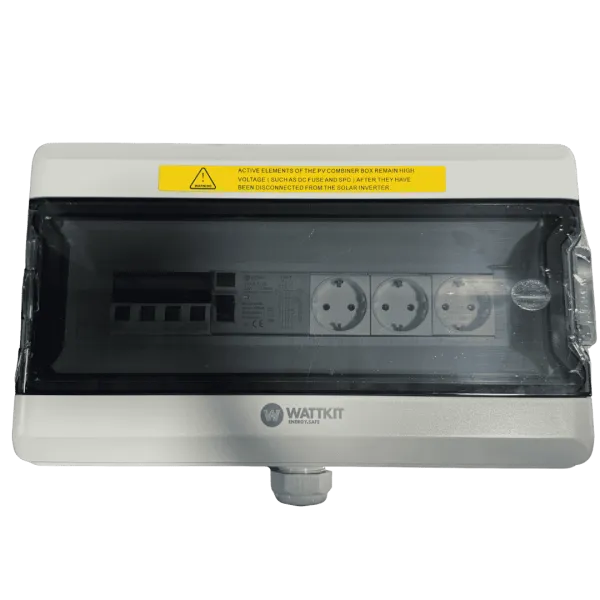
The pre-wired AC/DC boxes and surge arresters available in the SOLARKIT webshop are ready-made solutions that meet standard grounding and protection requirements right out of the box, significantly reducing the risk of on-site errors and making the electrician’s job easier as well.
Frequently Asked Questions About Solar Panel Grounding
Is grounding a solar panel system mandatory, or is high-quality insulation sufficient?
Insulation and grounding of a solar panel system represent two different and complementary layers of protection—neither can replace the other. On the DC side of solar panel systems, the equipment must always be considered live, even if it is disconnected from the AC side—it follows that, from a touch protection perspective, solar panel grounding is a fundamental safety requirement, not an optional addition. For grid-connected systems, the electrical safety documentation and verification of the measured grounding resistance are prerequisites for obtaining a connection permit.
What does the grounding symbol mean, and where do I find it in the system?
On electrical diagrams and electrical equipment, the grounding symbol is a downward-pointing symbol consisting of parallel horizontal lines that gradually shorten. In solar power systems, this symbol indicates the connection points of the protective conductor on the inverter, the junction boxes, and the grounding points of the mounting structure. The main grounding terminal is the central element of the grounding system—all grounding conductors and protective bonding conductors are connected here, and this ensures the electrical system’s neutral potential and stability. Knowing the grounding symbol helps you navigate the system documentation and inspection reports.
Is it necessary to install a retrofit grounding system if the house already has grounding?
Not necessarily, but the existing system must definitely be assessed and verified with measurements before connecting the solar panel system to it. When installing a new PV system, it often turns out that the existing grounding does not meet current standards and requires supplementation or repair. If the measured value is too high, a new grounding probe or additional protection may be necessary—this is particularly common in older buildings with unrenovated electrical systems. The installation of retroactive grounding must always be performed by a qualified electrician.
How often should grounding be checked in a solar PV system?
The international standard EN IEC 62446-1 stipulates that a full electrical inspection must be performed and the results documented before a grid-connected PV system is put into operation, and this same standard applies to periodic re-inspections. Over the system’s lifetime, ground resistance may change from time to time due to soil conditions, corrosion processes, and the aging of connectors. If, during periodic measurements, the grounding resistance value increases by more than 20–30 percent compared to the original value, it must be investigated and, if necessary, remedied by adding additional grounding electrodes.
Can surge protection function effectively without proper solar panel grounding?
No. Surge protection does not work without proper grounding: if the impedance of the discharge path is high, the energy does not dissipate through the grounding system but instead attempts to find a path through the equipment. This means that with a poorly designed or incomplete grounding system, the effectiveness of surge arresters and all other protective devices is drastically reduced, and the energy from a lightning strike can enter the inverter or the control electronics of the panels directly. Proper solar panel grounding is therefore not merely a standalone protective measure—it is also a fundamental prerequisite for the effective operation of all other protective solutions.