Heatable batteries for hybrid systems
If you are designing a battery storage system for a hybrid inverter system and do not have an indoor, heated space for the battery(ies), then the ability to heat the system is not optional: during the winter months, this determines whether your storage system can be charged at temperatures below ~0°C or not. LiFePO4 cells tolerate cold temperatures exceptionally well when discharged, but can be damaged when charging below ~0 °C, which is why manufacturers disable charging—this is precisely why built-in cell heating has emerged as a new industry standard, particularly for outdoor energy storage systems.
In this article, we’ll explore why battery temperature is critical for daily charging cycles, what the real difference is between an indoor and an outdoor unit, what exactly the term “heated” means, and what practical benefits it offers. We’ll also look at which models on the market today are truly considered heatable, with a focus on the Deye and Dyness portfolios, as well as when a simpler indoor unit is sufficient.
We’ll wrap up with a SOLARKIT recommendation: why this factor has become one of the most important design considerations if you want a durable, reliable system—and what criteria to use when choosing among heatable products.
Why is battery temperature important?
Today, home energy storage systems almost exclusively use lithium iron phosphate (LiFePO4) cells, which are extremely stable, long-lasting, and safe—but they have one sensitive point: charging below freezing. Fast charging of LiFePO4 cells is typically safe between 5 °C and 45 °C; below 5 °C, the charging current must be reduced, and charging is not recommended at all below freezing (~0 °C). There is a specific chemical reason for this: in cold temperatures, the incorporation of lithium ions at the anode slows down, and if you force a charge on the cell, the ions do not reach the correct location.
This phenomenon is called lithium plating: instead of ions, a layer of metallic lithium deposits on the anode’s surface. This layer is persistent, does not disappear even over multiple cycles, and causes three issues: it reduces storage capacity, increases internal resistance, and poses a safety risk in the long term. In the case of a residential energy storage system, this specifically means that an unheated outdoor battery installed on the wall of a cold, unheated garage or house simply cannot accept solar power generation during the winter cold, the built-in battery management system (BMS) monitors the temperature and shuts down the process at ~0 °C.
Capacity loss during discharge is also significant, but reversible. A battery that delivers its rated capacity at around 25 °C typically provides only 80% of its capacity at 0 °C, and as little as 50–60% at temperatures around -18 and -20 °C. While this does not damage the cell, it significantly impacts the winter energy balance: less usable stored energy, a system that discharges sooner, and charging only resumes in the morning once the cell temperature has warmed back up to a safe range. This is precisely why battery temperature has become one of the most critical design parameters for outdoor installations—and why models with built-in cell heating have entered the market.
Indoor vs. outdoor batteries: what’s the difference?
Energy storage systems available on the market fall into two main installation categories: indoor and outdoor models. The difference is not a marketing one, but a physical and design one: it lies primarily in the enclosure’s construction, its protection rating, and its temperature control. An indoor unit is typically manufactured with a protection rating between IP20 and IP54, which means that for IP20 (where the first digit indicates resistance to physical impact and the second digit indicates protection against water) there is no water protection (e.g., rain or condensation), whereas an IP54 unit is protected against "splashing water" from any direction. An outdoor unit, on the other hand, has at least an IP65 rating: it is dust-tight and protects against water jets from all directions, meaning it can withstand heavy rain, snow, and wet weather.
However, the protection level is only one side of the story. The other is temperature control. An indoor battery is typically designed for a temperature-controlled room—such as a technical room or a heated service room. Here, the ambient temperature can remain within the safe charging range all year round, meaning the cell does not require any active thermal assistance. An outdoor battery does not have this luxury: it may be exposed to scorching sunlight in the summer and freezing temperatures in the winter. Therefore, true outdoor models are not only waterproof but also provide active temperature control: cooling in the summer and—which is more important given Hungarian winters—heating at low temperatures.
The choice isn’t determined by which is “better,” but by where you can install the system. For a unit installed in a climate-controlled room, high IP protection and built-in heating are unnecessary extra costs. However, for a unit mounted on the side wall of a house, in a garage, on an outbuilding, or on an outdoor stand, both may be necessary. The most common design mistake is installing an indoor battery without a “heater” in an unheated, cold location—such as an uninsulated garage—and then finding that it fails to accept a charge below ~0°C during the winter months, resulting in a dramatic drop in capacity. This is not a manufacturing defect: it is the result of an inappropriate category selection. The first question of good design is therefore always where the battery will physically be located—and only then do capacity and performance considerations come into play.
What exactly does it mean for a battery to be “heatable”?
The term “heatable” has a specific technical meaning: a resistance-based heating element built into the battery that is in direct thermal contact with the cells, and which the BMS automatically activates when the cell temperature drops below a critical threshold (0–5 °C). In this case, the energy from the charger first goes to the heating element and only allows current to flow to the cells once they have warmed up to the operating range.
It is important to distinguish between the terms: the “outdoor,” “IP65,” or “outdoor-rated” designation does not in itself mean that the battery is heatable. The IP rating refers to the enclosure’s dust and water resistance, whereas heating is a separate function. Many outdoor-rated batteries are not equipped with a heating element—this is a common consumer misconception, as manufacturers often do not label the “heater.” The “heated” designation is therefore an additional feature, a hardware layer on top of the weatherproof enclosure. For some manufacturers, this is a standard factory feature; for others, it’s an optional accessory—the SOLARKIT catalog includes examples of both solutions among its heated products; look for the product that suits you (marked accordingly).
What are the benefits of a heated battery?
The most important advantage: the battery can be charged even in winter, even below 0°C, that is, when the ambient temperature is well below freezing. In practice, a heated model retains its chargeability down to -20°C because the BMS checks the cells before charging begins and, if necessary, heats them to a safe temperature of around +5°C. This means that on a winter morning—when solar production can begin after sunrise—your storage system captures the energy, and you don’t waste time waiting for the cells to warm up on their own—if they’re even capable of doing so, and assuming the daytime temperature doesn’t stay below 0°C.
The second advantage is long service life. An unheated outdoor battery that is regularly kept in a cold environment while charging ages more quickly: lithium-plating can occur, capacity decreases, and internal resistance deteriorates. The built-in heating systematically prevents this, so your investment will maintain its performance even over a 10- to 15-year period. The third consideration is the winter energy balance: less capacity loss, more predictable operation, and the photovoltaic system can be used year-round—not just when temperatures are above freezing.
When is an indoor battery sufficient?
An indoor model is the right choice if you have a heated (above 5 °C) enclosed space for the battery. Typical examples: a utility room, a heated basement, a service room in an office building, or a dedicated room in an apartment. Here, the indoor unit has been a proven choice for years: the purchase price is lower because you don’t have to pay for the higher-protection-rated enclosure or the heating.
The indoor option is not a good choice where the installation location is not guaranteed to be heated. An uninsulated garage regularly drops below freezing in winter, a mechanical room can cool down during a prolonged power outage, and an outbuilding can be exposed to a cold snap if a door is left open. In such situations, an indoor battery will function in the short term, but over the long term, capacity will degrade, the warranty may be affected, and winter operation will become unpredictable. The practical rule of thumb: if you know for certain that the installation location stays above 5 °C year-round, the indoor model is an excellent choice—if you have any doubts about this, it’s worth choosing the heated outdoor category, as the price difference between the two is usually not that significant.
Which outdoor batteries are currently heatable?
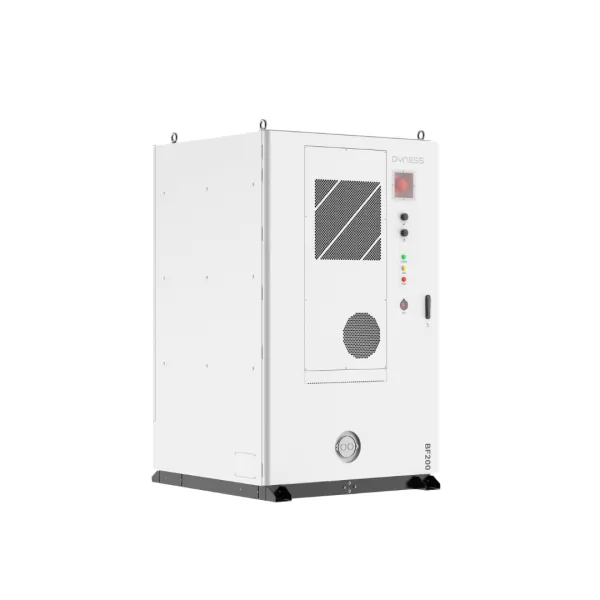
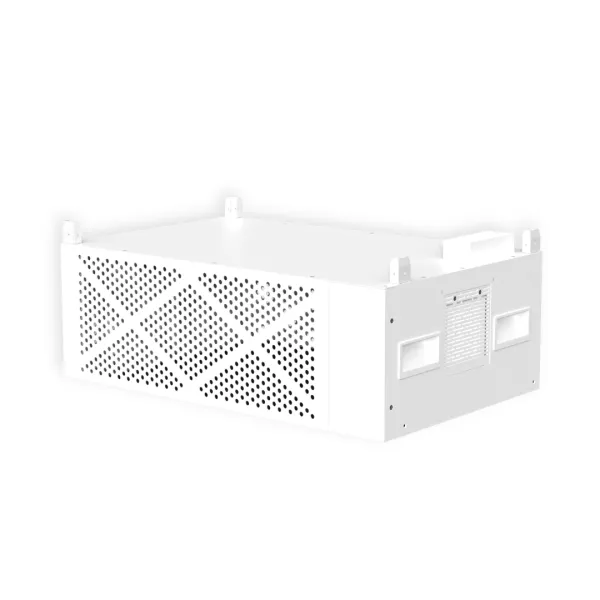
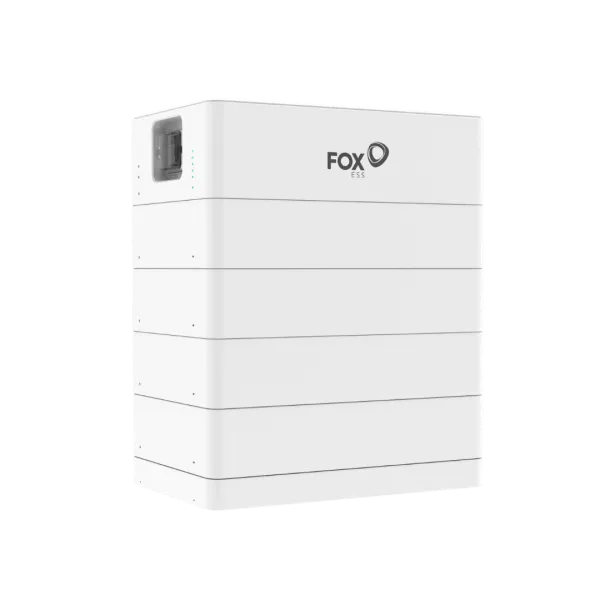
Several manufacturers currently offer heated outdoor battery models on the Hungarian market, but the offerings are not uniform: in some cases, heating is a standard factory feature, in others it is available as an option, and there are models labeled “outdoor” that still lack actual cell heating. Several brands make up the core offering in SOLARKIT’s portfolio: FoxESS, Deye, and Dyness.
These manufacturers use LiFePO4 cells, offer models with outdoor enclosures rated at IP65 or higher, and have product lines where the built-in cell heating guarantees chargeability down to -20 °C. However, there are some practical differences in their approaches that influence the choice: portfolio breadth, labeling system, and whether heating is standard or optional.
Deye heated battery models: a practical choice for colder environments
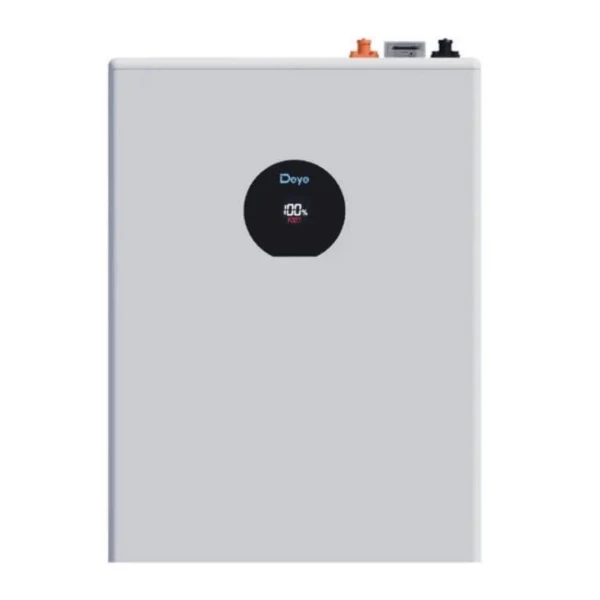
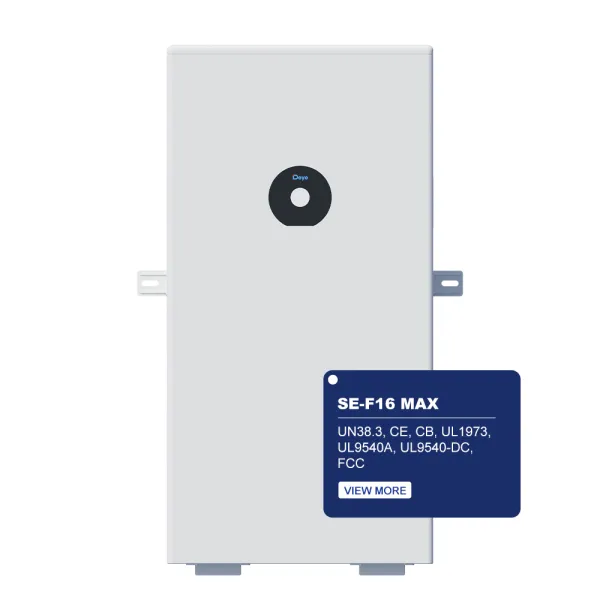
The Deye SE-F Max series is currently one of the most straightforward heated product lines on the market. It is available in two capacities: the SE-F12 Max in a 12 kWh version, and the SE-F16 Max in a 16 kWh version. Both models can be heated down to -20 °C, and the heating function is already included in the name—meaning that if you order the “Max heated” version, you are guaranteed to receive the heated variant.
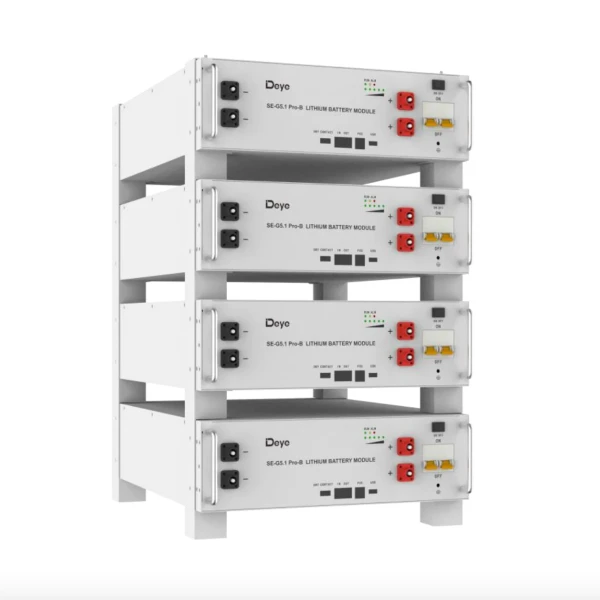
The strength of the series lies in its reliability: low-voltage (51.2 V nominal) LiFePO4 architecture, up to 32 units that can be connected in parallel, and a thermal management solution that comfortably handles the -10 to -20 °C range typical of Hungarian winters. For the full Deye category and complete product range, it’s worth browsing the Deye energy storage overview page —here you can see which versions are available from stock and which related models are not heatable (such as the SE-G5.1 Pro-B, which is specifically recommended for indoor or temperature-controlled environments).
Practical recommendation: if you’re looking for a compact, clean product line and cold tolerance is a basic requirement, the Deye Max series is an easy choice. The “heated” designation in the name indicates that heating is a standard factory feature, not an option that must be ordered separately.
H3: Dyness heated battery models: a wide selection, but pay attention to the markings
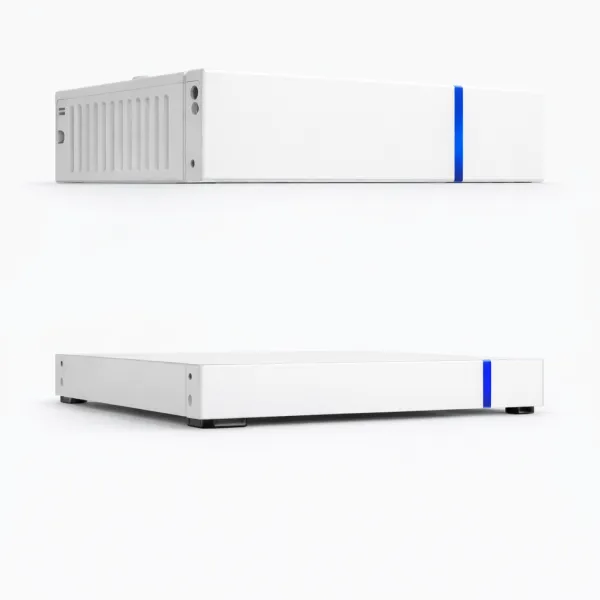
The Dyness portfolio is broader and more varied, but that’s exactly why it’s worth taking a closer look at the specific configuration before purchasing. The Powerbox G2 is the slim, wall-mountable model, with the -H suffix in its name indicating the heated version. It can be heated down to -20 °C, has an IP65 rating, and the built-in self-heating function automatically activates when the cell temperature drops below a critical threshold.
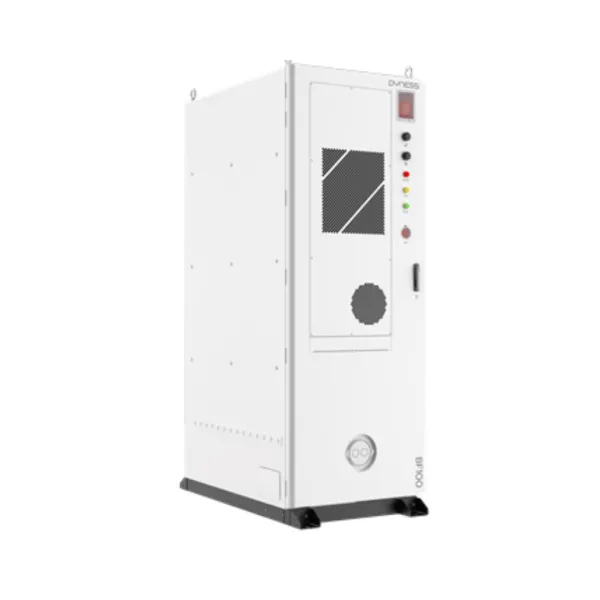
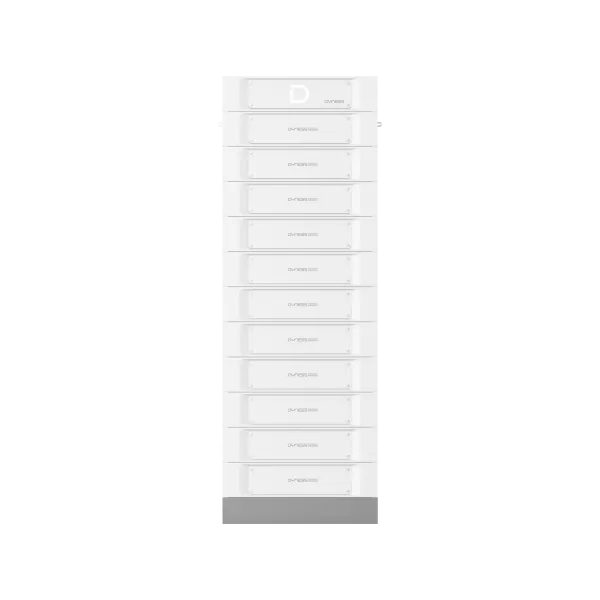
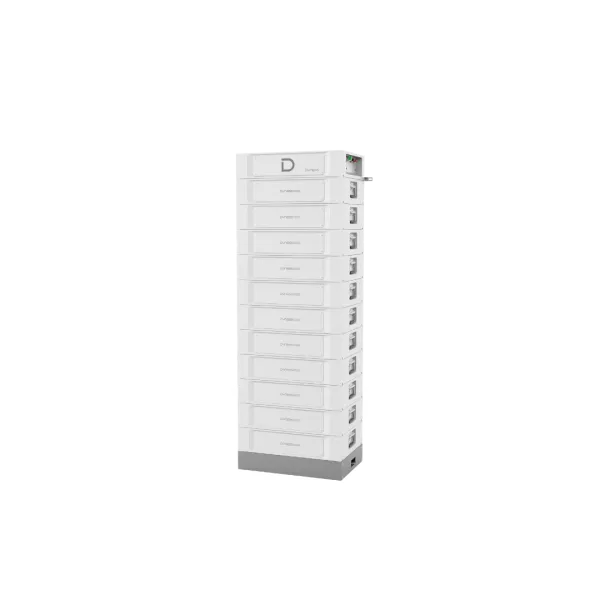
The PowerBrick Plus is also heatable, but heating is optional here—so you must specifically request the heated version when ordering. The Stack 100 Pro has an IP55 rating and can be ordered with optional heating down to -20 °C. The Tower Pro series (TP7–TP23) has an IP55 rating and can also be ordered with an automatic self-heating function as an optional accessory, likewise down to -20 °C.
In other words, on the Dyness website, the “heated” designation can mean at least two things: either “included in every unit shipped” (as with the Powerbox G2 marked with an -H), or “must be requested separately when ordering” (as with the PowerBrick Plus, Stack 100 Pro, and Tower Pro). That’s why it’s not enough to look at the model name—the configuration determines whether you’ll actually receive a heatable unit. The full Dyness lineup and identification of heatable versions are availableon the Dyness energy storage page .
Practical tip: if you choose Dyness, always ask before purchasing whether you’re getting the heated version of the specific configuration—at SOLARKIT, we clearly mark which outdoor battery models are part of the heated product line.
SOLARKIT recommendation: the heated battery is becoming an increasingly important consideration
On the Hungarian market, the heated category was still considered a premium feature just a few years ago—but today, it is increasingly becoming a basic requirement when planning new installations. There are two independent reasons for this. The first is the reality of installation: household energy storage systems are typically installed outdoors, on a side wall, in a garage, or in an outbuilding, rather than in a heated room. The other is the nature of winter: minimum temperatures in Hungary in January and February regularly approach or fall below -10 °C, and extreme cold snaps can drop as low as -15 °C—which is precisely the range where an unheated LiFePO4 battery cannot accept solar power generation.
SOLARKIT’s engineering and installation partners see the same thing every year: systems built with heated batteries deliver their designed performance even in winter, with predictable cycles and rapid morning recharging. In contrast, systems where someone chose an outdoor unit without heating—whether to save money or out of ignorance—start the winter with a 2- to 4-hour delayed charging window, significant capacity loss, and measurable degradation within a few years. In the long term, this difference also affects the full return on investment—the cheaper initial price of a non-heated unit may no longer appear to be a savings after three or four winter seasons.
The recommendation is therefore clear from a technical standpoint. If you have a temperature-controlled, reliably heated indoor space, consciously choose an indoor-category unit—it would make no sense to pay extra for heating here. In all other cases—that is, for installations mounted on a side wall, in a garage, in an outbuilding, or on an outdoor stand—heated outdoor models are the reliable choice in the long run. In SOLARKIT’s portfolio, the heated lines from FoxESS, Deye, and Dyness have proven to perform well under Hungarian winter conditions, and our catalog clearly indicates which models belong to the heated category and which require a separate option to order the heated version.
The most important thing is the order of planning: first, decide on the physical installation location; to do this, choose the appropriate indoor or outdoor category, and only then select the capacity and brand. This approach helps you avoid the most common mistakes and ensures that your storage unit will function as intended from the very first winter.
Frequently Asked Questions
1. Does a LiFePO4 battery really get damaged if charged below freezing?
Yes. When charging below freezing, metallic lithium deposits on the anode surface (lithium plating), which causes permanent capacity loss, increased internal resistance, and long-term safety risks. This is why the BMS disables charging on a cold cell.
2. What exactly does it mean when a battery is “heatable”?
Typically, there is a built-in, resistance-based heating element located next to the cells, which the BMS automatically activates when the temperature drops below a critical threshold (0–5 °C). Charging only begins once the cells have warmed back up to a safe range.
3. Does a high IP rating mean the battery can be heated?
No. The IP rating (IP65, IP66) refers exclusively to physical durability and water resistance. Heating is a separate hardware feature. Many outdoor models with high IP ratings do not have heating—always check this separately before purchasing.
4. Can an indoor battery be stored in an unheated garage?
Only if the temperature in the space is guaranteed to remain above 5 °C year-round. An uninsulated garage regularly drops below freezing in the winter, which can cause a loss of capacity and warranty issues for indoor-rated units. A heated outdoor model is recommended for such locations.
5. Why is it important to check for the -H designation or options on Dyness models?
Because in the Dyness portfolio, heating is often an optional accessory, not standard. The Powerbox G2 comes with the -H suffix in a heated version, while for the PowerBrick Plus, Stack 100 Pro, and Tower Pro, the heated configuration must be requested separately when ordering.